
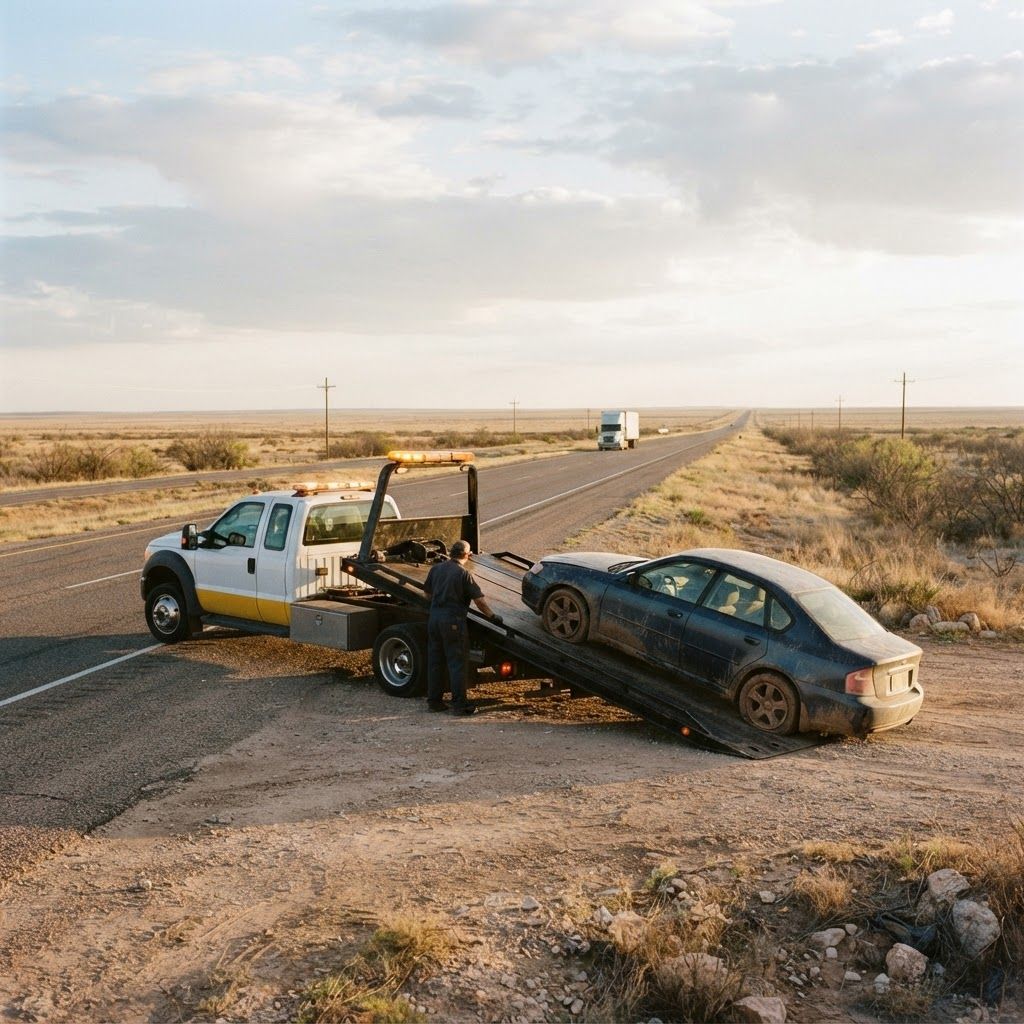
Why Towing Is a Critical Service in Lubbock
Lubbock functions as the hub of an enormous, sparsely populated region. Highways radiate outward across the Llano Estacado toward Amarillo, Abilene, Midland and the New Mexico line, and drivers routinely cover fifty or more miles between towns. When a vehicle fails on one of those stretches, the nearest capable recovery operator is almost always based in Lubbock. That geography makes towing less of a convenience trade and more of a genuine emergency service.
Local conditions add to the demand. Sudden hailstorms damage windscreens and disable vehicles. Winter ice events on Loop 289 and the interstate produce clusters of accidents. Summer heat causes overheating and tyre failures on long drives. Agricultural and oilfield activity puts heavy equipment on rural roads that occasionally needs recovery from soft ground. A good towing operation in Lubbock has to be prepared for all of it.
Types of Towing and Recovery Services
Light-duty towing covers passenger cars, crossovers, small pickups and vans. Most consumer calls fall into this category, and the preferred equipment is a flatbed carrier, where the whole vehicle is winched onto a tilting deck. Flatbeds are the safest option for all-wheel-drive vehicles, low-clearance cars, electric vehicles and anything with driveline damage, because no wheels rotate during transport.
Medium-duty towing handles box trucks, ambulances, larger vans, motorhomes and dual-rear-wheel pickups. It requires higher-capacity wreckers with heavier booms and wheel-lift assemblies.
Heavy-duty towing and recovery is a specialist discipline built around tractor-trailers, buses, farm equipment and construction machinery. It involves rotator or integrated wreckers, extensive rigging knowledge, load transfer capability and often coordination with law enforcement to close lanes. Very few operators in any market do this well, and the ones that do in Lubbock are the companies commercial carriers keep on speed dial.
Roadside assistance covers the problems that do not require a tow at all: jump starts, battery replacement, fuel delivery, tyre changes, lockout service and minor mechanical help. A capable roadside technician resolves a large share of calls on the spot, which is faster and cheaper for the customer.
Accident recovery and secure storage involves clearing collision scenes, sweeping debris, containing fluid spills and holding vehicles in a secured lot while insurance adjusters complete their work. Chain of custody and lot security become important here.
Specialty transport includes enclosed carriers for classic and high-value cars, motorcycle towing with proper wheel chocks and soft straps, off-road winch-out recovery from mud or sand, and equipment hauling on lowboy trailers.
What Distinguishes the Best Operators
Response time is the metric customers care about most, and it depends on fleet size and dispatch discipline rather than on promises. An operator with several trucks positioned across the Lubbock area and a genuine round-the-clock dispatcher will consistently outperform a single-truck outfit forwarding calls to a mobile phone.
Equipment condition is the next indicator. Modern carriers with functioning lighting, well-maintained winches, soft straps rather than chains for wheel attachment, and proper tie-down points protect the vehicle being moved. Damage caused during towing is a real and avoidable problem.
Driver training and certification matter more than most customers realise. Recovery work involves load physics, rigging angles, working near live traffic and handling damaged vehicles safely. Companies that invest in formal training and maintain clean driving records produce better outcomes and fewer secondary incidents.
Insurance and licensing are non-negotiable. A legitimate operator carries garage keepers liability coverage on stored vehicles as well as standard commercial auto liability, and holds the relevant state permits for consent and non-consent tows.
Transparent pricing is the final differentiator. The best companies quote a hook-up fee, a per-mile rate, and any applicable after-hours, winch-out or storage charges before dispatching. Vague answers on price are the clearest warning sign in this industry.
Trends in the Towing Industry
Technology has changed the customer experience substantially. Digital dispatch platforms now provide GPS-based arrival estimates and text updates, replacing the old experience of waiting without information. Many operators integrate directly with motor club and insurance networks, so a claim and a tow are coordinated automatically.
Electric vehicles have forced procedural change. EVs generally must be transported on a flatbed because towing with wheels on the ground can damage motors, and damaged battery packs require specific handling, isolation distance and sometimes quarantine storage. Operators who have trained for this are increasingly sought out.
Advanced driver assistance systems present another challenge. Vehicles with camera and radar sensors require careful handling to avoid damaging calibrated components, and improper loading can create expensive recalibration work.
Safety legislation, particularly move-over laws protecting stopped emergency and service vehicles, has raised the profile of roadside worker safety. Professional operators now use extensive lighting, cones and high-visibility gear as standard practice.
How to Handle a Breakdown in Lubbock
First, get to safety. Move as far onto the shoulder as possible, switch on hazard lights, and if traffic is heavy, exit on the side away from the roadway or stay belted inside the vehicle rather than standing beside it.
When you call, provide precise location detail. On a highway, note the nearest mile marker, exit number or cross street, and mention the direction of travel. In the city, a street intersection is usually enough. Describe the vehicle, whether it rolls and steers, whether the transmission is functional, and whether it is all-wheel drive, since these details determine which truck is dispatched.
Ask three questions before agreeing: what is the total estimated cost, what is the estimated arrival time, and where will the vehicle be delivered. Confirm that the destination repair shop is open and willing to receive the vehicle, otherwise you may pay storage fees unnecessarily.
Before the truck leaves, photograph your vehicle from several angles. It takes thirty seconds and settles any later dispute about pre-existing damage. Remove valuables, registration documents and garage remotes, and note the address of the storage lot if the vehicle is not going straight to a shop.
Final Thoughts
Towing is one of the few services people purchase under stress, with no time to compare options. The sensible approach is to decide in advance. Identify one or two well-reviewed Lubbock operators with proper insurance, flatbed capability and genuine twenty-four-hour dispatch, and save their numbers before you need them. Check whether your insurance policy, credit card or vehicle manufacturer already includes roadside coverage, and understand its mileage limits. A little preparation turns a roadside emergency into a manageable inconvenience.