
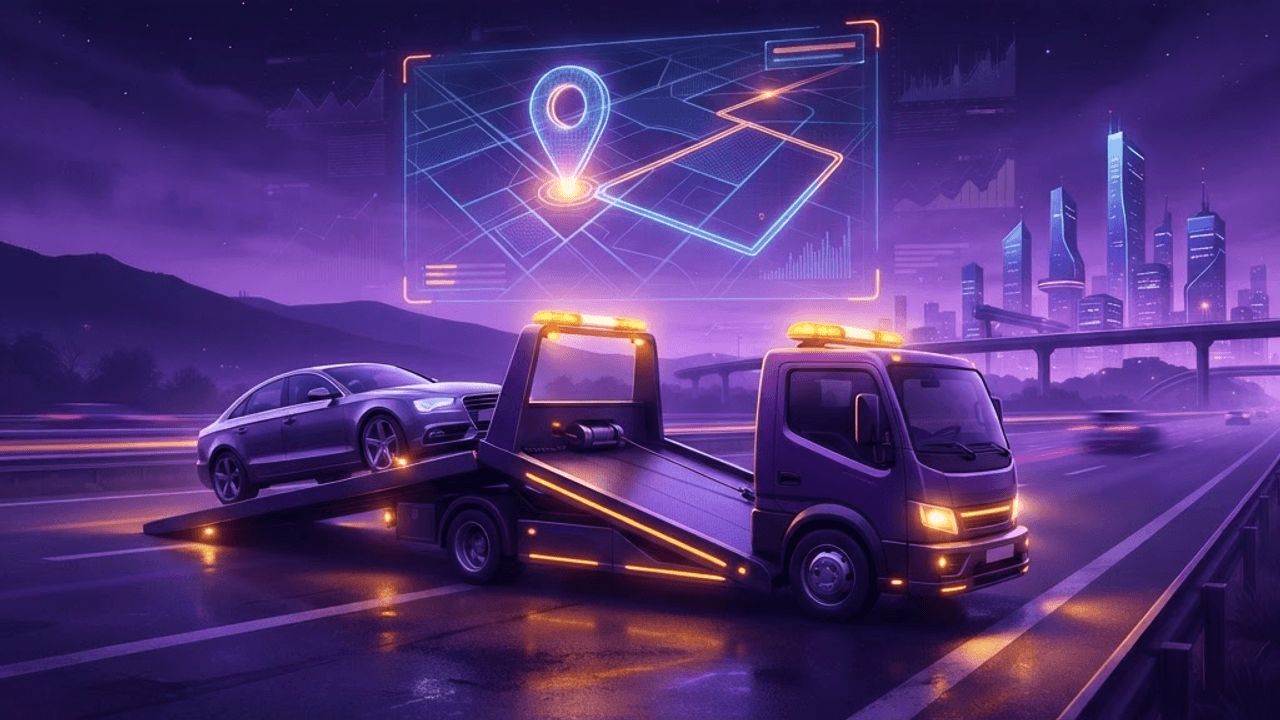
Towing in a High-Traffic Corridor City
Fremont's geography puts drivers on some of the busiest and most demanding roadways in Northern California. Interstate 880 carries enormous commuter and freight volume through the city, Interstate 680 climbs toward the Sunol grade, Mission Boulevard runs the length of the city and Niles Canyon Road offers a narrow, winding two-lane route with limited shoulder. Each presents different towing challenges: freeway breakdowns require rapid response and lane safety, canyon recoveries require equipment suited to constrained access.
Fremont's vehicle mix adds another dimension. The city's high concentration of electric vehicles means many tows require flatbed equipment and knowledge of specific transport procedures, since improper towing of an EV can cause expensive drivetrain damage. Understanding the towing landscape before you need it is genuinely worthwhile, because decisions made at the roadside under stress are rarely good ones.
1. Flatbed Towing Operators
Flatbed towing, in which the entire vehicle is winched onto a level bed with all four wheels off the ground, is the safest transport method and should be the default request for most situations. It is essential for all-wheel-drive vehicles, most electric vehicles, lowered and performance cars, vehicles with transmission or drivetrain damage, luxury vehicles and any vehicle involved in a collision. Because no wheels rotate during transport, there is no risk of drivetrain damage or additional tire wear. Fremont has numerous operators running flatbed equipment, and the modest price premium over wheel-lift towing is almost always worth paying.
2. Wheel-Lift and Conventional Tow Operators
Wheel-lift trucks use a metal yoke to lift one axle while the other axle's wheels roll on the road. The equipment is more compact and maneuverable than a flatbed, which makes it the practical choice in tight parking structures, narrow apartment complex driveways and congested urban settings where a flatbed cannot position. It is appropriate for front-wheel-drive and rear-wheel-drive vehicles towed from the correct end and for short distances. It is not appropriate for all-wheel-drive vehicles or most electric vehicles unless dollies are used under the trailing wheels.
3. Twenty-Four Hour Emergency Towing Services
Breakdowns do not respect business hours, and Fremont is served by operators dispatching around the clock. The genuine differentiators in this category are realistic response time estimates, dispatch that communicates clearly and drivers equipped for roadside safety at night on a freeway shoulder. Operators worth using provide a specific estimated arrival window rather than a vague assurance, call when the driver is en route and identify the truck so you know who is arriving. Save a chosen provider's number in your phone before you need it, because searching while standing on the shoulder of 880 is neither safe nor conducive to good judgment.
4. Roadside Assistance Programs
Membership roadside assistance programs, whether from motor clubs, insurance carriers or vehicle manufacturers, are the most cost-effective route for most drivers. Coverage typically includes towing up to a defined mileage, battery jump-start, flat tire change, lockout service and fuel delivery, all for an annual fee far below the cost of a single out-of-pocket tow. Many new vehicles include manufacturer roadside assistance during the warranty period, and many credit cards and insurance policies include it as an unadvertised benefit. Check what you already have before paying for a tow, because a substantial number of drivers pay for services they are entitled to receive free.
5. Electric Vehicle Specialized Towing
This category is disproportionately important in Fremont. Electric vehicles generally must be transported on a flatbed because their drive motors are permanently coupled to the wheels, and towing with driven wheels on the ground can generate current and damage components. Beyond equipment, EV towing requires knowledge of high-voltage safety procedures, correct tie-down points that avoid battery pack structure, how to release the parking brake and put the vehicle in transport mode when the twelve-volt system is dead, and appropriate handling of a vehicle involved in a collision where battery damage is possible. Confirm EV experience explicitly when calling, and specify the make and model.
6. Heavy-Duty and Commercial Towing
Fremont's logistics and construction sectors require heavy-duty recovery capability for tractor-trailers, box trucks, buses, RVs and construction equipment. Operators in this segment run rotator and heavy wrecker equipment, carry air cushion recovery systems and employ operators trained in load shifting and rollover recovery. They also handle load transfers when a disabled trailer's cargo must be moved. Because heavy recovery involves genuine engineering judgment, credentials matter here more than in light-duty towing, and commercial fleets typically establish relationships with a specific operator in advance.
7. Motorcycle Towing Specialists
Motorcycles require entirely different handling from cars. Proper motorcycle transport uses a dedicated trailer or a flatbed with a wheel chock and soft straps secured to frame or triple-tree points rather than to controls or bodywork. Improper strapping bends handlebars, damages fork seals and scratches finishes. Fremont's active riding community, with the canyon roads immediately east of the city, generates regular demand for competent motorcycle recovery. When calling, confirm the operator has a chock and soft ties, and consider staying to observe the loading if you are able.
8. Accident Recovery and Collision Towing
Collision recovery involves considerations beyond transport: scene safety, fluid containment, debris clearance, coordination with law enforcement and, increasingly, careful handling of vehicles with damaged high-voltage batteries or deployed airbag systems. Operators in this category work with insurers and body shops and can transport directly to a repair facility. Drivers should know that in California they choose where their vehicle is taken, and are not obligated to accept a tow operator's or insurer's preferred shop. State that preference clearly at the scene.
9. Long-Distance and Vehicle Transport Services
Not every tow is an emergency. Vehicle transport services move cars between cities and states on multi-vehicle carriers, handle relocations, deliver purchased vehicles and transport classic and inoperable vehicles. Enclosed transport protects valuable or collectible vehicles from weather and road debris, while open carriers cost less. For Fremont residents buying a vehicle out of state or relocating, this channel is far more economical than long-distance towing. Verify Department of Transportation registration and cargo insurance coverage limits before booking.
10. Municipal, Private Property and Impound Towing
The final category operates under contract rather than by customer request, handling abandoned vehicles, parking enforcement, private property removals and law enforcement impounds. California law regulates this segment closely, requiring proper signage on private property, notification procedures and posted rate schedules. Drivers whose vehicles are towed have the right to retrieve personal property, to receive an itemized invoice and to dispute charges. Knowing these rights is valuable because this is the segment where disputes most frequently arise.
Conclusion
Fremont drivers are served by flatbed and wheel-lift operators, twenty-four hour emergency dispatch, membership roadside assistance programs, EV-capable specialists, heavy-duty commercial recovery, motorcycle transport specialists, collision recovery operators, long-distance transport services and contracted municipal towing. The single most useful action is preparation: confirm what roadside coverage you already have through insurance, credit cards or your vehicle warranty, save a reputable local operator's number, and know to request flatbed transport for any all-wheel-drive or electric vehicle. Those three steps prevent the majority of towing problems before they occur.