
Why Towing Choice Deserves Advance Thought
Almost nobody researches towing until they need it, which is precisely why so many drivers end up with a poor experience. In Aurora, the variables that matter are response time across a geographically spread service area, equipment suitability for your specific vehicle, and whether the operator carries proper cargo insurance. Choosing wrongly can mean drivetrain damage on an all-wheel-drive vehicle, bumper and undertray damage on a low-clearance car, or a battery-management fault on an electric vehicle towed incorrectly.
Local conditions raise the stakes. Winter brings collision clusters, ditch recoveries, and battery failures. Summer construction detours and heat-related cooling failures generate their own call volume. Highway corridors near the city require operators equipped and permitted for fast-moving roadway work with proper scene lighting and traffic control.
1. Flatbed Towing Services
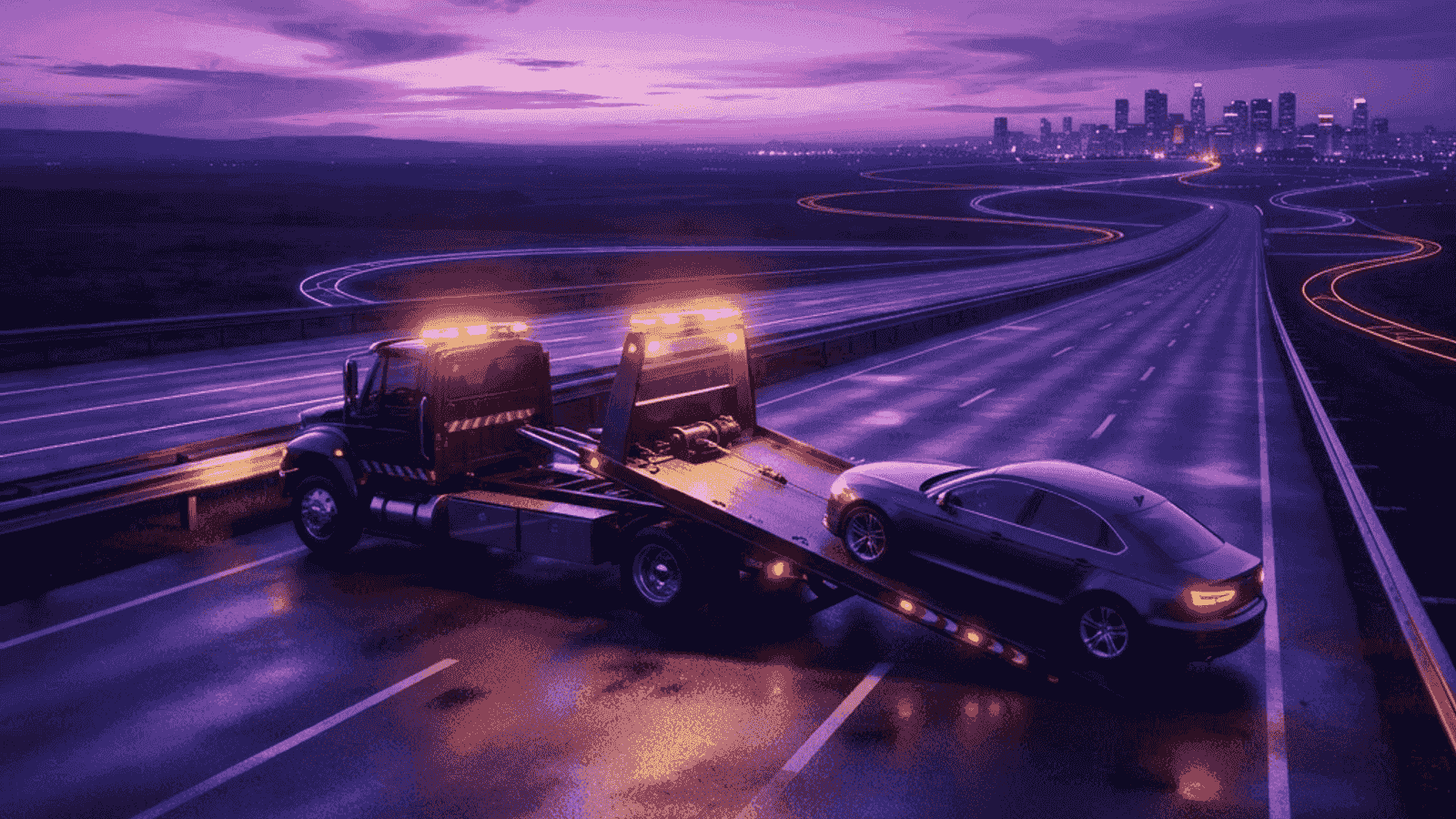
Flatbed, or rollback, towing is the safest general-purpose method because all four wheels leave the road surface. It is the correct choice for all-wheel-drive and four-wheel-drive vehicles, electric and hybrid vehicles, lowered and performance cars, luxury vehicles, classic cars, and any vehicle with drivetrain or transmission damage. Good operators use soft straps or wheel baskets rather than chains on suspension components, and carry approach ramps for low front clearance.
2. Wheel-Lift and Light-Duty Towing
Wheel-lift equipment cradles either the front or rear wheels and is well suited to tight parking structures, narrow residential streets, and short-distance moves of front-wheel-drive or rear-wheel-drive vehicles. It is faster to hook up and typically less expensive than a flatbed. The important qualification is that the drive wheels must be lifted or the drivetrain disengaged, which is why a competent dispatcher asks about your vehicle's drive configuration before sending equipment.
3. Heavy-Duty and Commercial Towing
Heavy-duty operators handle transport trucks, buses, motorhomes, construction equipment, and loaded commercial vehicles. This work requires rotator or heavy wrecker units, air brake knowledge, load stabilisation experience, and often coordination with authorities for road closures. For fleet operators in Aurora, having a pre-negotiated heavy-duty provider with defined response commitments is a basic continuity measure rather than a luxury.
4. Accident Recovery and Winch-Out Services
Recovery differs from towing. It covers vehicles in ditches, embankments, snowbanks, mud, and off-road positions, along with rollovers and vehicles wedged against obstacles. Proper recovery requires winching capacity, snatch blocks, rated recovery straps and shackles, and a clear understanding of load angles and pull points. Operators who rush recovery cause far more damage than the original incident. Scene safety, including traffic control and fluid containment, is part of a professional recovery.
5. Roadside Assistance Providers
Many calls are not tow calls at all. Roadside providers deliver battery boosting and replacement, fuel delivery, flat tyre changes and spare installation, lockout service, and minor on-site diagnostics. Resolving the issue in place is faster and cheaper for the driver, so operators who arrive with jump packs, tyre inflation and plug kits, fuel cans, and basic tooling deliver disproportionate value.
6. Motorcycle Towing Specialists
Motorcycles require entirely different handling. Correct transport uses a flatbed with a wheel chock, front wheel restraint, and multiple tie-down points on the frame or triple tree, never on handlebars or controls under load. Specialists carry dedicated motorcycle trailers or cradles and understand how to load a bike that cannot be ridden. Riders in Aurora should identify a motorcycle-capable operator before their first breakdown, since general towing companies do not always carry the right restraints.
7. Electric and Hybrid Vehicle Transport
Electric vehicle towing is a growing specialisation. Most electric vehicles must not be flat-towed with wheels rotating because regenerative systems can be damaged, and many manufacturers specify flatbed transport exclusively. Operators in this category understand high-voltage safety, know how to release electronic parking brakes and enter transport mode, and are trained in thermal event awareness for damaged battery packs. Verifying this capability matters if you drive an electrified vehicle.
8. Long-Distance and Vehicle Transport Services
Relocations, auction purchases, dealer transfers, seasonal vehicle moves, and classic car shipping call for long-distance transport rather than emergency towing. Providers use open or enclosed multi-car carriers, offer scheduled pickup windows, and provide condition reports at loading and delivery. Enclosed transport is worth the premium for high-value, low-clearance, or newly restored vehicles.
9. Private Property and Parking Enforcement Towing
Property managers, retail plazas, and residential complexes across Aurora contract enforcement towing to manage unauthorised parking, snow removal operations, and fire route access. Reputable operators in this category follow documented notification procedures, photograph vehicles before removal, maintain secure and monitored storage, and publish clear release procedures and fees. Transparency is the defining marker of a professional operation here.
10. Twenty-Four Hour Emergency Dispatch Services
Breakdowns ignore business hours. Around-the-clock operators maintain overnight staffing, distributed truck positioning to shorten response times, and dispatch systems that provide arrival estimates and driver tracking. The strongest ones answer with a live human rather than a queue, confirm your exact location, ask the right vehicle questions, and give a firm price before dispatch.
What to Confirm Before You Agree to a Tow
Ask for the total price including hook-up fee, per-kilometre rate, after-hours surcharge, storage charges, and any winching fees, and get it verbally confirmed before the truck is dispatched. Confirm the equipment type matches your drivetrain. Verify the company carries garage keepers and cargo insurance. Ask where the vehicle will be taken and whether you can choose the destination repair shop, which you generally can. Photograph your vehicle before loading, note existing damage, and keep valuables and documents with you. Record the truck number and driver name, and insist on a written invoice.
Local Trends in Towing and Roadside Services
The sector is modernising. Digital dispatch platforms with live tracking and photographic documentation are becoming standard, which improves both accountability and customer confidence. Electric vehicle adoption is driving investment in flatbed fleets and specialised training, since improper towing risk is higher and more expensive. Battery service calls now outnumber many traditional breakdown categories, pushing providers toward mobile repair capability rather than transport alone. And integration with insurers and manufacturer roadside programmes means many drivers already have covered service they forget to use.
Final Thoughts
Reliable towing in Aurora comes down to matching equipment to vehicle and confirming price and insurance before the hook goes on. Flatbeds are the safest default and mandatory for all-wheel-drive and electrified vehicles. Wheel-lift units suit tight urban spaces. Heavy-duty, recovery, motorcycle, and long-distance work each require genuine specialists. Save two numbers in your phone now, one general roadside provider and one flatbed operator suited to your specific vehicle, and check what coverage your insurance or manufacturer programme already includes. Preparation turns a bad day into a manageable inconvenience.