
What Makes Baton Rouge a Tour Destination
Baton Rouge sits at an unusual geographic and cultural crossroads, and that position defines its tour landscape. The city occupies the boundary between Anglo-influenced north Louisiana and French-Creole south Louisiana, giving it a hybrid identity visible in architecture, food, and language. The Mississippi River — working, industrial, immense — runs through it. The Atchafalaya Basin, the largest river swamp in North America, lies to the west. Antebellum plantation sites, with their difficult and essential histories, line the river road to the south. And the State Capitol, the tallest in the country, anchors a political history worth a tour of its own.
Good operators here do not simply move visitors between photo opportunities. They contextualize a landscape shaped by river engineering, sugar and cotton economies, slavery, immigration, petrochemical industry, and coastal loss. The best tours leave visitors understanding why Louisiana is the way it is.
1. Louisiana State Capitol Tours
The Capitol building offers guided tours covering its Art Deco architecture, the assassination of Huey Long, and the observation deck's panoramic view over the river and the industrial corridor. The building is a genuine architectural landmark, and the political history attached to it is among the most dramatic in American state government.
2. Atchafalaya Basin Swamp Tours
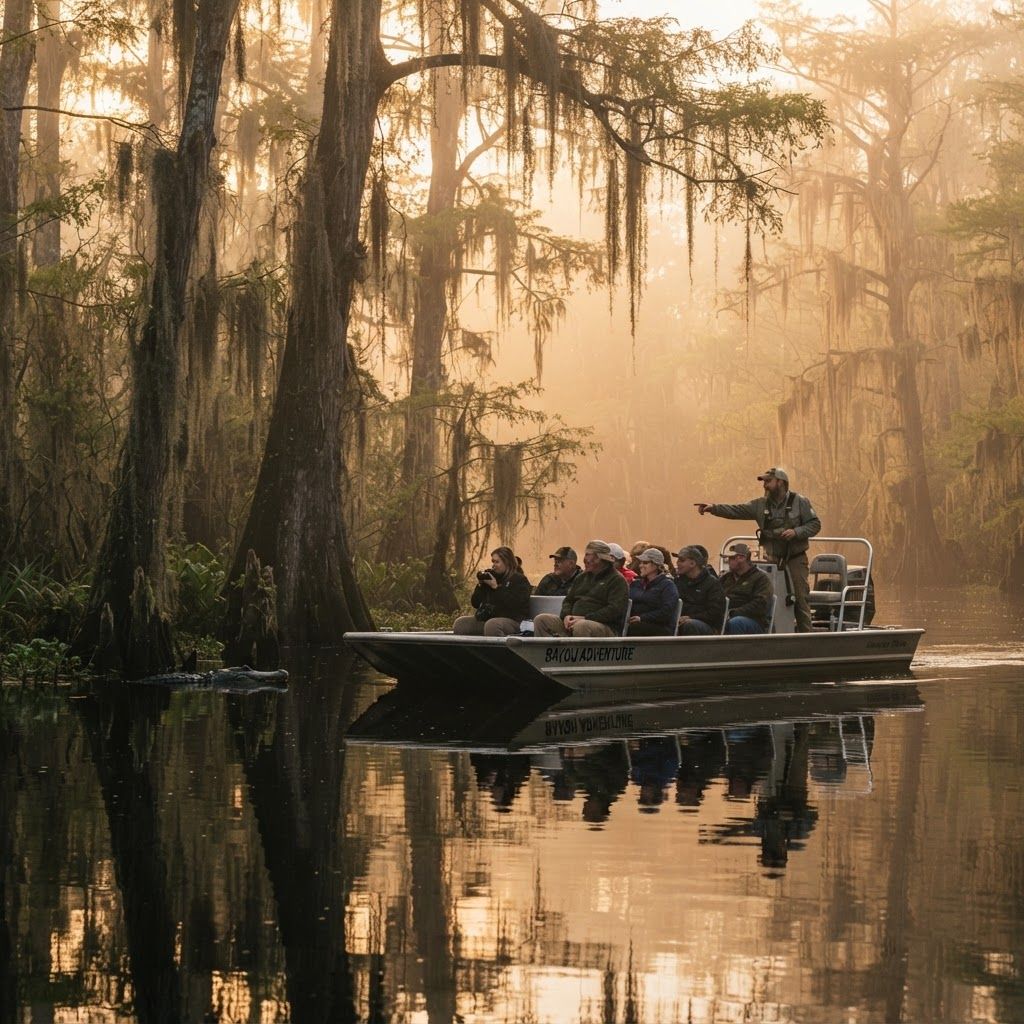
Operators running excursions into the Atchafalaya provide access to a cypress-tupelo ecosystem unlike anything else in North America. Small-boat tours navigate flooded forest where alligators, herons, egrets, and occasionally black bears appear. The strongest operators employ guides who explain hydrology, flood control engineering, and the crawfish industry rather than treating wildlife sightings as the entire product.
3. Magnolia Mound Plantation Tours
One of the oldest wooden structures in the region, this site interprets early Creole plantation life through preserved buildings, period furnishings, and open-hearth cooking demonstrations. Its interpretation addresses both the planter household and the enslaved people whose labor sustained it — a completeness that visitors increasingly expect and that responsible historical sites now provide.
4. River Road Heritage Tours
Operators offering day trips along the river road between Baton Rouge and New Orleans visit multiple plantation sites, including those focused specifically on the history of slavery. These itineraries are among the most substantive historical tours available in the American South, and thoughtful operators sequence sites to build understanding rather than repeat aesthetics.
5. Baton Rouge Culinary Walking Tours
Food tours introduce visitors to Louisiana cuisine with the context that makes it comprehensible — the distinction between Cajun and Creole, the role of the roux, the traditions behind gumbo, boudin, and jambalaya. Walking formats through downtown or Mid City combine tasting with neighborhood history and architecture.
6. USS Kidd Veterans Museum Tours
The USS Kidd, a World War Two destroyer moored on the riverfront, offers guided tours of a preserved warship alongside museum exhibits. Walking the ship's compartments conveys the physical reality of naval service in a way no exhibit can, and the site is a strong choice for visitors traveling with older children.
7. LSU Campus and Rural Life Museum Tours
The LSU campus features Italian Renaissance architecture, live oak allees, and Indian mounds thousands of years old. The associated Rural Life Museum preserves relocated historic Louisiana buildings — a working plantation complex, Acadian structures, and folk architecture — offering an unusually tangible survey of the state's vernacular building traditions.
8. Mississippi River Cruise Excursions
Riverboat operators offer sightseeing and dinner cruises on the Mississippi, providing perspective on the levee system, port operations, and the sheer scale of river commerce. Seeing ocean-going vessels loading at Baton Rouge — the furthest inland deepwater port on the river — reframes how visitors understand the city's economy.
9. Cajun Country Day Tours
Operators running trips south into Acadiana connect Baton Rouge visitors to Cajun music, dance halls, boudin traditions, and French-speaking communities. These tours cover meaningful driving distance and are best suited to travelers with a full day available, but they access culture that cannot be experienced within the city.
10. Custom Private Guides
Independent licensed guides build private itineraries around specific interests — architecture, Civil War history, birding, genealogy research, or the industrial corridor. Private guiding suits travelers with narrow interests or those who prefer flexible pacing over fixed group schedules.
Seasonal Considerations
Spring and fall are the best windows for touring Baton Rouge. Temperatures are moderate, humidity is manageable, and wildlife activity in the swamps is high. Spring brings blooming landscapes at historic sites; fall brings comfortable walking weather and football-season energy throughout the city.
Summer is hot and humid enough to genuinely affect enjoyment, particularly on walking tours and open-boat excursions. Morning departures are strongly preferable, and hydration is not a trivial concern. Afternoon thunderstorms are common and can cancel water-based tours on short notice.
Winter offers comfortable temperatures and thin crowds, though swamp wildlife activity decreases substantially as alligators become dormant. Operators are candid about this, and visitors prioritizing wildlife should plan accordingly.
Choosing a Responsible Operator
For swamp tours, ask about group size, boat type, and whether the operator feeds wildlife. Feeding alligators is harmful and, in many contexts, prohibited — operators who advertise guaranteed close encounters deserve scrutiny. Smaller boats access narrower channels and provide a quieter, better experience than large pontoon vessels.
For historical tours, ask how the operator interprets slavery. Sites and guides that romanticize antebellum life while omitting the enslaved people who built and sustained it are providing an incomplete and misleading account. The best Louisiana historical interpretation has moved decisively toward fuller honesty, and visitors should support operators doing that work.
Verify licensing and insurance, confirm what is included — transportation, admission fees, meals — and check accessibility if mobility is a consideration. Historic buildings and boat docks frequently present real barriers, and reputable operators disclose them clearly.
Final Thoughts
Baton Rouge tour operators offer access to swamp ecology, river commerce, political history, and layered cultural traditions that few American cities can match in combination. Travel in spring or fall when possible, choose operators who prioritize small groups and honest interpretation, and allow time for at least one excursion beyond the city limits.