
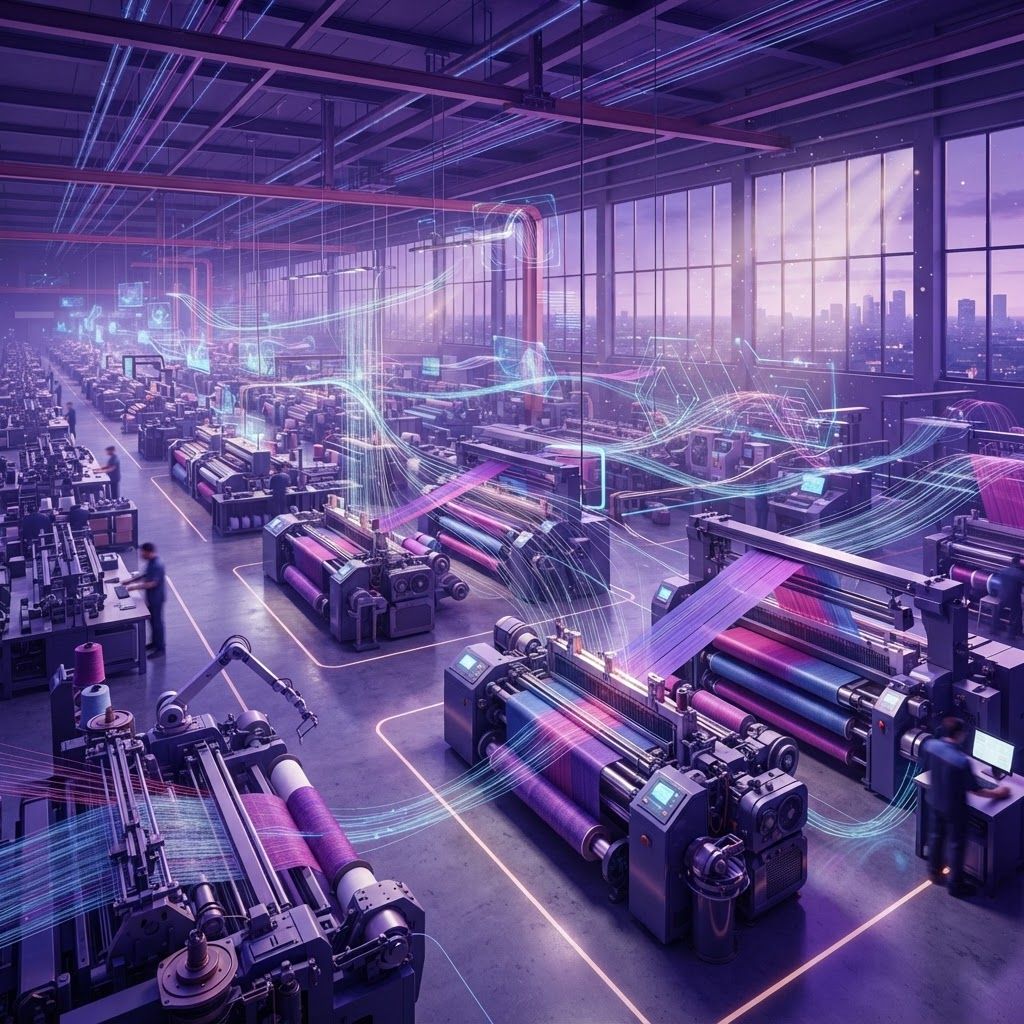
From Garment District to Technical Textiles
Rochester's textile heritage runs deeper than most people realize. Before imaging dominated the local economy, the city supported a substantial clothing industry, with manufacturers producing menswear and outerwear at scale and employing thousands. Hickey Freeman, founded in Rochester and still producing tailored clothing in the city, remains the most visible survivor of that era and one of the few American factories still making fine men's suits domestically.
The broader industry, however, has transformed rather than disappeared. Commodity apparel production largely moved offshore decades ago. What remained and grew in its place is technical: industrial fabrics, coated and laminated materials, medical textiles, filtration media, webbing and narrow fabrics, protective apparel, and custom cut-and-sew for specialized applications. These products compete on engineering, certification, and responsiveness rather than labor cost, which suits a high-skill regional economy.
Where the Region Competes
Technical textile manufacturing rewards proximity, quality systems, and problem-solving. A medical device company developing a wound care product needs a partner who can iterate on substrate selection quickly and document every lot. A defense contractor needs webbing that meets specification and passes traceability audits. An industrial customer needs filtration media matched to a particular chemistry and temperature.
Rochester's advantages include an engineering-literate workforce, materials science research at local universities, and adjacency to the medical device, food processing, and precision manufacturing sectors that consume technical fabrics. Short-run and custom work, which offshore suppliers handle poorly, is where regional manufacturers win consistently.
Ten Textile and Fabric Manufacturers in the Rochester Region
1. Hickey Freeman. The historic Rochester tailored clothing manufacturer continues to produce premium men's suits and sport coats domestically, and remains a symbol of American craft apparel production.
2. Rochester Uniform and workwear producers. Regional uniform manufacturers and suppliers produce and customize industrial workwear, healthcare scrubs, and branded apparel for institutional customers.
3. Bergen Cable and narrow fabrics suppliers. Producers of webbing, cordage, and narrow woven goods serve industrial, safety, and equipment markets requiring certified strength characteristics.
4. Ultrafab. Based in Farmington near Rochester, it manufactures weatherseal products including brush pile, foam, and fabric-based sealing components used in windows, doors, and industrial equipment worldwide.
5. Sutherland Global and textile services operations. Regional laundry, finishing, and textile services companies handle commercial linen processing, garment finishing, and industrial fabric maintenance at scale.
6. Trelleborg and coated fabrics operations. Coated and laminated fabric producers in Western New York supply membranes, seals, and engineered composites for transportation and industrial applications.
7. Custom cut-and-sew job shops. A network of small manufacturers around Monroe County performs prototype and short-run sewing for medical, filtration, and consumer product developers who need domestic production.
8. Filtration media producers. Manufacturers of nonwoven and woven filtration fabrics serve water treatment, food processing, and industrial air handling markets throughout the Northeast.
9. Rochester Institute of Technology materials and design programs. RIT contributes materials research, product design, and industrial engineering talent, and its facilities support prototyping for textile and soft goods innovation.
10. Regional embroidery and screen printing manufacturers. Decoration and finishing companies serving Rochester provide the final production stage for branded apparel, team wear, and promotional textiles.
Industry Trends
Reshoring interest has been genuine but selective. Supply chain disruption convinced many buyers to qualify a domestic source, though usually as a secondary supplier for critical or fast-turn items rather than a full transfer. Manufacturers that invested in quick-turn capability and documented quality systems captured most of that work.
Sustainability requirements now appear routinely in customer specifications, covering recycled content, chemical restrictions, water use in finishing, and end-of-life recyclability. Compliance documentation has become a competitive requirement rather than a differentiator.
Automation is slowly reaching soft goods. Automated cutting, pattern nesting software, and semi-automated sewing cells improve consistency, though the industry remains labor-intensive by nature. Workforce development is consequently the sector's most pressing constraint, and regional manufacturers increasingly partner with community colleges and training programs to build sewing and machine maintenance skills.
Choosing a Textile Manufacturing Partner
Define requirements precisely before requesting quotes: fiber and construction, weight, finish, performance specifications, applicable standards, packaging, and lot documentation needs. Ambiguity in a textile specification produces expensive misunderstandings.
Evaluate quality systems directly. Ask about certification, inspection procedures, traceability, and how nonconforming material is handled. Request samples produced on the actual equipment that will run production, not a lab bench. Discuss minimum order quantities, lead times, and capacity honestly, and understand how the manufacturer sources base material, since fabric availability often drives schedule more than sewing capacity.
Final Thoughts
Rochester's textile sector is smaller than it once was but considerably more sophisticated. Between a surviving premium apparel manufacturer, engineered sealing and coated fabric producers, filtration specialists, and a flexible base of custom job shops, the region offers real capability for companies that need technical fabrics, short runs, and domestic accountability. For product developers, that combination of engineering depth and geographic proximity is increasingly hard to find.