
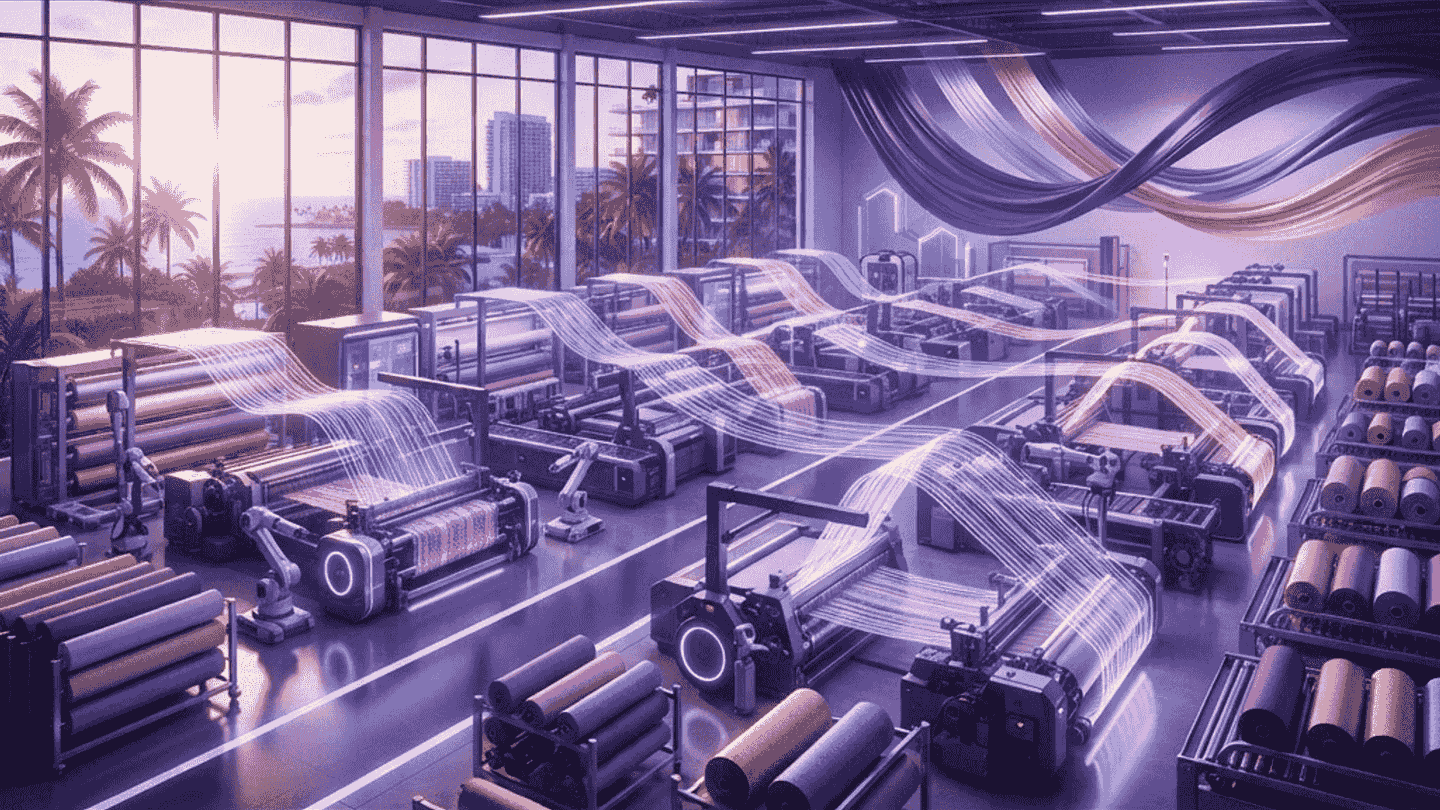
Miami as a Textile and Apparel Production Center
Miami occupies an unusual and valuable position in American textile manufacturing. While large-volume production migrated overseas decades ago, South Florida retained something more specialized: a dense network of cut-and-sew shops, pattern makers, fabric importers, dye houses, and finishing facilities clustered around the Fashion District, Hialeah, Doral, and Medley. These operations thrive on speed, flexibility, and proximity to Latin American supply chains.
The city climate and culture also shaped its product mix. Swimwear, resort wear, activewear, linen shirting, dancewear, and lightweight knits are Miami specialties. A designer launching a swim collection can develop patterns, source stretch fabric, sample, grade, and produce a small run without leaving the metro area, which is difficult to replicate almost anywhere else in the country.
Industry Trends Reshaping Local Textile Production
Near-shoring is the most significant trend. Rising freight costs, longer overseas lead times, and inventory risk have pushed brands to keep at least part of production close to their market. Miami manufacturers benefit directly, especially for replenishment orders and seasonal capsules that must arrive on schedule.
Sustainability is the second trend. Recycled polyester from post-consumer bottles, regenerated nylon for swimwear, organic cotton, low-water dye processes, and deadstock fabric sourcing now appear routinely in production briefs. Buyers increasingly ask for mill certifications and traceability documentation.
Small-batch digital production is the third. Digital fabric printing, laser cutting, and automated pattern nesting have lowered minimum viable order sizes, enabling independent labels to test designs with tens rather than thousands of units.
The Top 10 Best Textile Manufacturers in Miami
1. Biscayne Textile Works. A full-package manufacturer offering pattern development, grading, marking, cutting, sewing, and finishing. It is known for structured onboarding with new brands and for clear tech-pack requirements that reduce costly sampling rounds.
2. Hialeah Knit and Cut Company. Specializing in jersey, rib, and French terry knitwear, this factory serves streetwear and activewear labels. Strengths include consistent stitch quality, in-house cutting capacity, and reliable mid-volume throughput.
3. Sunshine Swim Manufacturing. A swimwear specialist handling stretch fabrics, bonded seams, elastic application, and lining. Its technical knowledge of chlorine and UV resistant textiles makes it a natural fit for resort and performance swim brands.
4. Doral Fabric Imports and Finishing. Primarily a fabric sourcing and finishing operation, this company imports mill goods, manages dyeing and printing, and performs shrinkage and colorfastness testing. Many local sewing factories depend on it for material supply.
5. Coral Way Apparel Group. A contract manufacturer focused on woven products such as linen shirts, dresses, and lightweight suiting. It is often recommended for brands that need refined finishing details and careful fabric handling.
6. Wynwood Print Studio and Textiles. Combining digital textile printing, screen printing, and embroidery, this studio supports custom graphics, all-over prints, and short-run experimentation. Creative brands use it for limited drops and collaborations.
7. Medley Industrial Textiles. This manufacturer produces technical and industrial fabrics including marine upholstery, awning material, filtration textiles, and protective covers. Its differentiator is durability testing for salt, sun, and abrasion exposure.
8. Miami Home Textile Manufacturing. Producing bedding, cushions, drapery, and hospitality linens, this company serves hotels, interior designers, and property developers. Hospitality clients value its commercial-grade fire and wear standards.
9. Little Havana Sewing Cooperative. A network of experienced sewing operators handling small runs, samples, and specialty construction. It is a practical resource for designers whose order sizes are too small for larger factories.
10. Atlantic Sustainable Fabrics. Focused on recycled and low-impact materials, this supplier and manufacturer provides traceability documentation, certified recycled yarns, and reduced-water dye options for brands with environmental commitments.
How to Work Successfully with a Textile Manufacturer
Arrive prepared. A complete tech pack with measurements, tolerances, stitch types, trim specifications, fabric composition, care instructions, and labeling requirements will save weeks of revisions and reduce unit costs. Manufacturers price uncertainty, so clarity is discount.
Understand minimums. Most Miami cut-and-sew shops work in the range of a few dozen to several hundred pieces per style and color. Ask specifically whether minimums apply per style, per color, or per fabric order, since fabric mills often impose their own thresholds.
Insist on approved samples. Approve a pre-production sample and a first-off-production piece before the full run proceeds, and define acceptable measurement tolerances in writing. This single practice prevents the majority of quality disputes.
Plan realistic timelines. Sampling typically takes several weeks, fabric lead times can add more, and production scheduling depends on factory load. Building a calendar backward from your launch date is essential.
The Outlook for Miami Textiles
Local textile manufacturing in Miami is likely to keep growing in value even if it never returns to mass-production scale. The competitive advantages are speed, communication, small-batch flexibility, and cultural fluency with both North and Latin American markets. As brands prioritize inventory efficiency and responsiveness over the lowest possible unit price, those advantages become more commercially relevant.
For designers and product companies, the recommendation is to build long-term relationships rather than chasing quotes. The manufacturers described here have durable reputations because they invest in technical capability and consistent execution, which is exactly what a growing brand needs from a production partner.