
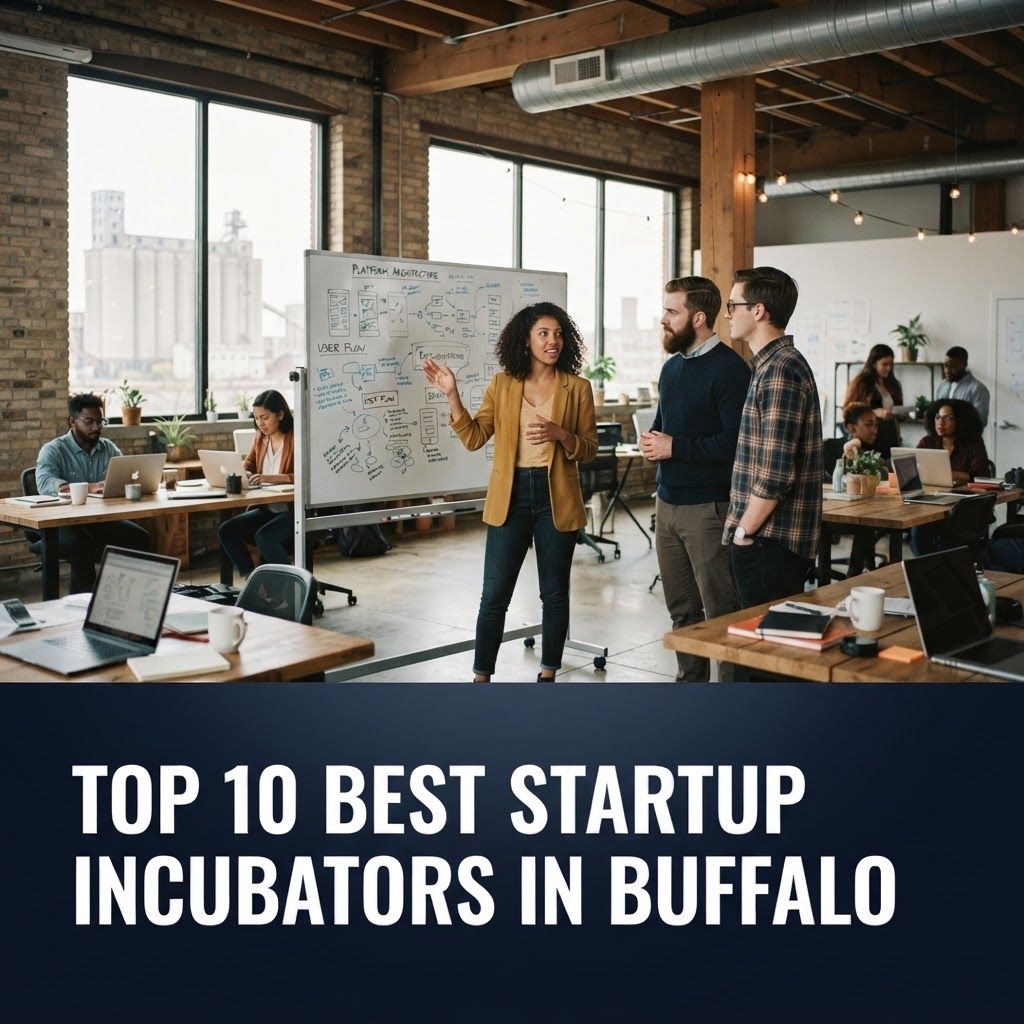
How Buffalo Built a Startup Ecosystem
Buffalo's emergence as a startup city was deliberate rather than accidental. Substantial state investment through economic development initiatives, the growth of the Buffalo Niagara Medical Campus, and the University at Buffalo's research output combined to create both capital and technical talent. Layered on top were programs designed specifically to attract and retain founders — most visibly a large annual startup competition that draws applications from around the world and requires winners to operate in Buffalo.
The result is an ecosystem with characteristics you rarely find in a mid-sized metro: meaningful non-dilutive capital, low operating costs, an unusually accessible network of mentors and executives, and physical infrastructure ranging from wet labs to prototyping facilities. What it has historically lacked is deep local venture capital at Series A and beyond, which shapes how founders should approach the region strategically.
The Difference Between Incubators, Accelerators, and Studios
These terms get used interchangeably, but the models differ materially. An incubator provides space, shared services, and mentorship over an open-ended period, typically at early stages and often without taking equity. An accelerator runs a fixed-length cohort program, usually three to six months, with structured curriculum, demo day, and frequently an investment in exchange for equity. A venture studio builds companies internally, supplying the initial idea and team while holding significant founding equity. A makerspace or prototyping facility provides equipment access without programmatic support.
Founders should be clear about which they need. A hardware founder needs machine access and engineering support more than pitch coaching. A software founder with a working product needs customer introductions and capital. A first-time founder with a hypothesis needs structured validation before anything else.
Programs and Organizations in the Buffalo Ecosystem
43North is the most nationally recognized program in the region, running a competition that awards substantial investment to selected startups on the condition that they operate in Buffalo for a defined period, along with mentorship, office space, and ecosystem access. Its portfolio has helped establish Buffalo's credibility with investors outside the region.
The University at Buffalo supports commercialization through its Technology Transfer office and entrepreneurship programs, and UB's Center for Advanced Technology and related initiatives assist researchers moving discoveries toward market. Z80 Labs operated as an early-stage technology incubator that helped seed the downtown startup community. The Buffalo Niagara Medical Campus provides infrastructure and connections for life sciences and digital health ventures, while Innovation Center facilities on the campus offer laboratory and office space suited to biotech companies.
Launch NY functions as a nonprofit venture development organization serving Upstate New York, providing mentorship through entrepreneurs-in-residence and seed funding to high-growth companies across the region. Insyte Consulting supports manufacturers with growth and operational assistance, which matters in a region where hardware and industrial startups are common. The Small Business Development Center at Buffalo State University offers no-cost advisory services for early-stage businesses, and SCORE chapters provide volunteer mentorship.
Additional resources include Westminster Economic Development Initiative, which supports immigrant and refugee entrepreneurs on Buffalo's West Side through business training and incubated retail space, and Beverly Gray Business Exchange Center, which serves entrepreneurs on the East Side. Buffalo Manufacturing Works provides advanced manufacturing technology support and prototyping capability that hardware startups struggle to find elsewhere.
What Founders Should Evaluate
Start with the portfolio. Look at companies that entered the program three to five years ago and determine what happened to them. Did they raise follow-on capital? Are they still operating? Did they stay in the region? Recent cohorts tell you about marketing; older cohorts tell you about outcomes.
Examine the terms carefully. If a program takes equity, understand the percentage, the valuation implied, and whether it includes pro rata rights or other provisions affecting future rounds. Non-dilutive grant capital is obviously preferable when available, but grant programs often carry reporting obligations and residency requirements that constrain flexibility. Read the fine print on relocation commitments and clawback provisions.
Assess mentorship substance. Programs advertise mentor networks of a hundred advisors, but what matters is whether two or three of them have deep experience in your specific market and will actually spend time with you. Ask current participants how many substantive mentor conversations they have had, not how many names appear on the website.
Consider follow-on capital pathways. Buffalo's seed environment is reasonably healthy, but Series A funding typically comes from outside the region. Programs that actively broker introductions to New York City, Boston, and Toronto investors add disproportionate value.
Sector Strengths in the Region
Life sciences and medical devices benefit from the medical campus, Roswell Park's research, and UB's biomedical programs. Advanced manufacturing and industrial technology draw on the region's engineering heritage and manufacturing base. Software and fintech have grown substantially, with several regional successes demonstrating that companies can scale from Buffalo. Agricultural technology and food processing connect to Western New York's substantial agricultural sector. Clean energy and energy storage have attracted attention given regional hydroelectric resources and state policy support.
Practical Advice for Applicants
Apply with traction rather than only an idea. Even modest evidence — pilot customers, letters of intent, a working prototype, early revenue — dramatically improves outcomes. Be specific about what you need from the program: capital, a specific customer introduction, laboratory access, or regulatory expertise. Vague applications asking for general support tend to lose to focused ones.
Take the regional commitment seriously. Programs requiring you to operate in Buffalo are investing in the local ecosystem, and founders who treat the requirement as a box to check rarely build the relationships that make the experience valuable. Founders who engage genuinely with the community find that Buffalo's accessibility — the ability to get a meeting with almost any executive in town — is a real competitive advantage.
Looking Forward
The ecosystem's trajectory depends on whether successful exits recycle capital and talent back into the region. Early evidence is encouraging, with alumni founders becoming angel investors and advisors. For founders evaluating where to build, Buffalo offers a rare combination of affordability, capital availability at the earliest stages, and a support network that is dense enough to be useful without being saturated.