
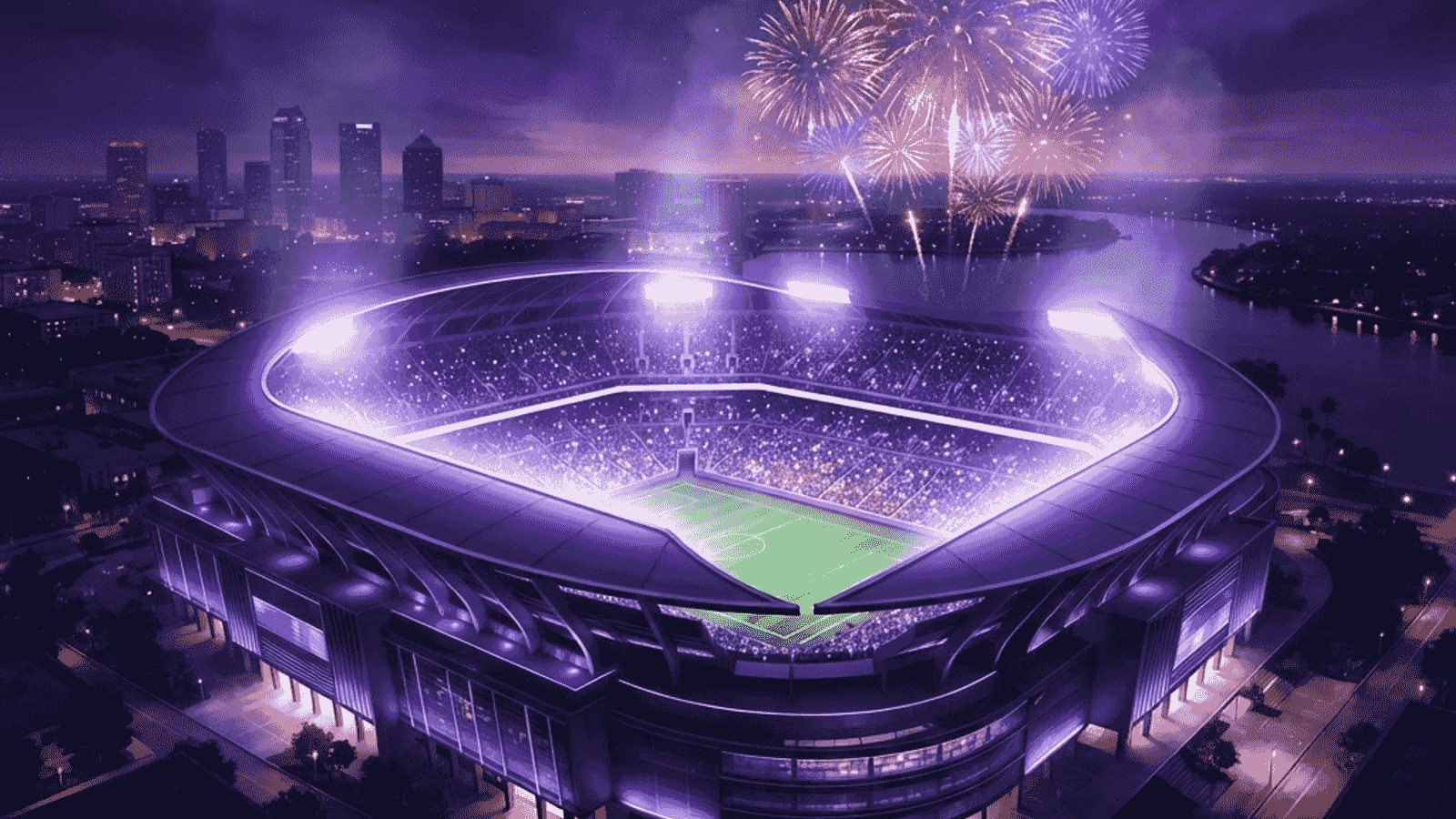
Tampa Bay: A Genuine Sports Town
Few metropolitan areas of Tampa's size support the breadth of professional and collegiate sport found along Florida's Gulf Coast. The region hosts NFL, NHL, Major League Baseball, top-tier college football, spring training, minor league baseball, professional soccer, and college basketball, plus regular hosting duties for Super Bowls, Stanley Cup Finals, college football playoff games, and championship events.
The venues themselves tell that story. Some are modern showpieces with continual investment, others are beloved for character and intimacy, and a few carry decades of history in their concrete and steel. Together they make Tampa one of the more rewarding cities in America for a fan planning a sports-focused visit.
Ten Standout Stadiums and Arenas
1. Raymond James Stadium — Home of the Tampa Bay Buccaneers and the University of South Florida Bulls, and the anchor of Tampa's big-event calendar. Its defining feature remains the pirate ship in the north end zone, which fires cannons after scores. Continuous renovations have added enormous video boards, improved club spaces, and modernized concourses. The stadium has hosted multiple Super Bowls, including one won by the home team, and regularly stages the Outback Bowl and major college matchups.
2. Amalie Arena — The downtown home of the Tampa Bay Lightning is widely regarded as one of the best atmospheres in the National Hockey League. The Tesla coils that fire after goals, the organ-driven crowd traditions, and consistently full houses give it genuine intensity. It also serves as the city's premier concert venue and has hosted Stanley Cup Finals and NCAA tournament games.
3. George M. Steinbrenner Field — The New York Yankees' spring training home and one of the finest facilities in the Grapefruit League, designed with dimensions mirroring Yankee Stadium. It also hosts the Tampa Tarpons in the Florida State League, making it an affordable way to watch professional baseball in an intimate setting.
4. Tropicana Field — Across the bay in St. Petersburg, the longtime home of the Tampa Bay Rays is unlike any other ballpark in Major League Baseball. Its domed, catwalk-crossed interior created its own rulebook quirks, and its rays touch tank became an iconic fan feature. Whatever its architectural critics say, it delivered decades of competitive baseball in a climate where summer afternoon games outdoors would be brutal.
5. Yuengling Center — The University of South Florida's on-campus arena hosts Bulls basketball along with concerts and community events. Its manageable scale keeps fans close to the floor, making it one of the better places locally to watch college basketball.
6. Al Lopez Field legacy and Al Lopez Park — Though the original ballpark that hosted spring training for decades is gone, its legacy remains central to Tampa baseball history and its name endures in the park adjacent to Raymond James Stadium. It is a meaningful stop for fans interested in the city's sporting past.
7. Publix Gate and the Tampa Bay Rowdies at Al Lang Stadium — Al Lang Stadium in St. Petersburg offers what may be the most scenic setting in American soccer, with the waterfront and marina directly behind the stands. The Rowdies' supporter culture creates a lively, family-friendly matchday experience.
8. BayCare Ballpark — The Philadelphia Phillies' spring training facility in Clearwater is regularly cited as among the best in Florida, with excellent sightlines, a tiki pavilion, and a comfortable outfield boardwalk. It also hosts the Clearwater Threshers during the summer.
9. TD Ballpark — Dunedin's renovated ballpark hosts Toronto Blue Jays spring training and the Dunedin Blue Jays. Its recent modernization added shaded seating and improved facilities while keeping the small-town charm that makes Dunedin a favorite spring destination.
10. Pete Cav Stadium and Tampa's high school and collegiate venues — Local institutions such as the University of Tampa's athletic facilities and long-standing prep football stadiums preserve a community sports culture that runs deep in Hillsborough County. Friday night football here draws crowds that would surprise visitors.
Attending Games in Tampa: Practical Advice
Weather governs planning. From June through September, afternoon thunderstorms are near-daily, so evening events are more comfortable and lightning delays are a genuine possibility at outdoor venues. Hydration matters more than most visitors expect, and shaded seating is worth paying extra for at spring training games.
Transportation varies by venue. Raymond James Stadium relies heavily on surrounding lots and shuttle services, and arriving early is essential on NFL Sundays. Amalie Arena benefits from downtown parking garages and proximity to the Riverwalk, Water Street, and Sparkman Wharf, which makes pre-game dining easy. Spring training parks in Clearwater and Dunedin are compact, so arriving well before first pitch avoids congestion in small residential-adjacent lots.
Beyond the Game
Part of what makes Tampa's venues enjoyable is what surrounds them. The Tampa Riverwalk connects downtown attractions within walking distance of Amalie Arena. Ybor City provides historic character and nightlife a short streetcar ride away. Waterfront dining near Al Lang Stadium and the walkable downtown of Dunedin turn a ballgame into a full day out.
Conclusion
The best stadiums in Tampa range from championship-caliber professional venues to sun-warmed spring training parks where players sign autographs along the rail. Amalie Arena and Raymond James Stadium deliver the big-event energy, while the Grapefruit League ballparks in Clearwater, Dunedin, and Tampa offer the relaxed intimacy that makes Florida baseball special. For any sports fan, Tampa Bay's collection of venues is a legitimate destination in its own right.