
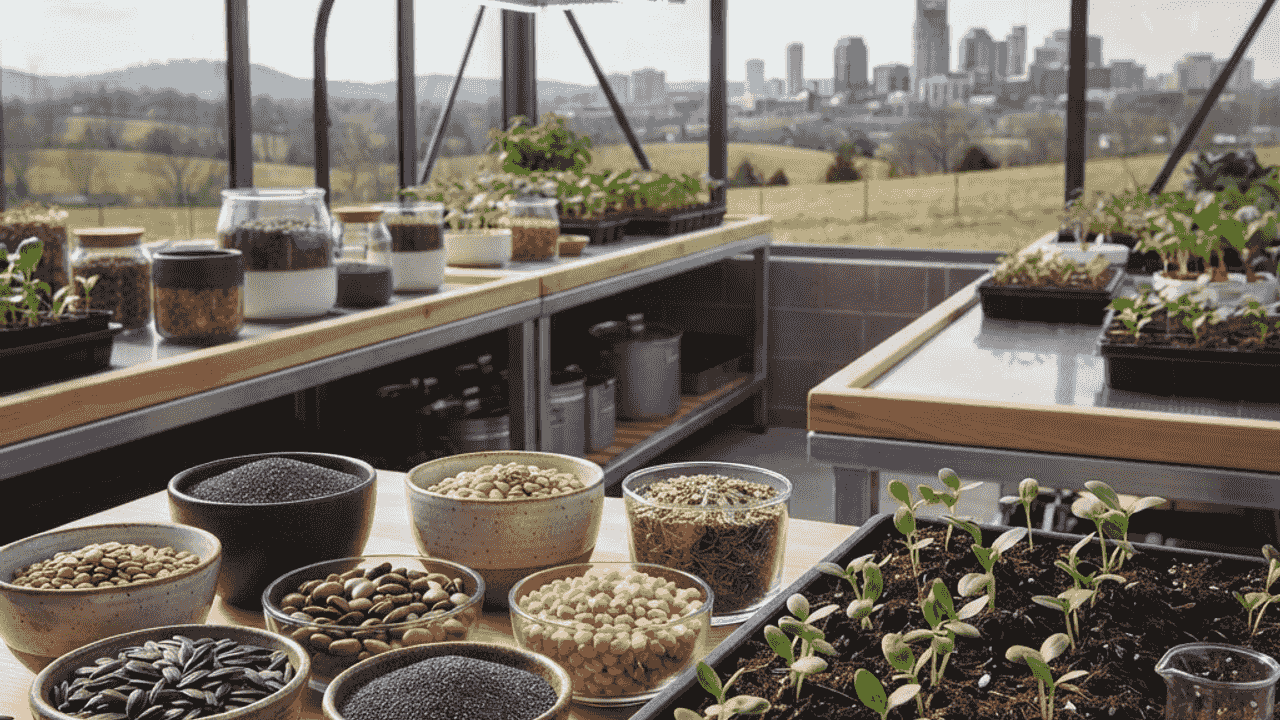
Selecting Seed for Nashville Conditions
Seed quality establishes the ceiling for a crop. Middle Tennessee growers contend with humid summers, variable spring weather, disease pressure, and soils that can differ greatly from one field to another. Home gardeners may prioritize flavor and unusual varieties, while commercial farms need emergence, yield, uniformity, resistance, harvest timing, and reliable availability. These companies represent useful sources for different scales and production systems.
1. Tennessee Farmers Cooperative
Tennessee Farmers Cooperative supports local cooperative stores with agricultural seed and crop inputs. Its regional orientation is valuable because recommendations can reflect Tennessee conditions. Producers may also gain access to fertilizer, crop protection, feed, and agronomic assistance through the same network.
2. Southern States
Southern States supplies farm, pasture, forage, lawn, and garden seed across the Southeast. Regional product knowledge is useful for livestock producers and property managers selecting grasses or cover crops. Local adaptation and intended use should guide variety choice.
3. Beck's Hybrids
Beck's serves row-crop farmers with corn, soybean, wheat, and cover-crop products. The company emphasizes regional testing and farmer support. Commercial growers should study multi-location performance rather than relying on a single exceptional trial result.
4. Pioneer
Pioneer provides widely used corn, soybean, and forage genetics supported by agronomic research. Its range allows producers to compare maturity, disease traits, standability, and stress response. Local representatives can help align hybrids with field history and management intensity.
5. DEKALB and Asgrow
DEKALB corn and Asgrow soybean products are prominent choices for row-crop operations. Trait packages and genetics are designed for different pest, weed, and yield environments. Stewardship requirements and resistance-management practices must be understood before planting.
6. Seedway
Seedway supplies farm, turf, and vegetable seed across multiple market segments. Vegetable growers can evaluate varieties based on disease packages, maturity, color, shipping quality, and protected-culture performance. Availability planning is essential for specific commercial varieties.
7. Johnny's Selected Seeds
Johnny's Selected Seeds is popular among market gardeners and diversified vegetable farms. Detailed production information, tools, and season-extension resources add value beyond seed packets. Nashville growers can compare heat tolerance and disease resistance for long summer conditions.
8. High Mowing Organic Seeds
High Mowing Organic Seeds focuses on certified organic vegetable, herb, and flower seed. It is a strong option for organic producers and gardeners who prioritize organic sourcing. Growers should still verify whether individual varieties suit Tennessee heat and humidity.
9. Baker Creek Heirloom Seed Company
Baker Creek is known for a large collection of heirloom vegetables, herbs, and flowers. The assortment appeals to gardeners, chefs, and small farms seeking distinctive appearance and flavor. Heirlooms can offer differentiation, though disease resistance and shipping durability may vary.
10. Sow True Seed
Sow True Seed specializes in open-pollinated and heirloom varieties with a Southern Appalachian perspective. Its regional focus can be useful for growers interested in seed saving and biodiversity. Open-pollinated crops also support community seed knowledge when isolation and selection are managed carefully.
Reading Seed Information Correctly
Review germination date, lot number, treatment status, maturity, planting population, resistance codes, and storage guidance. Treated seed requires specific handling and cannot be used interchangeably with untreated or certified organic seed. For pastures and cover crops, compare pure live seed rather than bag weight alone because germination and purity affect actual value.
Build a Local Trial Strategy
Even reputable genetics perform differently by field and season. Test new varieties on limited acreage beside a known standard, document planting conditions, and measure marketable yield rather than total output. Nashville growers can use university extension trials and local demonstrations to strengthen decisions. Interest in cover crops, pollinator habitat, climate resilience, and regionally adapted varieties is increasing, making thoughtful seed selection a central part of farm sustainability.