
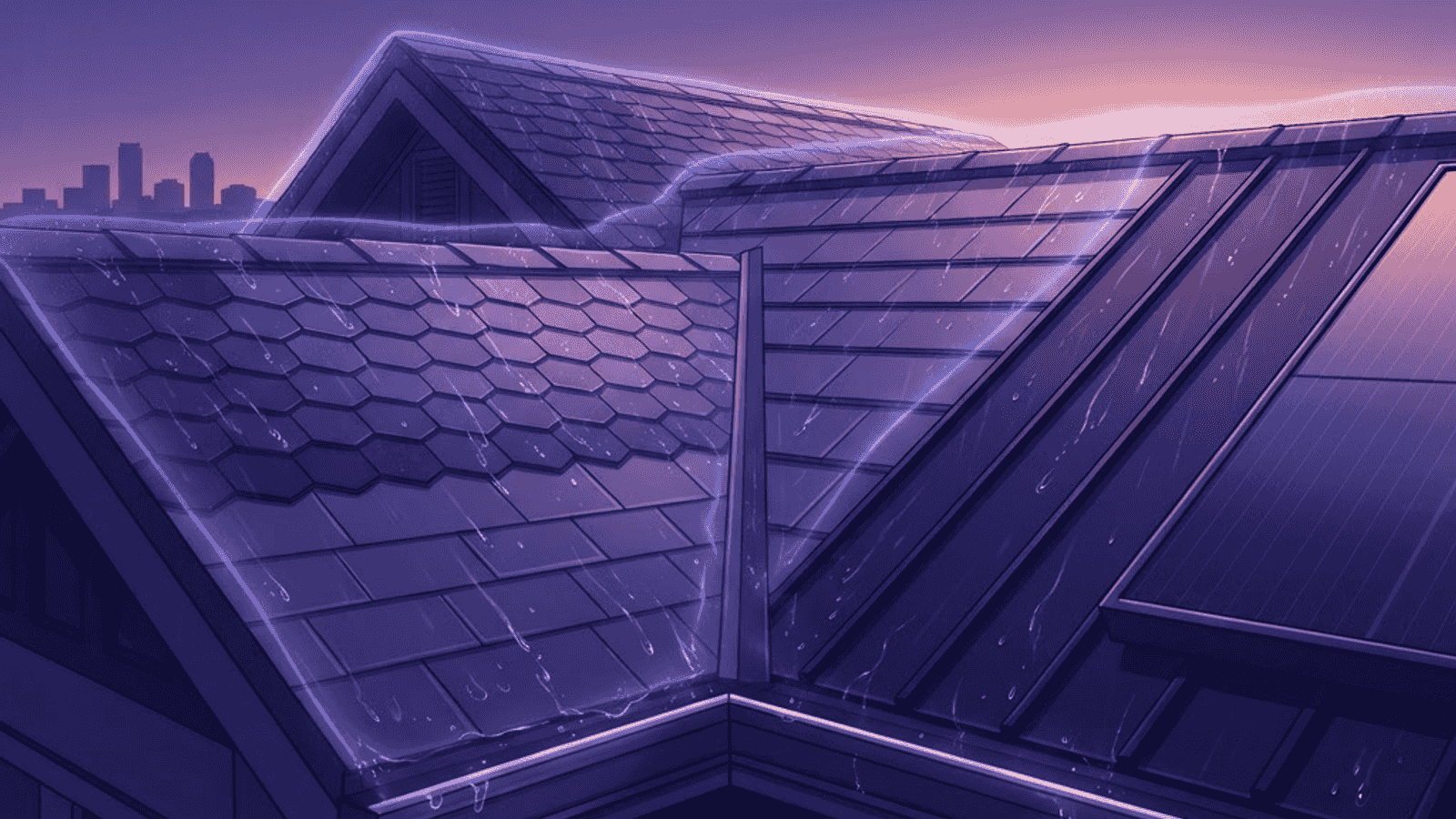
What Sacramento Weather Does to a Roof
The Central Valley climate is unusually hard on roofing. Summer air temperatures above 100 degrees translate into roof surface temperatures that can exceed 160 degrees on dark shingles. That heat drives volatile oils out of asphalt, causing granule loss, brittleness, and eventual cracking. Thermal cycling between blistering afternoons and cooler nights expands and contracts every material, fastener, and flashing joint on the roof, slowly working seals loose.
Then winter arrives and delivers nearly the entire year's rainfall in a few concentrated months, often as sustained atmospheric river events. A roof that has been quietly degrading all summer is suddenly asked to shed inches of rain over days. This is why so many Sacramento leaks are discovered in December and January, even though the damage occurred the previous August.
Ultraviolet exposure compounds everything. Sacramento averages a high number of clear days annually, and continuous UV degradation shortens the practical life of asphalt shingles compared to what the same product would achieve in a cloudier region.
Roofing Materials That Perform Locally
Architectural asphalt shingles remain the most common choice, offering reasonable cost, wide color availability, and typical service life in the twenty to thirty year range locally, though real-world performance depends heavily on ventilation and installation quality. Lighter colors and products with reflective granules reduce heat absorption meaningfully.
Concrete and clay tile are extremely well suited to the climate and appear throughout the region on Spanish and Mediterranean style homes. Tile itself lasts for decades, though the underlayment beneath it typically needs replacement well before the tile does. A knowledgeable contractor can lift, replace underlayment, and relay existing tile at substantially lower cost than full replacement.
Standing seam metal roofing has grown quickly in popularity. It reflects heat effectively, sheds water and debris well, resists fire, and can last fifty years or more. The higher upfront cost is offset by longevity and by cooling energy savings during Sacramento's long summers.
Cool roof requirements deserve mention. California's Title 24 energy standards impose solar reflectance and thermal emittance requirements on many reroofing projects in the Central Valley climate zones, so material selection is not purely aesthetic. Any competent local contractor will know how compliance applies to your project.
The Ten Best Roofing Contractors in Sacramento
1. Straight Line Construction. A well-established Sacramento area roofing and exterior contractor, Straight Line handles residential reroofing, repair, and related work including gutters and attic insulation. They are known for thorough written proposals, strong workmanship warranties, and detailed inspection documentation with photographs, which helps homeowners understand exactly what condition their roof is in.
2. Frey Roofing. A long-tenured Sacramento roofing company, Frey has extensive experience across asphalt shingle, tile, and low-slope systems. Their institutional knowledge of local building stock and permitting practice is a real advantage, and they handle both straightforward reroofs and complicated repairs on older structures with unusual roof geometry.
3. Sacramento Roofing and Solar. This firm specializes in the increasingly common combination of reroofing paired with solar installation. Doing both together avoids the expensive scenario of installing panels on a roof that needs replacement in five years, and it consolidates flashing and penetration detailing under one responsible party.
4. Roseville Roofing. Serving Sacramento and the northern suburbs, Roseville Roofing covers residential and commercial work including shingle, tile, and single-ply membrane systems. They are frequently chosen for insurance-related repair work and are experienced in documenting storm and wind damage for claims.
5. Bell Roofing. Bell Roofing has a solid regional reputation for repair and maintenance work in addition to full replacement. Their willingness to take on smaller repair jobs, which many larger reroofing companies decline, makes them a valuable resource when a targeted fix is genuinely the right answer.
6. Ridgeline Roofing. Ridgeline focuses on residential replacement with an emphasis on proper attic ventilation design. This is an underappreciated factor in Sacramento, where inadequate intake and exhaust ventilation traps superheated air, cooks shingles from beneath, and shortens roof life considerably while driving up cooling costs.
7. Sierra Roofing and Solar. Serving the greater Sacramento region, Sierra combines roofing expertise with solar and energy efficiency work. They handle tile underlayment replacement, metal roofing installation, and skylight work, and their consultative approach suits homeowners planning a broader efficiency upgrade.
8. Capital Coast Roofing. Capital Coast works across residential and commercial projects with particular capability on low-slope and flat roof systems. Many Sacramento homes, especially mid-century designs and additions, include flat sections where TPO, modified bitumen, or foam systems are appropriate and require specialized skill.
9. Advanced Roofing Solutions. A locally focused contractor known for responsive leak diagnosis, Advanced Roofing Solutions is often called when the source of a leak has proven difficult to locate. Water can travel considerable distance along framing before appearing on a ceiling, and methodical investigation is a genuine skill.
10. Presidential Roofing. Presidential handles full replacement projects with strong attention to detail on flashing, valleys, and penetrations, which is where the overwhelming majority of roof leaks actually originate rather than in open field areas. Their crews are noted for clean job sites and thorough debris removal.
Inspection and Maintenance Rhythm
Have your roof professionally inspected every two to three years, and always after a major wind event. The ideal timing in Sacramento is early autumn, before winter rains, so any deficiencies can be corrected while conditions are dry and contractor availability is better.
Between inspections, watch for warning signs. Granules accumulating in gutters indicate shingle wear. Curling or cupped shingle edges signal heat damage. Cracked or slipped tiles allow water directly onto underlayment. Rusted or lifted flashing around chimneys, vents, and skylights is the leading leak source. Interior signs include ceiling stains, bubbling paint, and musty attic odor.
Keep gutters and valleys clear. Sacramento's abundant mature tree canopy is wonderful for shade and terrible for roof drainage, dropping enormous leaf volume each autumn directly before the rainy season. Clogged gutters cause water to back up under roof edges and rot fascia. Trimming branches that overhang the roof also reduces debris and prevents abrasion.
Hiring Well
Verify the contractor holds an active C-39 Roofing Contractor license, carries general liability insurance, and provides workers' compensation coverage. Roofing has one of the highest injury rates of any trade, and uninsured crews create serious exposure for the property owner.
Get at least three detailed written bids that specify the material and manufacturer, the underlayment, the ventilation plan, flashing replacement, tear-off and disposal, permit fees, and the workmanship warranty separate from the manufacturer material warranty. Confirm whether the contractor is manufacturer-certified, since certification often unlocks enhanced warranty coverage.
Avoid door-to-door solicitation following storms, demands for large upfront payments, and any contractor unwilling to pull a permit. A roof is among the most consequential systems on a house, and in Sacramento's climate, quality installation is the difference between twenty-five years of service and a callback in year six.