
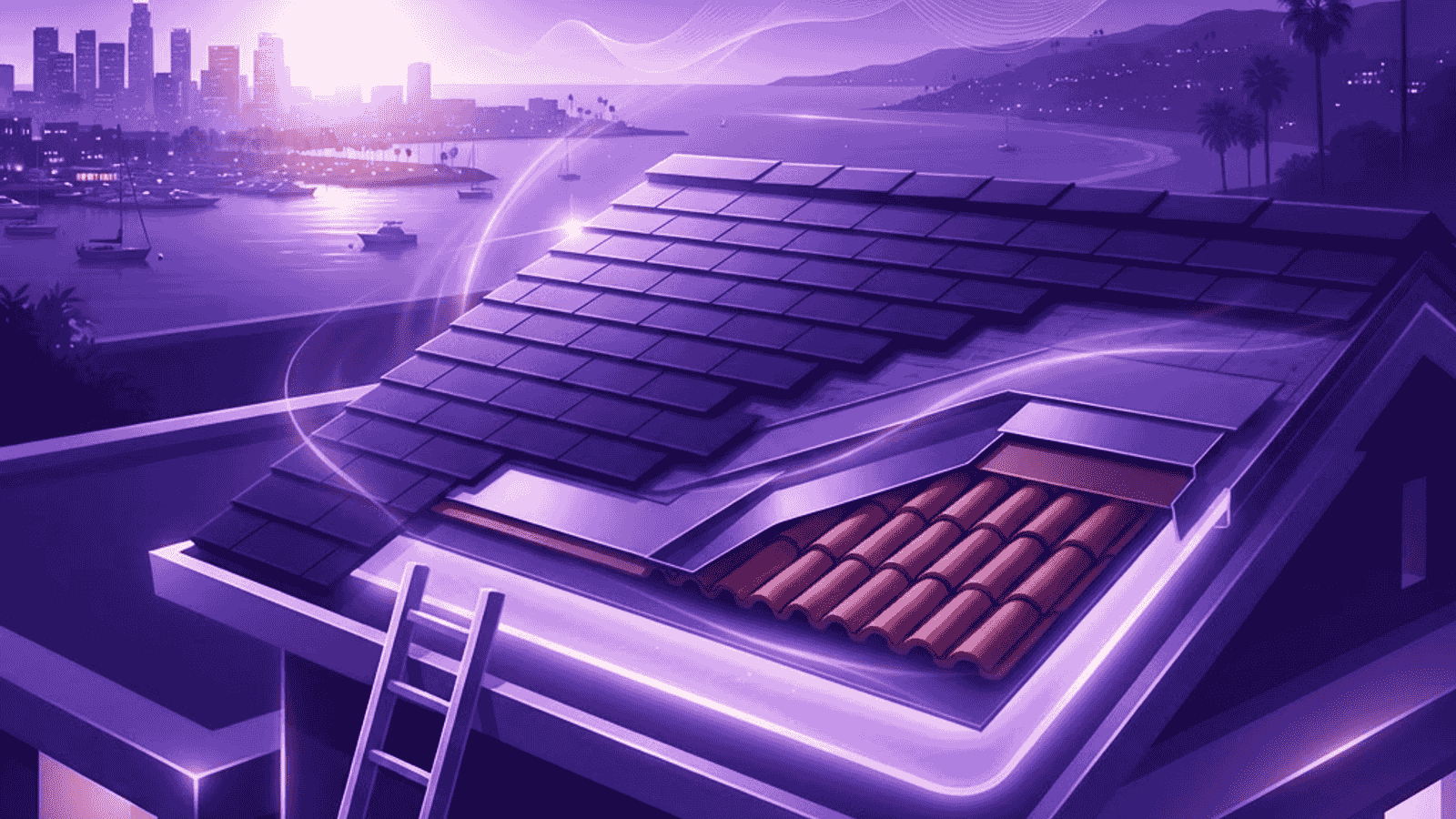
How Long Beach Weather Actually Damages Roofs
It is tempting to assume that a mild coastal climate is easy on roofs. In practice, Long Beach roofs fail from a combination of stresses that differ sharply from those in colder regions. Ultraviolet exposure is the primary aging mechanism: months of intense sun degrade asphalt binders, embrittle underlayment, chalk out coatings, and dry the sealants around penetrations. Daily thermal cycling, where surfaces heat substantially by afternoon and cool quickly after sunset, drives expansion and contraction that loosens fasteners and opens laps.
Salt air compounds the problem near the coast, corroding exposed fasteners, flashing, drip edge, and vents. Homes within a mile or two of the shoreline see galvanized components fail years earlier than they would inland, which is why experienced local roofers specify stainless or heavily coated hardware in those zones.
Then rainfall arrives in concentrated bursts. Because Long Beach receives most of its precipitation in a handful of winter storms, roofs sit dry for long stretches and are then tested hard. Leaks that would appear gradually in a wetter climate instead show up all at once, frequently at flashing, valleys, skylight curbs, parapet transitions, and the low-slope sections common on additions and mid-century homes.
The Top 10 Roofing Contractors Serving Long Beach
1. Harbor Ridge Roofing handles full residential replacements across asphalt shingle, concrete and clay tile, and metal systems. Their proposals are unusually specific about underlayment type, flashing details, ventilation, and fastener specification rather than listing only a shingle brand.
2. Pacific Flat Roof Systems specializes in low-slope assemblies. Single-ply membrane, modified bitumen, and fluid-applied coatings are installed with attention to drainage design, since ponding water is the leading cause of low-slope failure on the city's flat-roofed additions and duplexes.
3. Bixby Tile Roof Restoration focuses on the clay and concrete tile roofs common on Spanish Revival homes. Because tile often outlasts the underlayment beneath it, their core service is careful tile removal, full underlayment replacement, and reinstallation of the original tile, preserving appearance at lower cost than replacement.
4. Belmont Coastal Metal Roofing concentrates on standing seam and metal panel systems selected for marine environments. Coating systems, concealed fastener design, and corrosion-resistant hardware are chosen specifically for shoreline exposure.
5. Signal Hill Roof Repair & Leak Detection is known for diagnostics rather than replacement. Water testing, infrared moisture scanning, and attic inspection allow them to locate the actual entry point, which is frequently far from where the ceiling stain appears.
6. Long Beach Emergency Roof Response provides storm response including tarping, temporary patching, and documentation for insurance claims. Rapid mobilization during winter storm events limits interior damage while permanent repairs are scheduled.
7. Alamitos Gutter & Drainage Roofing treats water management as part of the roof system. Seamless gutters, oversized downspouts, scupper and overflow correction, and underground drainage discharge prevent the fascia rot and foundation issues that poor runoff creates.
8. Cypress Commercial Roofing Group serves apartment buildings, retail centers, and industrial properties. Roof asset assessments, phased capital planning, warranty-backed membrane installation, and preventive maintenance programs suit owners managing multiple buildings.
9. Rose Park Solar-Ready Roofing coordinates roofing with photovoltaic installation. Sequencing replacement before solar, using proper flashed mounts rather than sealant-dependent penetrations, and planning panel layout around vents avoids the expensive mistake of mounting an array on an aging roof.
10. Seaside Skylight & Roof Penetration Specialists focuses on the details where most leaks originate. Skylight replacement with proper curbs and step flashing, chimney and vent flashing rebuilds, and correction of previous sealant-based repairs are their specialty.
Trends in Roofing Materials and Practice
Cool roofing has moved from optional to expected. California energy standards encourage high solar-reflectance materials on many projects, and reflective shingles, tiles, coatings, and membranes measurably reduce attic temperatures and cooling loads in a climate with long hot seasons.
Synthetic underlayment has largely replaced traditional felt on quality installations. It resists tearing, tolerates extended sun exposure during construction, and lies flatter, which matters when a roof is opened during a dry season and finished over several days.
Ventilation and insulation are now treated as part of the roof rather than separate concerns. Balanced intake and exhaust ventilation extends material life and reduces moisture accumulation, and many local retrofits pair a new roof with attic air sealing and added insulation.
Solar integration has changed replacement timing decisions. Because removing and reinstalling an array is costly, homeowners increasingly replace roofs preemptively before adding panels, and roofers now design layouts collaboratively with solar installers.
How to Choose a Roofing Contractor
Verify licensing, bonding, and insurance. Roofing work in California requires a C-39 Roofing Contractor license, and the contractor should carry general liability and workers' compensation coverage. Request certificates directly and confirm the license is active.
Insist on a detailed written scope. A credible proposal names the underlayment, flashing materials and gauge, fastener type, ventilation components, drip edge, valley treatment, tear-off layers, deck repair allowance, permit responsibility, and cleanup terms. Proposals that list only a brand name and a price hide the details where quality lives.
Understand the two warranties. Manufacturer warranties cover materials and sometimes require certified installation, while workmanship warranties cover the installation itself. Most leaks trace to workmanship, so the length and clarity of that second warranty matters more than the marketing on the first.
Require permits and inspection. Reroofing in Long Beach is permitted work, and an inspected roof creates documentation that protects resale value.
Be cautious with pricing extremes and pressure tactics. Large upfront deposits, insistence on immediate signatures, and quotes far below competitors usually indicate thin scope, uninsured labor, or corners cut on underlayment and flashing that will not be visible until the first serious storm.
Final Thoughts
A roof is the single most consequential building assembly on a home, and in Long Beach it fails through sun degradation, salt corrosion, and concentrated winter rain rather than snow load. The contractors profiled here have earned recognition by specifying appropriate materials, executing flashing and drainage details carefully, and standing behind their workmanship. Choosing based on documented scope rather than headline price is the most reliable way to buy a roof that lasts its full expected life.