
Roofing in One of America's Wettest Building Climates
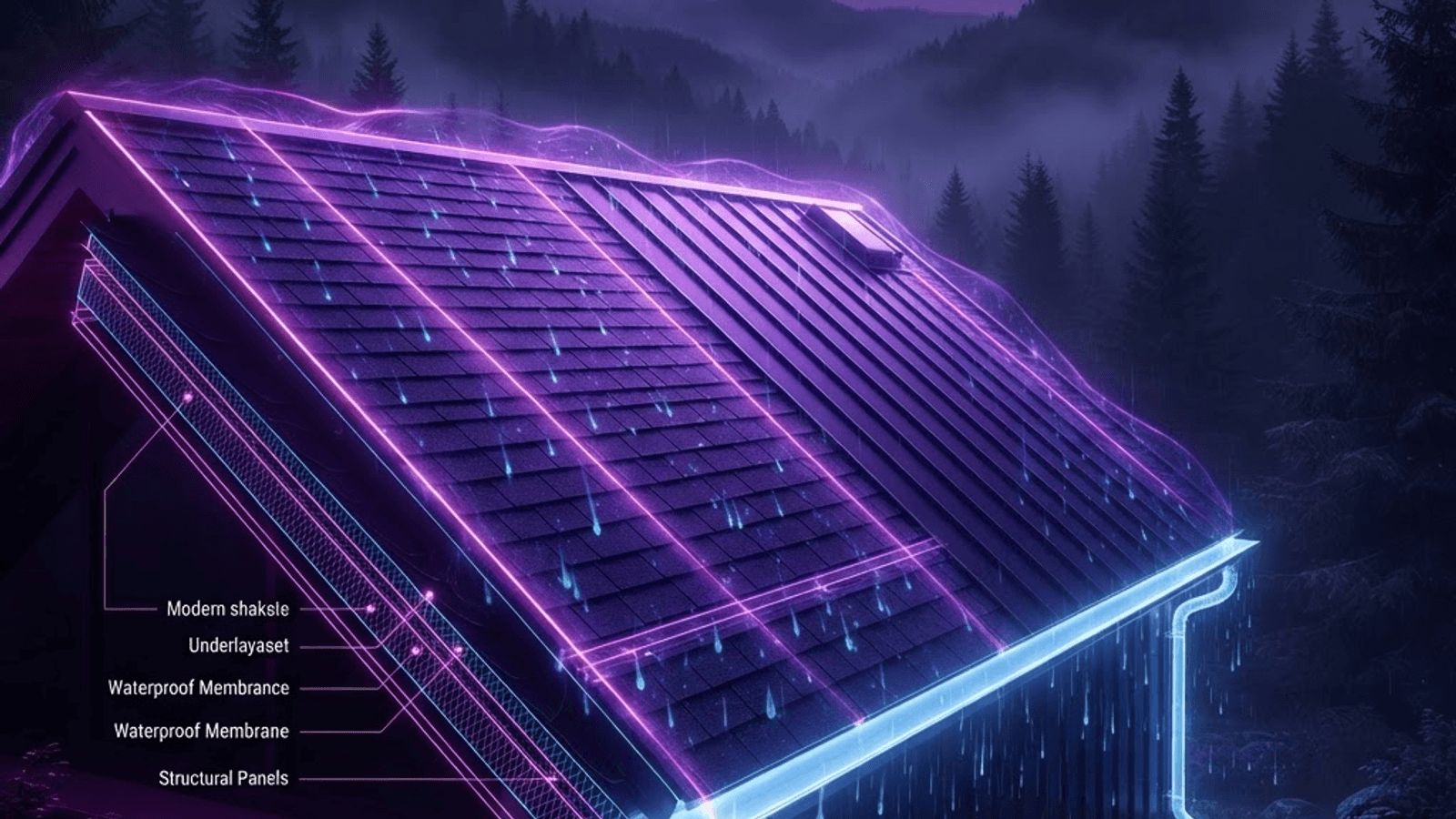
A roof in Eugene faces conditions that would be considered extreme in most of the country. Rainfall arrives not as occasional heavy storms but as persistent moisture stretching from October through June, keeping surfaces damp for months at a time. That sustained wetness promotes moss and algae growth that lifts shingle edges and holds water against the roof deck. Shaded north-facing slopes under Douglas fir canopy stay wet almost continuously and accumulate needle debris that traps moisture in valleys and behind chimneys. Summer brings the opposite stress, with intense UV exposure and thermal cycling. A roof installed without accounting for these conditions will underperform its warranty by years.
Materials That Work Here
Architectural asphalt shingles remain the dominant choice, and modern algae-resistant versions with copper granules perform substantially better in valley conditions than standard products. Metal roofing has gained significant ground, offering fifty-year service life, excellent shedding of needles and debris, and strong performance on the low-slope sections common in mid-century homes. Composite and synthetic shake products provide the cedar look without the maintenance burden that real shake demands in a wet climate. Flat and low-slope areas require single-ply membrane systems such as TPO rather than shingles, and one of the most common failures local roofers encounter is shingles improperly installed below minimum slope.
The Ten Roofing Contractors to Consider
1. Bennett and Sons Roofing
A long-established Eugene contractor with deep local experience across residential re-roofs and repairs. The company is known for thorough tear-off practice, proper deck inspection before installation, and clear communication about what is found once the old material comes off.
2. Ridgeline Roofing and Restoration
Handling both roofing and related exterior restoration, this firm addresses the water damage that frequently accompanies a failed roof. Single-contractor accountability across roof, gutters, and affected trim simplifies what can otherwise be a fragmented repair.
3. Emerald Roofing
Locally owned and focused on the Eugene and Springfield market, Emerald handles asphalt, metal, and low-slope systems. Customers cite straightforward estimates that specify materials and underlayment rather than vague descriptions, which makes bid comparison meaningful.
4. Jobin Roofing
With a strong regional reputation, Jobin serves residential and commercial clients and handles complex roof geometry including multiple dormers, valleys, and additions where flashing detail determines success or failure.
5. Pacific Pride Roofing
This contractor emphasizes manufacturer certification, which allows it to offer extended system warranties covering both materials and workmanship. For homeowners planning to stay long term, that combined coverage carries real value.
6. Cascade Roofing and Sheet Metal
In-house sheet metal capability distinguishes this company, allowing custom flashing, chimney crickets, and metal roofing fabricated to the specific dimensions of a project rather than adapted from stock parts. Flashing is where most roofs actually leak, so this matters.
7. Willamette Valley Roofing
Serving the broader valley including rural properties, this firm handles agricultural buildings and outbuildings alongside residential work. Metal roofing over large spans is a particular strength.
8. Advantage Roofing
Focused on residential re-roofing with an emphasis on efficient project execution, typically completing standard homes within a compressed schedule. Minimizing the exposure window during Eugene's wet season is a genuine practical benefit.
9. Northwest Roof Maintenance
Rather than replacement, this provider specializes in cleaning, moss treatment, minor repair, and preventive maintenance. Given that moss is the leading cause of premature roof failure locally, regular professional treatment can add years of service life at modest cost.
10. Summit Roofing Solutions
Rounding out the list, Summit handles commercial low-slope membrane systems alongside residential work. Property owners with flat-roof commercial buildings benefit from the specialized equipment and detailing experience those systems require.
Reading a Roofing Bid Properly
Comparable bids must specify the same things. Confirm whether the quote includes full tear-off or a layover, since layovers hide deck problems and shorten system life. Check the underlayment specification, because synthetic underlayment and ice-and-water shield in valleys and at eaves significantly outperform basic felt in this climate. Verify that flashing will be replaced rather than reused, that new pipe boots are included, and whether ventilation will be assessed and corrected. Confirm the contractor is CCB licensed and carries both liability insurance and workers compensation, and ask about the labor warranty separately from the manufacturer material warranty.
Ventilation and Attic Health
Many Eugene roof failures originate inside the attic rather than above it. Inadequate ventilation traps warm moist air against the underside of the deck, causing condensation, sheathing deterioration, and mold. Balanced intake at the soffits and exhaust at the ridge is essential, and blocked soffit vents stuffed with insulation are extremely common in homes that have had attic insulation added over the years. Any competent re-roof includes an attic assessment, and a contractor who never looks in the attic is not evaluating the whole system.
Maintenance Through the Wet Season
Keep gutters clear, particularly during the autumn needle drop that overwhelms valley homes with conifer canopy. Remove accumulated debris from roof valleys and behind chimneys where it holds water. Treat moss with an appropriate product rather than pressure washing, which strips granules and voids warranties. Trim branches back from the roof surface to reduce both debris and shade. Schedule a professional inspection every two to three years, and always after a significant wind event. These habits routinely extend a roof's service life by five years or more in Eugene conditions.