
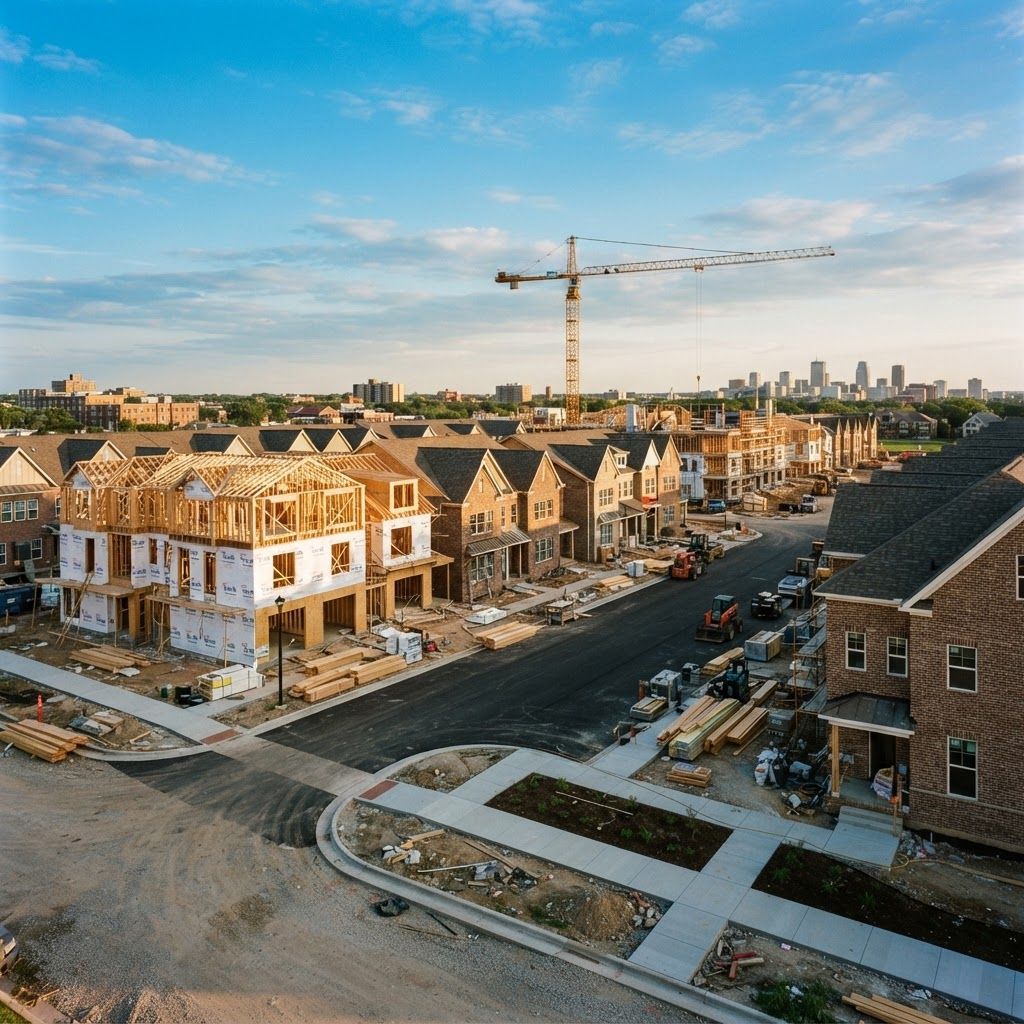
Residential development in St. Louis is a study in contrasts. Within a twenty-mile radius, builders are converting century-old brick warehouses into loft residences, infilling vacant city lots with modern townhomes, and platting entire master-planned neighborhoods across former farmland in St. Charles County. This diversity reflects the region's underlying economics: relatively affordable land on the periphery, an enormous stock of architecturally significant older buildings near the core, and historic tax credit programs that make rehabilitation financially viable in ways they are not in many other markets.
The Structure of the Local Development Market
Three developer types dominate. Production builders construct large volumes of homes from standardized plans in new subdivisions, competing primarily on price, delivery timeline, and included features. Custom and semi-custom builders work on scattered lots or in premium enclaves, offering architectural flexibility at higher cost per square foot. Urban infill and adaptive reuse developers focus on the city itself, redeveloping historic buildings and underused parcels into apartments, condominiums, and townhouses. Each model carries different risks for buyers, from timeline uncertainty in custom work to limited personalization in production communities.
The 10 Best Residential Real Estate Developers in St. Louis
1. McBride Homes
The largest homebuilder in the St. Louis region, McBride Homes has delivered tens of thousands of homes across the metro. Its strength is scale-driven value: standardized floor plans, in-house financing and title services, and communities positioned at accessible price points for first-time and move-up buyers.
2. Fischer and Frichtel
A long-standing regional builder, Fischer and Frichtel focuses on well-located communities with strong design detail and quality finishes. It tends to operate in the mid-to-upper market, appealing to buyers who want new construction without moving to the far exurbs.
3. Payne Family Homes
Payne Family Homes built its reputation on customer experience and flexible plan customization within a production framework. Buyers frequently mention responsive project management and the ability to modify layouts more than competitors allow.
4. Consort Homes
Consort emphasizes energy efficiency and building science, with construction practices aimed at lower operating costs and better indoor comfort. For buyers focused on long-term utility expense, that technical focus is a genuine differentiator.
5. Restoration St. Louis
One of the most important adaptive reuse developers in the region, Restoration St. Louis specializes in bringing historic buildings back into productive use, including significant residential conversions. Its projects have been catalysts in several city neighborhoods.
6. Green Street Real Estate Ventures
Green Street is a diversified developer active in residential, commercial, and mixed-use projects across the metro. Its residential work often anchors larger district-scale redevelopment, combining housing with retail and public space.
7. UIC (Urban Improvement Construction)
UIC pairs architecture, development, and construction in one integrated practice focused on contemporary urban housing. Its modern infill homes and small multifamily projects have helped redefine expectations for new construction inside the city.
8. Advantes Group
Advantes has been active in city neighborhoods with historic rehabilitation and new infill housing, frequently working in areas where careful development has meaningful neighborhood-stabilizing effects.
9. Lombardo Homes
Lombardo brings a multi-state production platform to the St. Louis market, offering a range of home designs across suburban communities with the process discipline of a larger operator.
10. Rothschild Development
Rothschild has developed notable multifamily and mixed-use residential projects in the central corridor, contributing to the growth of urban rental housing in high-demand neighborhoods.
What Buyers Should Evaluate
New construction removes some risks and introduces others. Request the builder's standard warranty in writing and understand what is covered in year one versus years two through ten. Ask which items are truly standard versus upgrades, because base pricing comparisons are meaningless without a matched specification list. Investigate the subdivision's homeowners association documents, assessment history, and whether the developer still controls the board. For urban rehabilitation projects, ask about the scope of systems replacement, since a beautiful renovation with original plumbing and knob-and-tube wiring carries hidden cost. Independent inspections during framing and before closing are worth every dollar, even on brand-new homes.
Market Trends Shaping Development
Several dynamics are influencing what gets built. Construction costs and interest rates have pushed builders toward smaller footprints and attached product types, with townhomes and villas gaining share against large single-family homes. Demand for main-floor primary suites continues to rise as the region's older homeowners downsize without leaving the metro. Downtown and central corridor development has shifted decisively toward rental apartments rather than for-sale condominiums, reflecting financing realities. Meanwhile, historic tax credits remain a defining feature of the St. Louis market, keeping rehabilitation competitive with new construction in a way few American cities can match.
Final Thoughts
The best residential developer in St. Louis depends entirely on what kind of home you want and where. Production builders deliver predictable value in the suburbs, custom builders deliver control at a premium, and the region's rehabilitation specialists offer architectural character that new construction simply cannot reproduce. Whichever path you choose, evaluate the builder's completed communities in person, talk to residents who closed two or three years ago, and read every document before signing.