
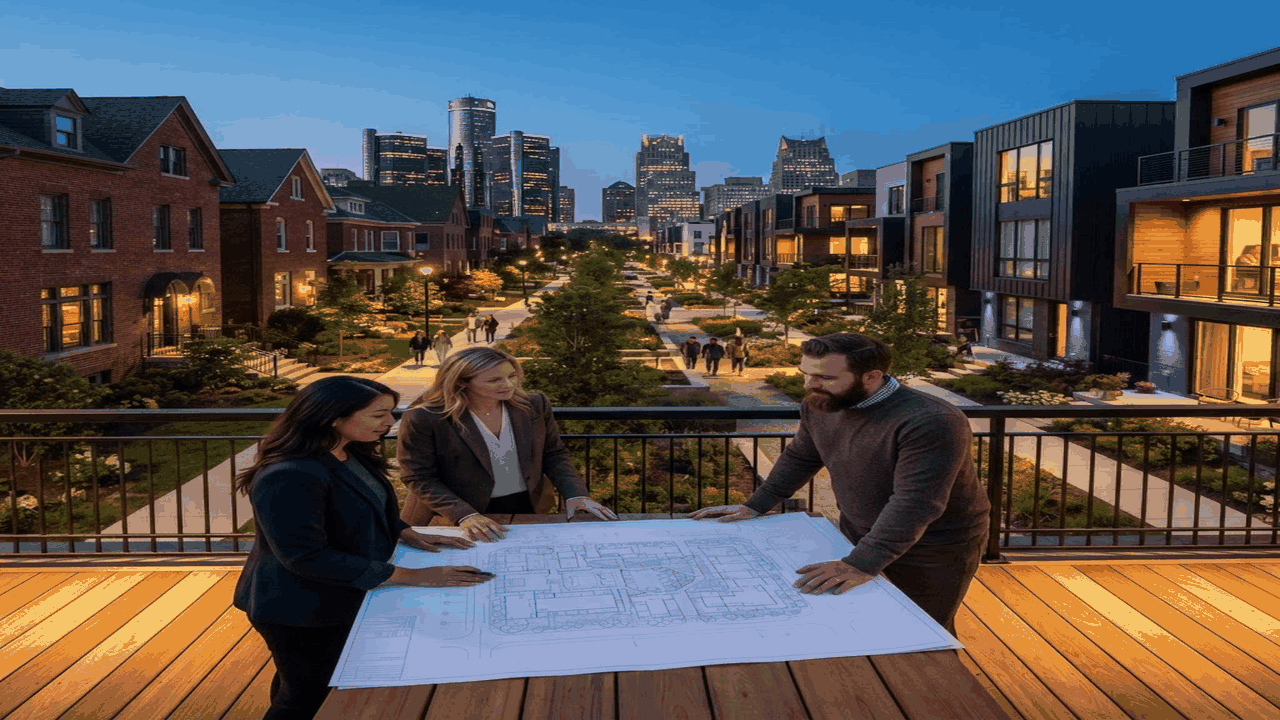
A City Rebuilding Its Neighborhoods
Few American cities have undergone as dramatic a residential transformation as Detroit over the past decade. Once defined by vacancy and disinvestment, entire neighborhoods are now being reimagined through thoughtful development that balances affordability, design, and community character. Residential developers have become central figures in this comeback story, converting long-neglected buildings into vibrant homes and constructing new communities on formerly empty lots.
The city's development momentum is fueled by a combination of factors: relatively affordable land, strong civic incentives, a passionate local workforce, and renewed confidence from investors. The result is a residential market that offers everything from restored historic mansions in Boston-Edison to sleek modern townhomes in Brush Park.
Leaders in Detroit Residential Development
Several firms have distinguished themselves through the scale and quality of their work. Bedrock Detroit has become synonymous with the downtown and Midtown revival, delivering residential towers and mixed-use projects that anchor entire districts. Their commitment to walkable, amenity-rich living has reshaped expectations for urban housing in the city.
The Platform has earned recognition for its neighborhood-focused approach, developing projects in areas like the Fitzgerald and West Village that prioritize local businesses, green space, and community ownership. American Community Developers and MHT Housing have played essential roles on the affordable housing front, ensuring that Detroit's revival includes residents across the income spectrum.
Firms such as Shea and Woodborn Partners have built reputations for combining architectural distinction with sustainable building practices, delivering homes that are as energy-efficient as they are attractive.
Preservation Meets Innovation
One of the most compelling aspects of Detroit's residential development is the emphasis on preservation. The city's stock of historic homes and buildings is a defining asset, and the best developers treat these structures with reverence. Rather than demolishing, they restore original brickwork, woodwork, and architectural details while integrating modern systems for heating, cooling, and connectivity.
At the same time, new construction is embracing contemporary design and forward-looking technology. Smart home features, solar readiness, and modular building techniques are increasingly common in Detroit's newest residential projects, signaling a market that respects its past while planning for the future.
Trends Shaping the Market
Detroit's residential development is being shaped by several key trends. Mixed-income communities are becoming the norm as developers recognize that diverse, inclusive neighborhoods are more resilient and desirable. Sustainability is moving from a selling point to an expectation, with green roofs, efficient appliances, and native landscaping appearing throughout new projects.
There is also growing attention to transit-oriented development, with housing clustered near the QLINE streetcar and major corridors to reduce car dependence. Density is being embraced in the urban core while lower-density, family-oriented developments flourish in outlying neighborhoods.
What This Means for Buyers and Renters
For prospective residents, Detroit's development boom translates into an expanding range of high-quality housing options at price points that remain competitive compared to other major cities. Buyers can find beautifully restored historic homes, while renters can access modern apartments with amenities that were unimaginable in the city a decade ago.
Choosing a home built or restored by a reputable developer offers peace of mind regarding construction quality, long-term value, and community stability. As Detroit continues its ascent, the developers profiled here are laying the foundation for neighborhoods that will thrive for generations, making the city one of the most exciting residential markets in the country.
How We Evaluated Detroit's Leading Options
To develop this guide, we considered the factors that matter most to local residents, customers, and decision-makers: depth of experience, consistency of service, knowledge of Detroit, responsiveness, reputation, and the ability to adapt as needs change. We also looked for organizations that distinguish themselves through thoughtful processes rather than short-lived promotions. A strong local provider should understand the differences among downtown, Midtown, Corktown, the east and west sides, and the wider metro area. That context affects everything from pricing and availability to customer expectations and long-term value.
No single choice is ideal for everyone, so readers should treat this list as a practical starting point. Priorities vary by budget, schedule, location, desired level of support, and personal preferences. Before making a commitment, prepare a short list of questions, compare written details carefully, and ask how the organization handles unexpected challenges. Clear explanations, realistic expectations, and transparent policies are often better indicators of quality than a polished sales pitch alone.
Detroit is changing quickly, and the strongest organizations are changing with it while retaining the local knowledge that made them trusted in the first place. They invest in people, improve their services, listen to feedback, and build relationships that extend beyond a single transaction. Readers who take time to compare expertise, service quality, and fit will be better positioned to choose confidently. The goal is not simply to identify a famous name, but to find a dependable partner whose capabilities align with the outcome you want and whose approach reflects the energy, resilience, and community-minded character of Detroit.