
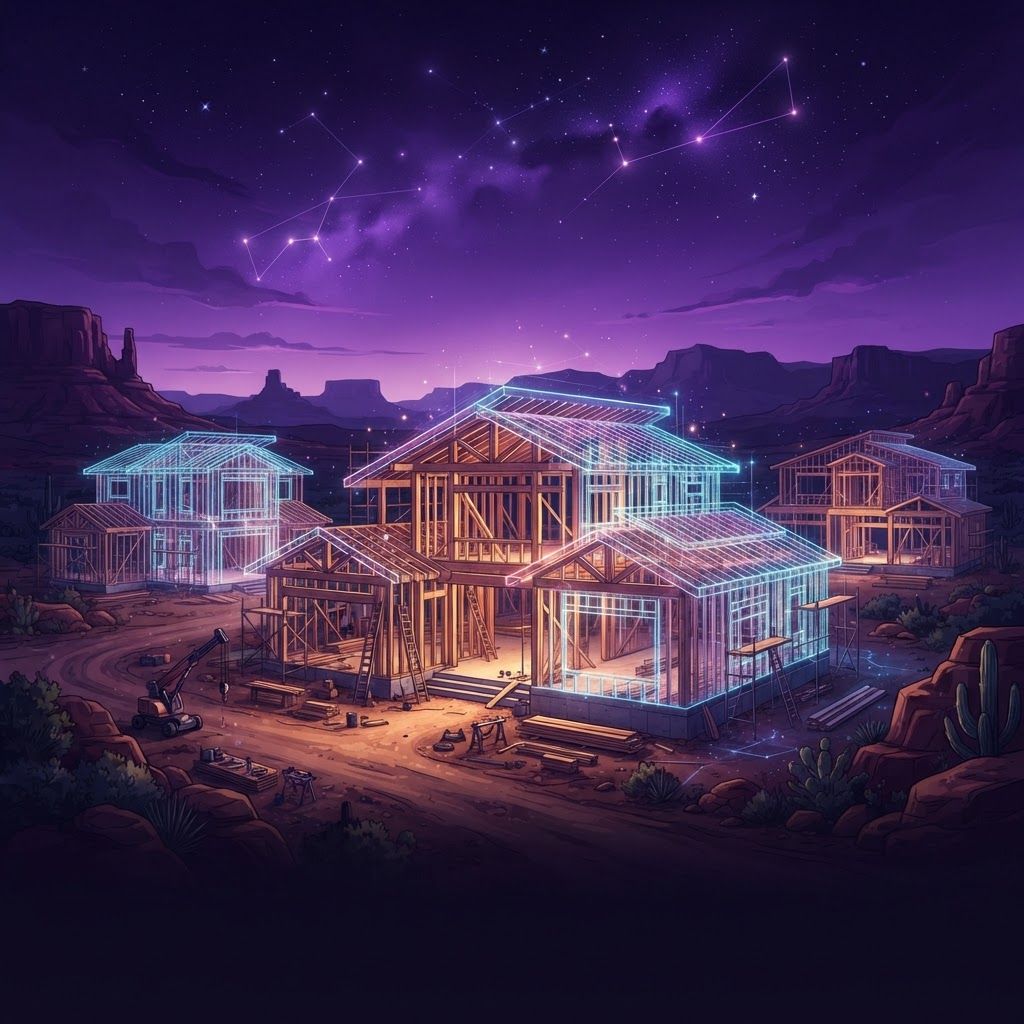
Residential Construction in a Desert City
Homebuilding in Tempe operates under constraints that shape every design and construction decision. Cooling loads dominate energy consumption, so orientation, glazing selection, insulation levels and roof reflectivity matter more here than almost anywhere else. Expansive and collapsible soils appear across parts of the valley, requiring engineered foundations. Water conservation influences landscaping and plumbing choices. And because the city is largely built out, most new residential work is infill, redevelopment or substantial renovation rather than tract expansion.
Understanding which type of builder suits a given project is the first practical step for any homeowner or investor. The categories below reflect how the local residential market is actually organised.
1. Custom Home Builders
Custom builders construct one-off homes designed specifically for a client and site. They coordinate closely with architects and structural engineers, manage extended timelines and handle bespoke details that production builders cannot accommodate. In an infill context, custom builders also navigate tight lots, neighbour relations and existing utility constraints.
2. Semi-Custom and Production Builders
Semi-custom builders offer a curated set of floor plans with selectable finishes and options. The approach controls cost and schedule by standardising structure while allowing personalisation of kitchens, bathrooms and exterior treatments. For buyers who want a new home without managing a full custom process, this segment offers the best balance.
3. Infill and Lot Redevelopment Specialists
Infill builders acquire underused lots or older properties and replace them with contemporary homes. This requires zoning knowledge, setback and height analysis, and often variance applications. Success depends as much on entitlement skill as on construction ability, and experienced infill builders assess feasibility thoroughly before committing.
4. Accessory Dwelling Unit Builders
Accessory dwelling units have become a significant residential category. These compact secondary residences serve multigenerational households, provide rental income and add housing supply without changing neighbourhood character. Specialists in this work manage the specific permitting pathway, utility connections and parking considerations that separate an accessory unit from a standard addition.
5. Whole-House Renovation Contractors
Much of Tempe's housing stock dates from earlier decades and benefits enormously from comprehensive renovation. Whole-house contractors modernise layouts, replace failing mechanical and electrical systems, upgrade insulation and glazing, and bring properties up to current code. Preserving the existing structure while transforming its performance is often more economical than demolition.
6. Addition and Second-Storey Builders
Homeowners who value their location frequently choose to expand rather than move. Addition specialists handle structural reinforcement, roof tie-ins, foundation extension and matching existing finishes. Second-storey additions in particular require careful structural analysis of the existing foundation and framing.
7. Energy-Efficient and High-Performance Builders
High-performance builders focus on measurable outcomes: blower-door tested envelope tightness, continuous exterior insulation, properly sealed and insulated ducts within conditioned space, reflective roofing and correctly sized mechanical equipment. In a cooling-dominated climate, these measures reduce operating costs substantially and improve comfort noticeably.
8. Solar-Ready and Sustainable Construction Firms
Arizona's solar resource is exceptional, and builders who plan for it design roof planes with adequate unobstructed south and west exposure, install conduit pathways during framing and size electrical panels for future inverter and battery capacity. Sustainable builders also address water efficiency, drought-adapted landscaping and material selection with lower embodied impact.
9. Outdoor Living and Pool Construction Specialists
Given the climate, outdoor space is genuinely usable for much of the year. Specialists build shaded patios, ramadas, outdoor kitchens, fire features and pools. Thoughtful design here focuses on shade structures and evaporative comfort strategies that extend usability into the hotter months rather than simply adding hardscape.
10. Investment Property and Rental Renovation Firms
With a large student and young professional rental market, contractors serving investors focus on durability, fast turnaround between tenancies and cost-effective finishes. These firms understand which upgrades produce rental premium and which do not, and they schedule work around lease cycles.
Design Decisions That Matter Locally
Several choices have outsized impact in this climate. Orientation and glazing on west-facing elevations drive afternoon heat gain more than any other factor. Deep overhangs, shade screens and strategically placed trees reduce cooling load meaningfully. Light-coloured or reflective roofing lowers attic temperatures dramatically. Placing ductwork inside conditioned space rather than in a scorching attic can improve system efficiency more than upgrading the equipment itself.
Selecting and Managing Your Builder
Verify licensing, insurance and bonding, then review completed projects of comparable scope. Compare bids on identical specifications so allowances and inclusions are genuinely equivalent. Insist on a written contract covering scope, schedule, milestone-based payments, change order procedure and warranty terms. During construction, expect regular progress reporting and document every decision in writing.
Final Thoughts
The strongest residential construction companies in Tempe combine desert-specific building science with disciplined project management. Choosing a builder who can explain why a particular assembly performs well in this climate, rather than simply quoting a price per square foot, is the clearest indicator of long-term value.