
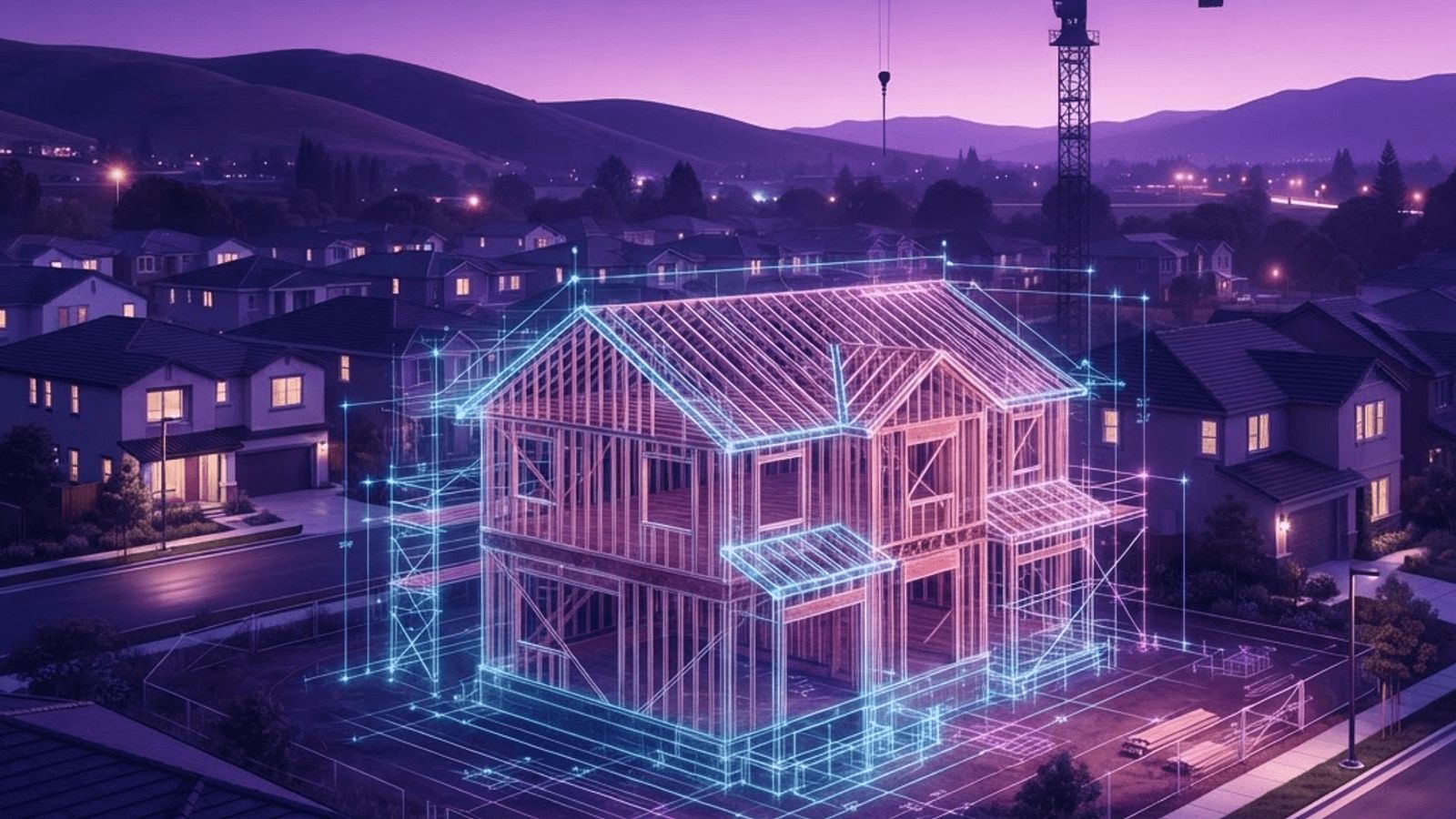
Residential Construction in a Growing Valley
Santa Clarita has been one of Los Angeles County's most consistent residential growth stories for decades. Master-planned development in Valencia established a template of walkable paseos, community amenities, and coordinated architecture that shaped the entire valley. Newer development continues in the northern and eastern portions of the city, while established neighborhoods in Newhall, Saugus, and Canyon Country see steady renovation, addition, and infill activity. Canyon and hillside areas support custom home construction on challenging lots.
The result is a construction market with distinct segments. Large-scale production builders deliver planned communities. Custom builders handle one-off homes on difficult terrain. Renovation and addition specialists work within existing homes. And an increasingly large accessory dwelling unit sector has emerged following state legislation that dramatically simplified approvals.
What Separates Strong Residential Builders
Evaluate builders on four dimensions. Technical competence comes first: structural work in a seismic region requires engineering coordination, hillside construction requires soils analysis and drainage design, and California's energy code compliance requires genuine understanding of building envelope performance rather than checkbox compliance.
Second, project management. Residential construction involves dozens of trades, long material lead times, and multiple inspection gates. Builders who maintain detailed schedules, communicate weekly, and manage subcontractors proactively finish on time. Those who do not produce projects that drag on for a year past their estimate.
Third, financial stability and transparency. Ask about how allowances work, how change orders are priced, and whether the contract includes escalation clauses for material costs. Verify licensing, bonding, insurance, and workers compensation independently.
Fourth, quality evidence. Tour completed homes, not just models. Ask to visit an active job site, where organization, cleanliness, and framing quality reveal a great deal. Speak with homeowners who finished a project one to three years ago, since warranty responsiveness only becomes visible after occupancy.
The Top 10 Residential Construction Companies in Santa Clarita
1. Valencia Residential Builders. A prominent local builder handling custom homes and substantial additions with a reputation for structural quality and schedule discipline. Its strength is thorough pre-construction planning, including detailed selections and engineering before ground breaks, which minimizes mid-project changes.
2. Santa Clarita Custom Home Construction. Focused on architect-designed single-family homes, including hillside and canyon lots that require grading, retaining structures, and specialized foundation systems. Experience with the county and city approval processes for constrained lots is a significant differentiator.
3. SCV Accessory Dwelling Unit Builders. Purpose-built companies delivering detached and attached accessory dwelling units, garage conversions, and junior units. This has become the most active residential category in the valley, and specialists move through permitting and utility connection far more efficiently than generalists.
4. Newhall Home Additions and Expansion Contractors. Second-story additions, room expansions, and floor plan reconfigurations in established neighborhoods. This work is technically demanding because it requires integrating new structure with existing framing, upgrading electrical service, and matching exterior finishes convincingly.
5. Master-Planned Community Production Builders. National and regional production builders operating in the valley's newer developments deliver homes at scale with standardized plans, warranty programs, and design center selections. For buyers who want a new home without managing construction, this route offers predictability and financing integration.
6. Saugus Whole-House Renovation Specialists. Companies focused on comprehensive interior rebuilds, taking dated homes down to studs and reconstructing with modern layouts, systems, and finishes. Given the age of much of the valley's housing stock, this segment delivers substantial value relative to buying new.
7. Canyon Country Green and Energy-Efficient Builders. Builders emphasizing high-performance envelopes, heat pump systems, solar integration with battery storage, and all-electric construction. As energy costs rise and codes tighten, expertise here affects both compliance and long-term operating cost.
8. Hillside and Foundation Engineering Contractors. Specialists in caisson and pier foundations, retaining walls, drainage systems, and slope stabilization. On the valley's steeper lots, these contractors are effectively the difference between a buildable property and an unbuildable one.
9. Wildfire-Resilient Construction Specialists. Builders experienced in ignition-resistant assemblies, ember-resistant venting, tempered glazing, non-combustible siding, and defensible space design. In hazard severity zones throughout the canyon areas, this expertise is a code requirement and a genuine safety investment.
10. Multifamily and Infill Residential Developers. Companies building townhomes, small apartment projects, and infill housing serve the valley's demand for attainable housing. Their work involves different code sections, fire separation requirements, and parking standards than single-family construction.
Trends Shaping Residential Construction
Accessory dwelling units remain the dominant growth story, driven by rental income potential and multigenerational living. Electrification is accelerating, with all-electric homes becoming increasingly standard and electrical service upgrades common in renovations. Wildfire resilience is now a design driver rather than a code afterthought in hillside areas. Water-conscious landscaping and fixtures have become expected. Prefabrication and panelized components have gained ground as a response to labor availability and schedule pressure. And design preferences have shifted toward flexible spaces, home offices, and indoor-outdoor connection.
Making a Smart Decision
Begin with a realistic budget including a contingency of at least fifteen percent, because residential construction reliably uncovers surprises inside existing walls and beneath existing soil. Interview at least three builders and compare detailed scopes rather than headline numbers. Verify license, insurance, and references independently. Insist on a written schedule with milestones and a clear change order process. Understand the permit path before signing, and ask who is responsible for each approval. Document the project photographically as it progresses.
Santa Clarita's residential construction market is deep, competitive, and generally professional. Homeowners who invest time in pre-construction planning and builder verification consistently end up with better outcomes than those who chase the fastest start date or the lowest bid.