
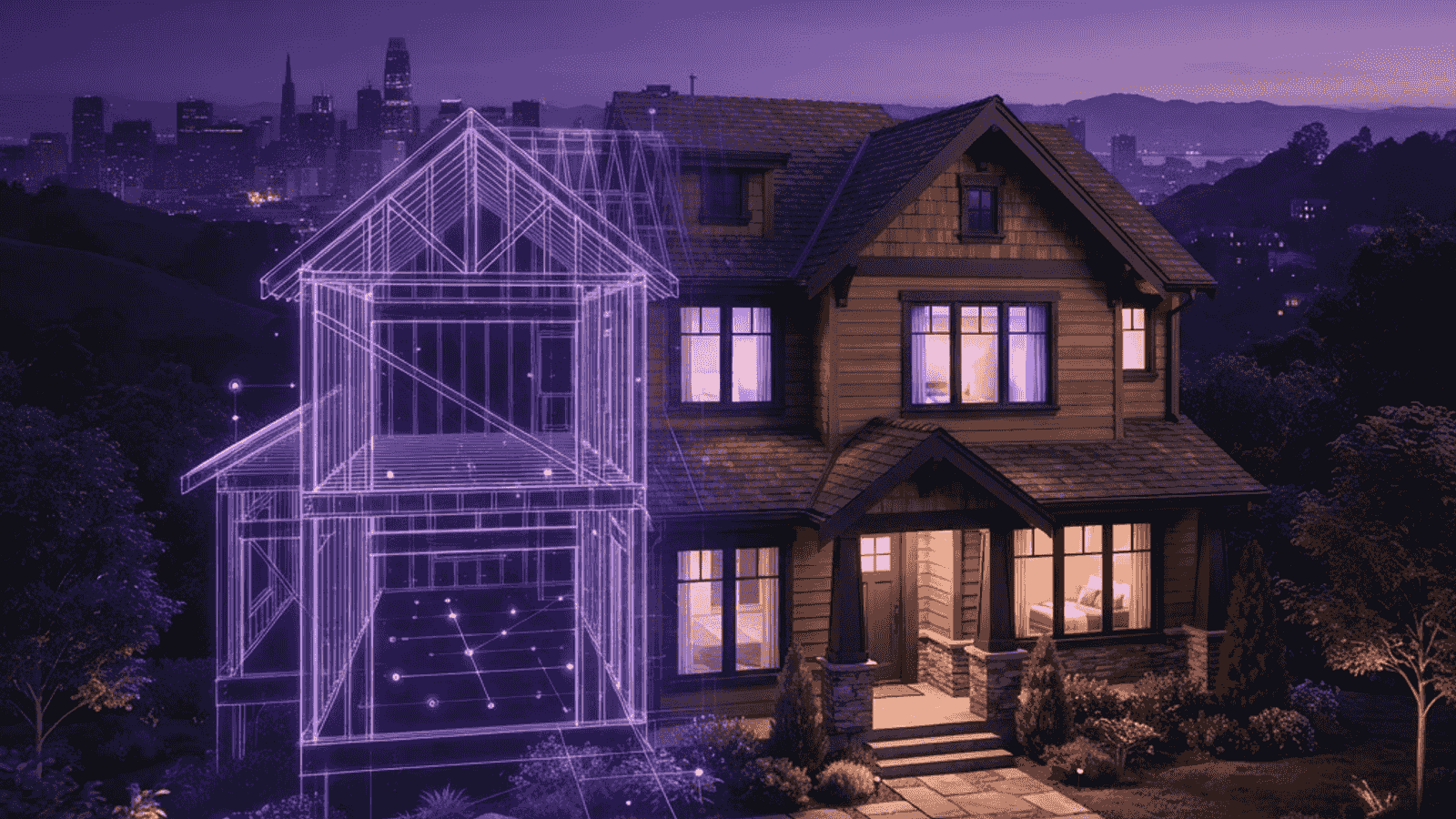
The Oakland Residential Market
Residential construction in Oakland is defined by constraint and character. Available land is limited, so most work involves renovation, additions, accessory dwelling units, or infill on complex lots rather than open greenfield development. Much of the housing stock dates from the early twentieth century, which means beautiful architecture combined with outdated framing, knob and tube electrical remnants, galvanized plumbing, and foundations that predate seismic understanding.
Layered onto this are demanding site conditions. Hillside parcels require geotechnical investigation and engineered foundations. Flatland areas closer to the bay may involve expansive soils or elevated groundwater. Neighborhood context and, in some districts, design review shape what can be built. Successful residential builders here are as much problem solvers as they are craftsmen.
Ten Residential Construction Companies in Oakland
1. Bay Area Custom Homes
Bay Area Custom Homes focuses on ground-up custom residences and whole-house rebuilds, managing architecture coordination, engineering, permitting, and construction as an integrated process. Clients highlight detailed preconstruction budgeting, which reduces the surprises that derail custom projects.
2. Oakland Hills Residential Builders
Building on a slope is fundamentally different from building on flat ground. Oakland Hills Residential Builders specializes in drilled pier and grade beam foundations, retaining structures, and drainage systems that manage winter runoff. Fire-hardened assemblies are standard practice given proximity to open space.
3. Lake Merritt Historic Restoration
The neighborhoods around Lake Merritt contain some of the finest Victorian and Craftsman housing in the region. Lake Merritt Historic Restoration performs structural rehabilitation while preserving original detailing, from window sash restoration and plaster repair to reproduction of missing trim profiles.
4. Temescal Accessory Dwelling Construction
Accessory dwelling units have become one of the most active segments in Oakland residential building. Temescal Accessory Dwelling Construction handles detached units, garage conversions, and junior units, managing the utility, egress, and fire separation requirements that determine feasibility.
5. Fruitvale Home Builders
Fruitvale Home Builders delivers additions, second story expansions, and full remodels with an emphasis on clear communication and phased budgeting. Bilingual project management and realistic scheduling have earned strong word of mouth throughout the neighborhood.
6. Rockridge Kitchen and Bath Construction
Kitchens and bathrooms concentrate the highest cost per square foot in any home. Rockridge Kitchen and Bath Construction manages the plumbing rerouting, electrical capacity upgrades, waterproofing, and ventilation that these rooms demand, coordinating cabinetry and surface fabrication lead times to avoid stalled schedules.
7. Uptown Multifamily Residential
Small multifamily infill is a meaningful part of Oakland housing supply. Uptown Multifamily Residential builds duplexes, triplexes, and small apartment buildings, navigating the fire rating, sound isolation, and accessibility requirements that separate multifamily from single family construction.
8. Eastmont Foundation and Seismic
Foundation work is invisible and essential. Eastmont Foundation and Seismic performs foundation replacement, underpinning, cripple wall bracing, and anchor bolt retrofits to engineered specifications. In a region with active faults, this work protects both safety and property value.
9. Downtown Oakland Green Builders
Sustainable construction has moved from premium option to expectation. Downtown Oakland Green Builders emphasizes envelope air sealing, high performance insulation, heat pump systems, solar readiness, and low emission materials, delivering homes with lower operating costs and better indoor air quality.
10. Piedmont Avenue Residential Group
Piedmont Avenue Residential Group handles mid-size renovations and additions with a focus on craftsmanship in finish carpentry, tile, and millwork. The company works on a limited number of concurrent projects, which clients cite as the reason quality remains consistent.
How a Residential Project Actually Unfolds
Understanding the sequence prevents frustration. The process begins with feasibility, including zoning review, lot coverage limits, setbacks, and height restrictions. Design follows, moving from schematic concepts to construction documents. Structural engineering is required for most significant work, and hillside sites additionally require geotechnical reports.
Permitting comes next and often takes longer than owners expect, particularly when design review or variance requests are involved. Construction then proceeds through demolition, foundation, framing, rough mechanical electrical and plumbing, inspection, insulation, drywall, finishes, and final inspection. Each inspection milestone gates the next phase, so schedule discipline matters.
Budgeting Realistically
Bay Area construction costs are among the highest in the nation, driven by labor rates, permitting complexity, and seismic requirements. Build a contingency of ten to twenty percent into your budget, and more for older homes where opening walls frequently reveals unexpected conditions such as failed framing, prior unpermitted work, or hazardous materials requiring abatement.
Insist on allowances being clearly defined. Vague allowances for items such as tile, fixtures, and appliances are a common source of budget overruns because the initial figure was unrealistically low.
Evaluating a Builder
Verify the state license and confirm the classification and active status. Request proof of general liability and workers compensation coverage from the insurer. Ask for references from projects completed two or more years ago, since that reveals how the work has held up and how warranty issues were handled.
Visit an active job site. Organization, cleanliness, and safety practices on site tell you a great deal about how your project will be managed. Ask who will be on site daily and how often you will receive updates.
Current Trends
Electrification is now a defining trend, with heat pump water heating and space conditioning increasingly specified and electrical panels sized for future vehicle charging. Accessory dwelling units continue to expand as owners pursue rental income or housing for family members. Fire-resilient design has become mainstream in hill neighborhoods. Indoor air quality receives more attention, with balanced mechanical ventilation appearing in high performance renovations. And prefabricated wall panels and modular components are being used selectively to compress schedules amid skilled labor shortages.
Final Thoughts
The best residential construction company in Oakland is one with demonstrated experience in your specific project type, whether that is a hillside custom home, a historic restoration, an accessory dwelling unit, or a small multifamily building. Interview several firms, compare detailed scopes rather than headline prices, verify credentials independently, and choose the builder who communicates most clearly. That relationship, more than any material or design choice, determines how your project feels from start to finish.