
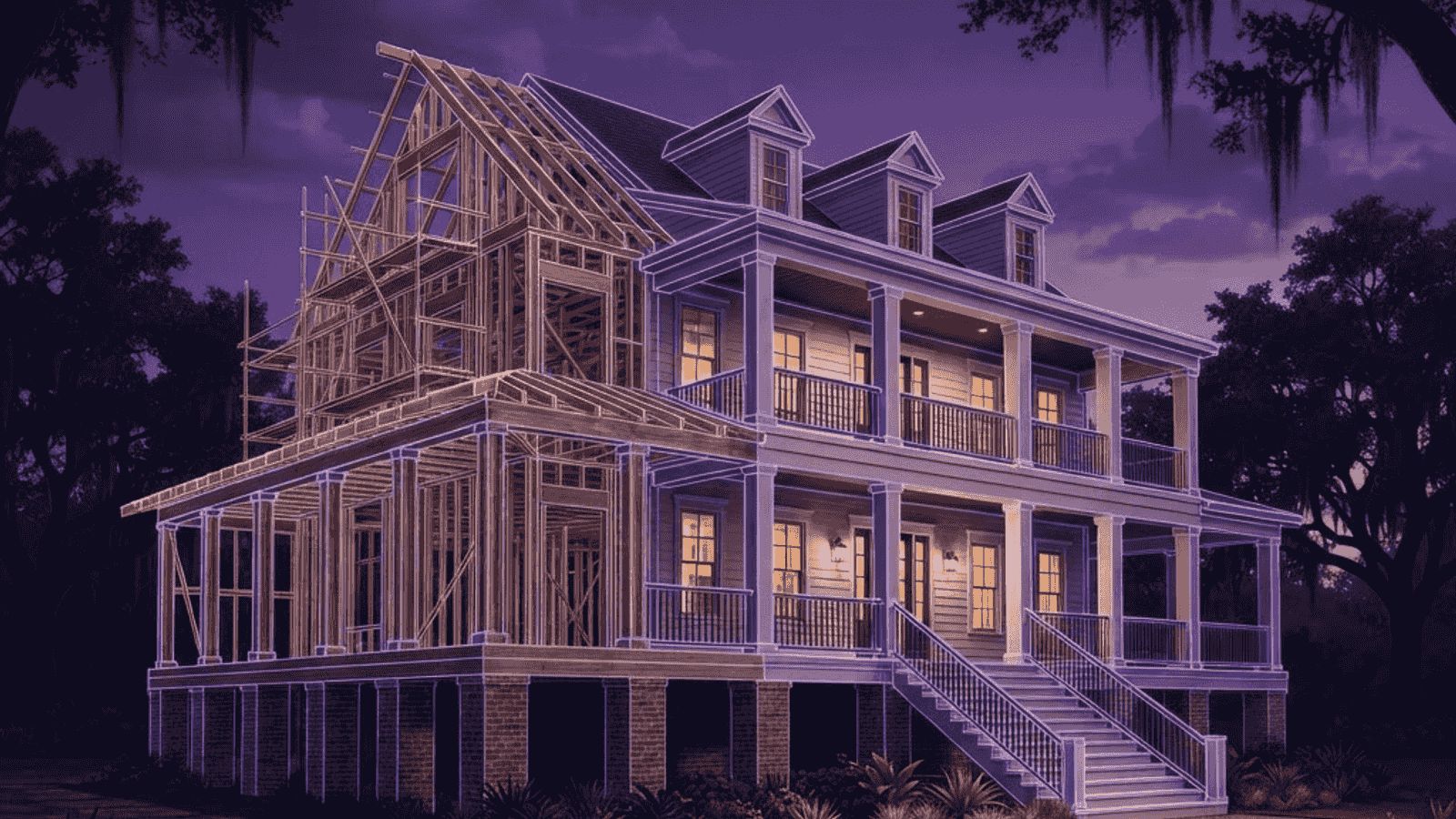
Residential Construction in a City Unlike Any Other
Homebuilding in New Orleans is a specialized craft. The region alluvial soil provides limited bearing capacity, which is why raised pier foundations have been standard here for centuries and why modern slab construction requires careful engineering. Elevation requirements tied to flood mapping influence design from the first sketch. Humidity averages high enough that moisture management, insulation strategy and mechanical sizing must be handled deliberately rather than by regional rule of thumb. Wind-load standards affect roof systems, sheathing attachment and window selection.
Neighborhood character adds another dimension. Shotgun houses, Creole cottages, center-hall homes, raised basements and camelbacks each carry proportions and details that residents recognize instantly. New construction that ignores this vocabulary reads as out of place, while thoughtful design that references it commands stronger long-term value. The builder categories below reflect the range of residential expertise available across the metro area.
1. Custom Home Builders
Custom builders design and construct one-of-a-kind homes tailored to a specific lot and client. Their value lies in problem solving: fitting a home onto a narrow city lot, orienting living spaces for shade and prevailing breezes, designing elevated ground levels that satisfy flood requirements without looking awkward, and integrating outdoor living space that works in a humid climate. Strong custom builders involve structural and mechanical engineers early, because soil conditions and moisture control decisions are far cheaper to solve on paper than in the field.
2. Production and Semi-Custom Homebuilders
Production builders offer predefined plans with selectable finishes, delivering lower cost and shorter timelines through repetition and purchasing efficiency. In suburban parishes surrounding New Orleans, this model dominates new subdivision development. Buyers benefit from predictable pricing, warranty programs and faster occupancy. The trade-off is limited flexibility, so it suits families whose needs align with existing plans rather than those with unusual site or lifestyle requirements.
3. Historic Home Renovation Builders
Renovating century-old housing stock is among the most respected work in the local industry. These builders repair rather than discard original elements: restoring wood windows and their weight-and-pulley mechanisms, replicating millwork, salvaging heart pine flooring, repairing lime plaster and reusing cypress. They also solve modern living needs within historic shells, adding air conditioning, updated electrical service, insulation and bathrooms without destroying the features that define the house. Working within architectural review guidelines is a routine part of their process.
4. Elevation and Flood-Resistant Construction Specialists
Given the region flood history, builders specializing in elevated and flood-resistant construction serve a critical role. Their work includes raising existing homes onto new foundations, designing new homes above base flood elevation, installing flood vents in enclosed lower areas, elevating mechanical equipment, and using flood-resistant materials in vulnerable zones. These decisions reduce insurance premiums and, more importantly, protect households from repeated loss.
5. Multifamily and Small-Scale Development Builders
Duplexes, fourplexes and small apartment buildings are a defining part of New Orleans housing. Builders in this space manage the additional complexity of fire separation between units, sound isolation, separate utility metering, shared access and code requirements that differ from single-family work. For investors, builders with multifamily experience deliver projects that lease well and avoid the costly retrofits that inexperienced builders create.
6. Whole-Home Remodeling and Gut Renovation Contractors
Gut renovation is often more economical than new construction on an established lot, particularly where a sound structural shell exists. These contractors strip interiors to framing, correct structural and foundation issues, replace all mechanical systems, insulate properly and rebuild interiors to modern standards. Success depends on rigorous investigation before pricing, because concealed termite damage, rot and previous unpermitted work are common in older properties and derail budgets when discovered late.
7. Energy-Efficient and High-Performance Home Builders
High-performance building has real payoff in a climate with long cooling seasons. Builders in this category focus on the building envelope: continuous air sealing, appropriate insulation strategies for humid climates, properly sized and dehumidifying mechanical systems, radiant barriers, high-performance glazing and, increasingly, solar readiness. The outcome is lower utility costs, more consistent comfort and reduced mold risk, because controlling moisture is as important as controlling temperature here.
8. Accessory Dwelling Unit and Small Structure Builders
Accessory dwelling units, converted carriage houses, garage apartments and backyard cottages have grown popular as both rental income and multigenerational housing. Builders specializing in small structures handle the disproportionate complexity these projects carry: utility connections across a lot, setback and coverage limits, drainage impacts and efficient design of very small floor plans. Well-executed units add meaningful property value and income potential.
9. Outdoor Living, Pool and Hardscape Builders
Given the long warm season, outdoor space is genuinely usable most of the year. Specialists build covered porches and galleries, screened rooms, outdoor kitchens, decks, patios, pools and drainage-conscious hardscape. Local expertise matters because poor site drainage causes standing water and foundation problems, while material selection must account for constant moisture and intense sun. Covered and shaded designs are more valuable here than open patios that go unused in summer heat.
10. Design-Build Residential Firms
Design-build firms handle architecture and construction together, streamlining communication and giving homeowners cost feedback during design rather than after. This structure is especially useful for New Orleans projects where site conditions, elevation requirements and historic guidelines all constrain design simultaneously. With one team responsible for both drawings and execution, responsibility for problems cannot be shifted between parties.
Evaluating a Residential Builder
Start with verification: state contractor licensing appropriate to the project value, general liability insurance, workers compensation and, for larger projects, bonding capacity. Request certificates directly from insurers rather than accepting copies.
Then examine relevant experience. Visit completed homes similar in style, scale and neighborhood to the intended project, and if possible speak with owners who have lived in the house for a year or more. That timeframe reveals how the builder handles warranty issues and whether moisture, settlement or mechanical problems emerged after occupancy.
Contracts should specify scope, plans and specifications, material allowances with realistic values, milestone-based payment schedules, change order procedures, substantial completion definitions and warranty terms. Vague allowances are the most common source of budget disputes, so pushing for specific product selections before signing protects both parties.
Budget and Schedule Expectations
Residential construction costs in the New Orleans area vary widely by neighborhood, foundation requirements, elevation needs and finish level. Historic renovation and elevation work carry premiums because they require specialized labor. A contingency reserve of fifteen to twenty percent is realistic for renovation and ten percent for new construction on a clean site.
Schedules are influenced by permitting review, utility coordination, weather and post-storm demand surges that consume regional labor and materials. Building relationships early, ordering long-lead items such as windows promptly, and making finish selections before construction begins are the most effective ways homeowners can protect their timeline.
Design Choices That Age Well Locally
Certain decisions consistently prove wise in this climate. Deep overhangs and covered porches shade walls and windows while creating usable outdoor space. Elevated floor levels protect against water intrusion and improve underfloor ventilation. Standing seam metal and quality architectural shingles both perform well under high wind when installed correctly. Durable, moisture-tolerant exterior materials and breathable paint systems reduce maintenance cycles. Inside, tile and engineered flooring resist humidity better than solid wood in ground-level spaces, and dedicated dehumidification prevents the musty conditions common in tightly sealed homes.
Final Thoughts
Residential construction in New Orleans rewards builders who respect the environment and the architecture. Whether the project is a custom home on a narrow lot, a historic renovation, an elevation, a small multifamily building or a high-performance new build, the right company will be licensed, insured, locally experienced and transparent about cost and schedule. Choosing that partner carefully is the single most important decision in the entire process.