
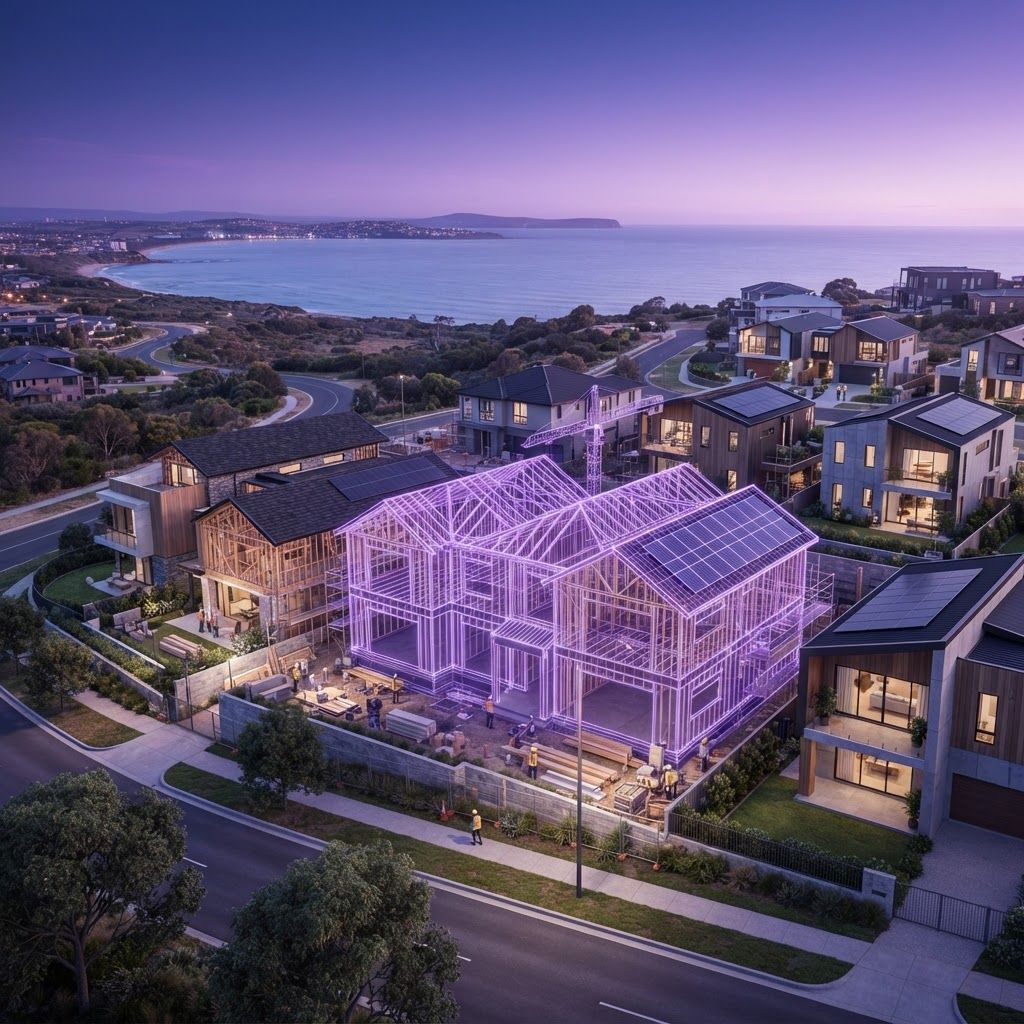
A Growing Residential Market
Chesapeake has been one of the steadier growth markets in Hampton Roads, driven by employment across the port, military installations, healthcare and construction itself, combined with substantial developable land compared with its more built-out neighbours. That combination supports an active residential construction industry spanning large production builders working in planned communities to small custom builders producing a handful of homes each year. Understanding which builder type matches your goals, budget and tolerance for decision-making is the foundation of a successful project.
Local Building Conditions That Shape Design
Homes in Chesapeake must contend with a high water table, low-lying topography, flood zone designations across parts of the city, coastal wind loads, and persistent humidity. Practical consequences include the prevalence of slab-on-grade and elevated foundations over full basements, careful attention to lot grading and stormwater management, engineered structural connections for wind uplift, and mechanical design that manages humidity as well as temperature. Termite protection is standard, and material selections increasingly favour fibre cement siding, composite trim and architectural shingles rated for high wind. Builders who treat these as baseline requirements rather than upgrades deliver homes that age well.
1. Production Home Builders
Production builders construct homes from a set of predefined plans within planned communities, offering buyers a curated list of structural options and finish selections. The advantages are cost efficiency from volume purchasing, predictable timelines, warranty programmes and financing coordination, sometimes including in-house mortgage services. The trade-off is limited customisation. For buyers who want a new home with modern energy performance and minimal decision fatigue, this segment offers the best value per square foot in the market.
2. Semi-Custom Builders
Semi-custom builders start from base plans but allow meaningful structural modification — moving walls, extending rooms, altering rooflines — along with a wider range of finish choices. This middle path suits buyers who want a home tailored to how they actually live without the cost and timeline of full custom design. Strong semi-custom builders maintain clear pricing for modifications so the budget remains controllable as changes accumulate.
3. Custom Home Builders
Custom builders construct unique homes designed specifically for an owner and a site. Work begins with architectural design, site analysis, soil testing and utility planning, then proceeds through a construction process with high finish tolerances and long-lead specialty materials. Costs per square foot are considerably higher and timelines longer, but the result reflects the owner's priorities precisely. Communication discipline is the defining quality of a good custom builder, because the volume of decisions is far greater than in production work.
4. Waterfront and Elevated Home Specialists
Chesapeake's extensive waterways create a distinct specialty. These builders work with pile foundations, elevated living levels, flood-resistant materials below base flood elevation, corrosion-resistant hardware, hurricane-rated glazing and shoreline permitting. They also coordinate docks, bulkheads and shoreline stabilisation. Expertise here is not interchangeable with inland experience; the structural, permitting and durability requirements are materially different.
5. Townhome and Attached Housing Builders
Attached housing has grown substantially as land costs rise and buyers prioritise location and lower maintenance. Builders in this segment manage party wall construction, fire-rated assemblies, sound attenuation, shared utility infrastructure and homeowner association coordination. Good execution shows up in acoustic separation between units and in careful detailing where roofs and walls intersect between homes.
6. Modular and Prefabricated Home Builders
Modular construction builds sections in a controlled factory environment and assembles them on a prepared foundation. Benefits include reduced weather exposure during construction, tighter quality control, less material waste and shorter site schedules. Modern modular homes meet the same building codes as site-built houses and are frequently indistinguishable once complete. Buyers should focus on the builder's site preparation and finishing capability, since those phases determine the final quality more than the factory work does.
7. Home Addition and Second-Storey Specialists
Many Chesapeake families choose to expand rather than move, given attachment to neighbourhoods and school assignments. Addition specialists handle structural tie-ins to existing framing, foundation extension, roof integration, mechanical system capacity upgrades and matching of exterior materials. Second-storey additions are technically demanding because they require verifying that existing foundations and walls can carry new loads, often necessitating structural engineering and reinforcement.
8. Green and High-Performance Home Builders
This growing segment focuses on energy efficiency and indoor air quality: advanced air sealing verified by blower door testing, continuous exterior insulation, high-efficiency heat pumps, heat recovery ventilation, solar readiness and low-emission interior materials. In a hot, humid climate the performance gains are substantial, and properly designed dehumidification often improves comfort more than additional cooling capacity. Third-party certification provides verification rather than marketing claims.
9. Accessory Dwelling Unit and Small Home Builders
Interest in accessory dwelling units, garage conversions and small guest homes has increased as households seek space for extended family, home offices or rental income. Builders in this niche navigate zoning constraints, setback requirements, utility connections and parking rules, and they design compact layouts that feel larger through ceiling height, natural light and efficient storage. Careful zoning verification before design is essential in this category.
10. Renovation-Focused Residential Builders
Chesapeake has a substantial stock of homes built decades ago that need comprehensive updating. Renovation builders replace outdated electrical and plumbing systems, reconfigure closed floor plans, upgrade insulation and windows, remediate moisture damage and modernise kitchens and bathrooms. Their skill is diagnostic: understanding how an existing house was built and how to improve it without creating new moisture or structural problems.
Trends in Residential Construction
Home office space has become a standard requirement rather than a luxury. Multigenerational layouts with secondary suites are increasingly requested. Heat pump adoption continues to accelerate as efficiency improves and codes tighten. Resilience features such as elevated mechanical equipment, improved drainage and wind-rated assemblies are now common buyer questions. Outdoor living investment remains strong, given the long comfortable season. And digital project management has become the norm, with owners expecting photo updates, selection portals and transparent change order tracking.
Due Diligence Before You Sign
Confirm the builder's Virginia licence class covers your project value and verify insurance directly with the carrier. Request references from homeowners whose houses were completed two or more years ago, since that reveals warranty responsiveness and how the work has held up. Review a sample contract and pay attention to the allowance schedule, change order pricing, payment milestones, delay provisions, warranty terms and dispute resolution. Ask specifically how the builder handles moisture management, site drainage and mechanical sizing — the answers reveal technical depth quickly. Visit an active job site to assess organisation, cleanliness and framing quality before insulation hides it.
Budgeting Realistically
Build a budget that includes land cost, site work and utility connections, permits and impact fees, construction cost, landscaping, window treatments, appliances and a contingency of at least ten per cent. Site work is the most commonly underestimated line item in Chesapeake because poor soils or high water tables can require significant fill, drainage work or foundation upgrades. Secure construction financing early and understand the draw schedule, since payment timing affects the builder's ability to keep trades on schedule.
Final Thoughts
Chesapeake's residential construction market offers genuine choice at every level. Production builders deliver efficiency and value, semi-custom builders offer balance, custom and waterfront builders provide precision for demanding sites, and renovation specialists unlock the potential of existing homes. Match the builder type to your priorities, verify credentials rigorously, and insist on a contract that documents scope and process clearly. Those three steps account for most of the difference between a satisfying build and a difficult one.