
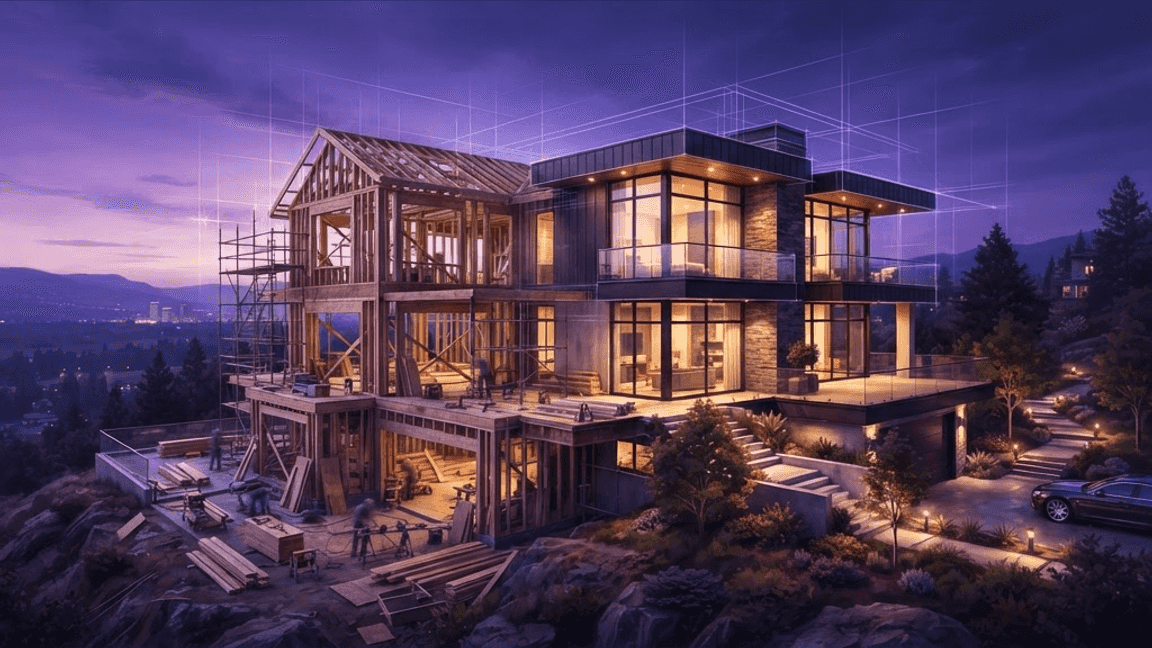
Residential Construction in a Growing Atlanta
Atlanta remains one of the most active residential construction markets in the Southeast. Sustained population growth, corporate relocations and steady in-migration have driven demand for new housing across a wide spectrum, from infill homes on tight lots in established intown neighborhoods to large master-planned communities in the outer suburbs. At the same time, the region's substantial inventory of mid-century housing has fueled a parallel boom in extensive renovation and teardown-rebuild projects.
Building a home in this market means engaging with conditions specific to the region. Georgia clay soil requires proper foundation design and drainage engineering because it swells when wet and shrinks when dry. Substantial annual rainfall makes site grading, waterproofing and roof detailing critical. Summer heat and humidity demand thoughtful attention to insulation, air sealing, mechanical sizing and moisture management within wall assemblies. Tree ordinances in many jurisdictions protect specimen trees, affecting site layout. Understanding these realities helps homeowners recognize which builders genuinely know what they are doing.
1. Custom Home Builders
Custom builders construct one-of-a-kind homes from client-driven designs. The process is collaborative and detailed, involving architect coordination, engineering, extensive material selection and continuous decision-making throughout construction. Quality custom builders in Atlanta distinguish themselves through transparent budgeting, realistic allowances, organized selection timelines and disciplined site supervision. They typically build a limited number of homes per year, which allows senior attention on every project. This category suits owners who have specific requirements and want direct influence over every element.
2. Production and Volume Homebuilders
Production builders construct homes from a set of established floor plans across subdivisions and communities. Their advantage is efficiency and value: refined designs, negotiated material pricing, standardized construction processes and predictable timelines. Buyers select a plan, choose from curated finish packages and often benefit from structural warranty programs. This approach delivers strong value for buyers whose priorities are location, price certainty and move-in timing rather than design uniqueness.
3. Semi-Custom Builders
Semi-custom builders occupy the middle ground, offering base plans that can be meaningfully modified. Owners can adjust room layouts, add or expand spaces, change ceiling treatments and select from broader finish options while still benefiting from proven plans and established cost structures. For many Atlanta buyers, this model provides the best balance between personalization and budget control, avoiding both the constraints of pure production building and the cost variability of full custom work.
4. Infill and Urban Residential Builders
Building on small lots inside established intown neighborhoods is a specialized discipline. Infill builders manage constrained sites with limited staging area, tight setbacks, existing mature trees, neighbor proximity, aging utility connections and often neighborhood design review. Success requires careful logistics planning, respectful site management and design skill in fitting contemporary square footage requirements onto compact lots while maintaining street character. Atlanta's intown areas have produced a group of builders who excel specifically at this work.
5. Whole-Home Renovation Contractors
Renovating an entire home is often more complex than building new. Contractors specializing in this work handle systems replacement, structural modification, layout reconfiguration, envelope upgrades and finish work, frequently while managing the unknowns that older houses conceal. Skilled renovation firms perform thorough pre-construction investigation, budget realistic contingencies, sequence work to limit disruption and communicate proactively when conditions differ from expectations. For Atlanta's extensive stock of older homes, this expertise is in constant demand.
6. Townhome and Attached Housing Builders
Townhomes have become a dominant housing type across the metro area, offering density and affordability near employment centers and transit. Builders in this segment manage repetitive-unit construction, party wall fire rating and sound attenuation, shared utility infrastructure, common area development and homeowner association documentation. Efficiency in this category comes from process repetition, and experienced builders deliver consistently detailed party wall assemblies that perform well acoustically, which is the most common source of resident complaints.
7. Luxury Home Builders
Atlanta's luxury residential market spans established northside neighborhoods and premium suburban enclaves. Luxury builders execute large homes with sophisticated systems: elevators, home automation, wine rooms, whole-house generators, complex millwork, natural stone and steel windows. This work requires access to specialized trades and rigorous quality control, since expectations at this price point leave little tolerance for defects. Strong luxury builders maintain dedicated project managers, detailed shop drawing review and extended warranty service.
8. Accessory Dwelling Unit and Small Structure Builders
Accessory dwelling units, guest houses, garage conversions and detached studios have grown quickly in popularity as homeowners seek rental income, multigenerational living space or dedicated home offices. Builders specializing in these projects understand the specific zoning, setback, size and utility connection requirements that vary by jurisdiction across the metro area. Because these structures are small, cost efficiency depends heavily on smart design and simple structural systems.
9. Energy-Efficient and High-Performance Home Builders
A growing segment of Atlanta builders focuses on building science: continuous air sealing, high-performance insulation, right-sized and properly commissioned mechanical systems, controlled ventilation, advanced framing and third-party performance testing. In Georgia's hot and humid climate, these practices deliver measurable benefits, including lower utility bills, better humidity control, improved indoor air quality and greater comfort consistency between rooms. Certification programs provide independent verification that performance claims are real.
10. Modular and Off-Site Construction Companies
Modular and panelized construction, where major components are manufactured in a controlled factory environment and assembled on site, has gained traction as a response to labor availability and schedule pressure. Factory conditions eliminate weather exposure during framing, which improves moisture control, and precision manufacturing produces tight tolerances. On-site work is compressed considerably. This approach requires early design finalization but appeals to owners prioritizing schedule certainty and consistent quality.
How to Choose a Residential Builder
Verify licensing, general liability insurance and workers compensation coverage before anything else. Review a builder's portfolio for projects genuinely similar to yours in size, style and complexity, and ask to tour both a completed home and an active site. References from homeowners who have lived in a builder's homes for a year or more are especially valuable because they reveal how the builder handled warranty issues.
Scrutinize the contract. It should specify scope in detail, list materials by brand and model, define allowances clearly, establish a schedule with milestones, tie payments to completed work verified by inspection, describe the change order process in writing and state warranty terms explicitly. Confirm how the builder handles subcontractor lien waivers, and understand what construction financing draw requirements apply if you are borrowing.
Trends Shaping Atlanta Residential Construction
Several trends are prominent. Flexible floor plans with dedicated home office and multigenerational suites remain in high demand. Outdoor living investment continues, with covered porches and screened areas that extend usability through humid summers. Energy performance and resilience features, including backup power and improved storm detailing, are increasingly requested. Material lead times remain a planning factor, encouraging earlier selection finalization. Finally, infill density and accessory dwelling units continue expanding as the region addresses housing supply within existing neighborhoods.
Final Thoughts
Atlanta's residential construction market offers capable builders across every model, from production and semi-custom to full custom, infill, luxury, high-performance and modular. The right choice depends on how much personalization you need, how firm your budget and timeline must be, and how complex your site is. Verify credentials thoroughly, compare bids on identical scope, document everything in a detailed contract and choose a builder whose communication gives you confidence. A well-selected builder makes the construction process manageable and delivers a home that performs well for decades in Georgia's demanding climate.