
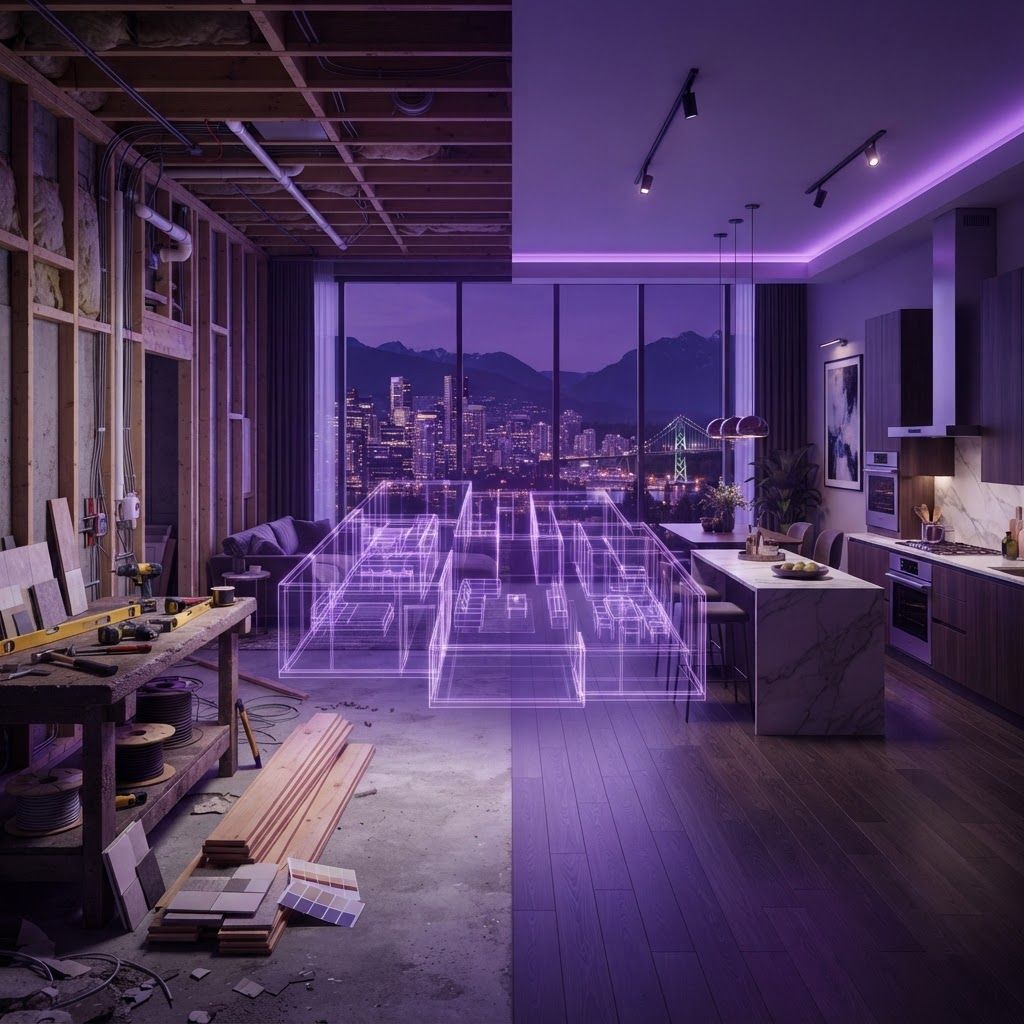
Why Renovation Dominates the Vancouver Market
In a region where land represents most of a property's value, renovating usually delivers more usable improvement per dollar than moving. Vancouver's housing stock also creates natural demand: thousands of homes built between the 1910s and 1980s have solid structures but outdated layouts, poor insulation, obsolete mechanical systems and finishes at the end of their life. Add strong condo inventory needing refresh and the growth of secondary suites for rental income, and renovation becomes the busiest segment of local construction.
Renovation is also the hardest form of construction to execute well, because every project begins with unknowns behind finished surfaces.
The Real Challenges of Renovating Here
Older Vancouver homes commonly reveal knob-and-tube or aluminium wiring, galvanised or cast-iron plumbing, undersized floor framing, asbestos in textured ceilings and vinyl flooring, lead paint, minimal insulation and inadequate moisture management. Condo renovations face strata bylaws, working-hour restrictions, elevator booking, noise limits and building envelope boundaries that owners cannot alter. Permitting for structural changes, suite additions and plumbing relocation adds time. A contractor who plans for these realities produces a smooth project; one who does not produces a series of expensive surprises.
1. Full-Service Design-Build Renovation Firms
Design-build renovators handle concept, drawings, permitting, construction and finishing under one contract. For homeowners, the appeal is a single point of accountability and cost feedback during design rather than after. These firms typically maintain in-house designers, dedicated project managers, and showrooms where clients can select finishes efficiently. They tend to be the best choice for whole-home renovations where dozens of decisions must be sequenced correctly.
2. Kitchen and Bathroom Renovation Specialists
Kitchens and bathrooms are the highest-value renovations in Vancouver and the most technically dense per square foot, combining plumbing, ventilation, electrical, waterproofing, tile, cabinetry and appliance integration. Specialists in this niche run efficient schedules because they repeat the same trade sequence constantly, and they understand critical details such as proper shower waterproofing membranes, adequate exhaust ventilation for a damp climate, and cabinet layouts that work in narrow city homes.
3. Whole-Home and Structural Renovation Contractors
Deep renovation projects strip a house to its structure, then rebuild with new framing where needed, seismic and structural reinforcement, complete mechanical and electrical systems, new insulation and modern envelope assemblies. Common Vancouver additions include basement underpinning for ceiling height, rear additions, and second-storey construction. These builders combine new-construction discipline with the adaptability renovation demands.
4. Condominium and High-Rise Renovation Specialists
Renovating in a tower is a logistics exercise. Specialists in this segment handle strata approval submissions, insurance certificates, protection of common areas, restricted work hours, material movement through service elevators, dust containment and noise mitigation for neighbours. They also know which changes are permissible: interior partitions and finishes generally yes, envelope penetrations and structural elements generally no.
5. Basement Suite and Secondary Suite Builders
Adding a legal secondary suite is one of the most financially effective renovations in the city, creating rental income and improving mortgage qualification. Specialists manage the technical requirements: ceiling height, egress windows, fire separation between dwelling units, sound attenuation, independent heating and ventilation, separate entry and parking considerations, and municipal permitting. Doing it legally protects both insurance coverage and future resale.
6. Heritage and Character Home Renovators
Character homes in Kitsilano, Mount Pleasant, Grandview and Shaughnessy require renovators who can modernise without erasing what makes the house valuable. Skills include restoring original windows and trim, repairing fir flooring, replicating exterior detailing and integrating insulation and mechanical systems into assemblies never designed for them. These firms often collaborate with heritage consultants and municipal planners.
7. Energy Efficiency and Deep Retrofit Contractors
Retrofit specialists focus on measurable performance: air sealing, attic and wall insulation upgrades, window replacement, heat pump conversion from gas heating, heat recovery ventilation and improved building envelope detailing. Available rebate and incentive programs make many of these upgrades far more attractive than they appear at list price, and knowledgeable contractors help homeowners assemble the paperwork. The benefits extend beyond utility bills to summer comfort during heat events.
8. Exterior Renovation and Re-Cladding Contractors
Exterior renovation addresses the source of most building problems in the region. Work includes rainscreen cladding systems, new windows with proper flashing integration, deck and balcony waterproofing, soffit and roofline detailing, and drainage improvements around foundations. Contractors here work closely with envelope consultants on larger projects, because water management detailing is unforgiving.
9. Accessibility and Aging-in-Place Renovators
An increasingly important category, these contractors adapt homes for long-term independence: barrier-free bathrooms with curbless showers, widened doorways, grab bar blocking, stairlifts or elevators, improved lighting, lever hardware and level entries. Well-designed accessibility work is invisible rather than institutional, and it materially extends the time a household can remain in a home they own.
10. Insurance Restoration and Water Damage Renovators
Water damage from failed supply lines, roof leaks and appliance failures is common, and restoration contractors combine emergency mitigation with reconstruction. Their strengths are rapid drying, moisture documentation, mould remediation to accepted protocols, and reporting that satisfies insurers. Because these projects begin without warning, twenty-four hour response capability is the primary selection criterion.
Budgeting and Contract Discipline
Successful Vancouver renovations share three habits. First, a contingency of fifteen to twenty percent on older homes, because concealed conditions are near-certain. Second, a written contract with defined scope, milestone-based payments, a clear change order process, allowances stated in dollars rather than vague terms, and holdback provisions. Third, decisions made before demolition rather than during construction, since late selections cause the majority of schedule slippage. Verify WorkSafeBC coverage and liability insurance for every contractor, and never pay large deposits without contractual protection.
Getting Real Value
The renovations that deliver the strongest return in Vancouver are those that add functional space, create legal rental income, resolve envelope or moisture problems, or meaningfully improve energy performance and comfort. Cosmetic work matters for enjoyment but less for value. Choose a contractor whose recent projects match your scope, insist on clarity in writing, and treat the planning phase as the part of the project that determines whether everything after it goes well.