
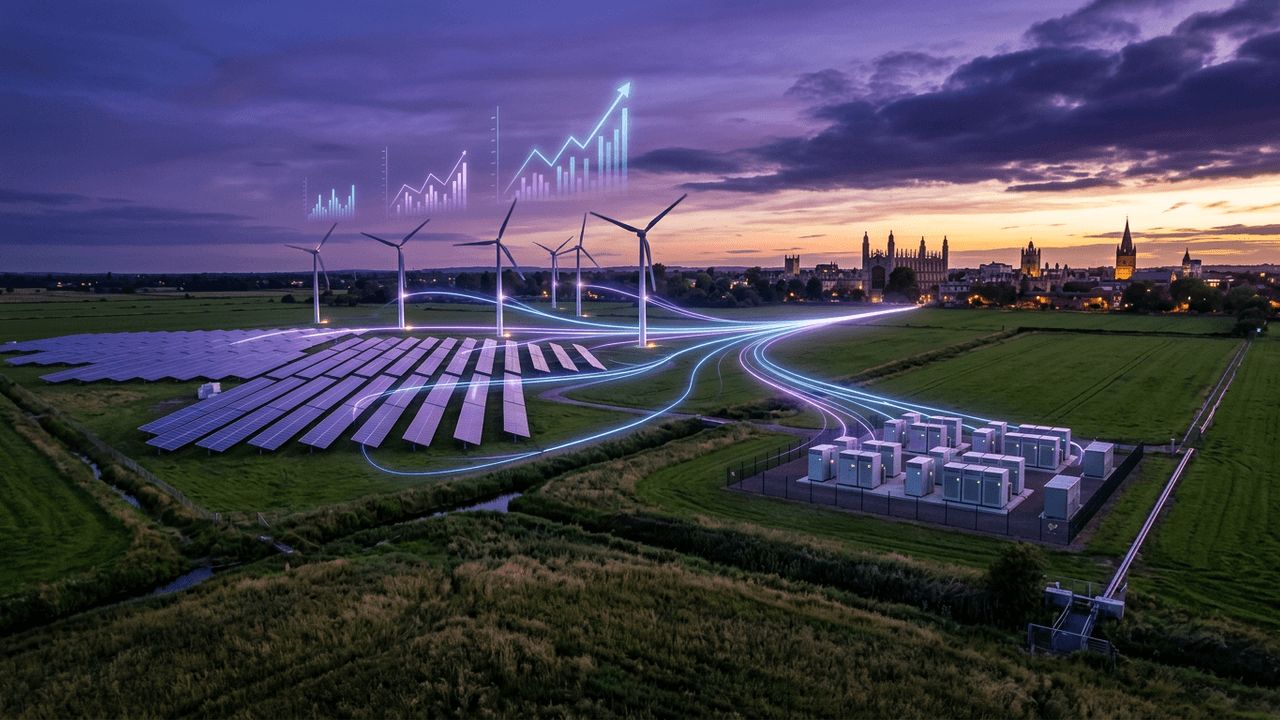
Cambridge and the Clean Energy Transition
Cambridge has set ambitious climate goals, and the surrounding region of Cambridgeshire and East Anglia is one of the UK's most important areas for renewable generation. Flat, open farmland suits solar farms, the nearby North Sea hosts some of the world's largest offshore wind projects, and the city's research base is producing breakthroughs in energy storage and carbon reduction. For businesses and households, this creates an exciting choice of partners for decarbonisation.
The companies listed here range from Cambridge-born innovators to national developers active in the region. Together they illustrate how the renewable sector is evolving from simply generating clean electricity to storing it, managing it and integrating it into everyday life.
Why Cambridge Matters for Renewables
Three strengths stand out. First, research: the University of Cambridge and its spin-outs are at the forefront of battery chemistry, materials science and building physics. Second, geography: East Anglia's land and coastline make it ideal for solar and offshore wind. Third, demand: a growing population, new housing developments and energy-intensive laboratories all need reliable, low-carbon power, often in places where the electricity grid is already constrained.
Top 10 Renewable Energy Companies
1. Echion Technologies
A Cambridge University spin-out, Echion Technologies develops advanced anode materials that allow lithium-ion batteries to charge extremely quickly. Its technology is relevant to electric vehicles, industrial equipment and grid storage, all central to a renewable future.
2. Nyobolt
Nyobolt, also born in Cambridge, focuses on ultra-fast charging battery technology. Its work addresses one of the biggest barriers to electrification: the time it takes to recharge vehicles and machinery.
3. Breathing Buildings
Breathing Buildings designs natural and hybrid ventilation systems that reduce the energy used to heat and cool buildings. Schools, offices and public buildings use its solutions to cut carbon emissions while improving indoor air quality.
4. Cambridge Carbon Capture
Cambridge Carbon Capture is developing technology to capture carbon dioxide and convert it into useful minerals. Its approach complements renewable generation by tackling emissions from sources that are difficult to decarbonise.
5. Lightsource bp
Lightsource bp is one of the world's leading developers of utility-scale solar and battery projects. It has an active presence in the UK and develops large solar farms that supply clean power to the grid and to corporate buyers.
6. RES
RES is a long-established renewable energy company that develops, builds and operates wind, solar and storage projects. Its experience across the full project lifecycle makes it a trusted partner for landowners and communities.
7. Low Carbon
Low Carbon is a UK-based renewable energy company that develops solar farms and battery storage sites, including projects in the East of England. It emphasises biodiversity improvements alongside clean energy generation.
8. Octopus Energy Generation
Octopus Energy Generation manages one of the largest renewable energy portfolios in Europe. Its investments span solar, wind and storage, and it connects generation directly to customers through the wider Octopus Energy group.
9. EDF Renewables UK
EDF Renewables UK develops onshore wind, offshore wind, solar and battery storage. It also offers energy solutions for businesses seeking to source renewable power or install on-site generation.
10. Vattenfall
Vattenfall is a major European energy company with significant UK offshore wind interests off the coast of East Anglia. Its projects are expected to contribute substantially to the region's clean power supply.
How to Choose a Renewable Energy Partner
Define your objective first. A homeowner seeking lower bills needs a reputable installer, whereas a business aiming for net zero may need a power purchase agreement, on-site generation and storage. Check credentials and accreditations, ask for case studies and look at long-term maintenance arrangements. For landowners considering leasing land for solar or storage, take independent legal and land agent advice and consider grid connection timelines, which can be lengthy in the region.
Trends in Renewable Energy
Battery storage is growing rapidly, smoothing out the intermittent output of solar and wind. Grid capacity has become a key constraint, encouraging local energy schemes and smarter demand management. Community energy projects and heat networks are gaining momentum in Cambridgeshire villages. Meanwhile, Cambridge's research community continues to produce innovations in batteries, materials and carbon capture that could shape the global energy system.
Frequently Asked Questions
Can my Cambridge business buy renewable power directly?
Larger organisations can sign corporate power purchase agreements with solar or wind generators. Smaller businesses can choose renewable tariffs backed by certificates of origin or install on-site solar and storage.
What is a community energy scheme?
Community energy schemes are locally owned projects, such as village solar arrays or heat networks, where residents share the benefits. Several Cambridgeshire communities have explored or delivered such projects.
Why are grid connections such a challenge?
The local electricity network is under pressure from new housing, laboratories and electric vehicles. New generation projects may face long waits for connection, which is why storage and smart energy management are becoming so valuable.
Opportunities for Local Businesses
Renewable energy creates opportunities well beyond generation. Installers, electricians, data specialists, ecologists and engineering consultancies all play a role in delivering projects. For Cambridge companies with relevant skills, partnering with renewable developers can open new and growing markets.
Conclusion
Cambridge sits at the meeting point of research excellence and renewable resources. The companies in this guide show how innovation and large-scale deployment work together to cut emissions. Whether you are a business, a landowner or a curious resident, there has never been a better time to engage with the clean energy transition.