
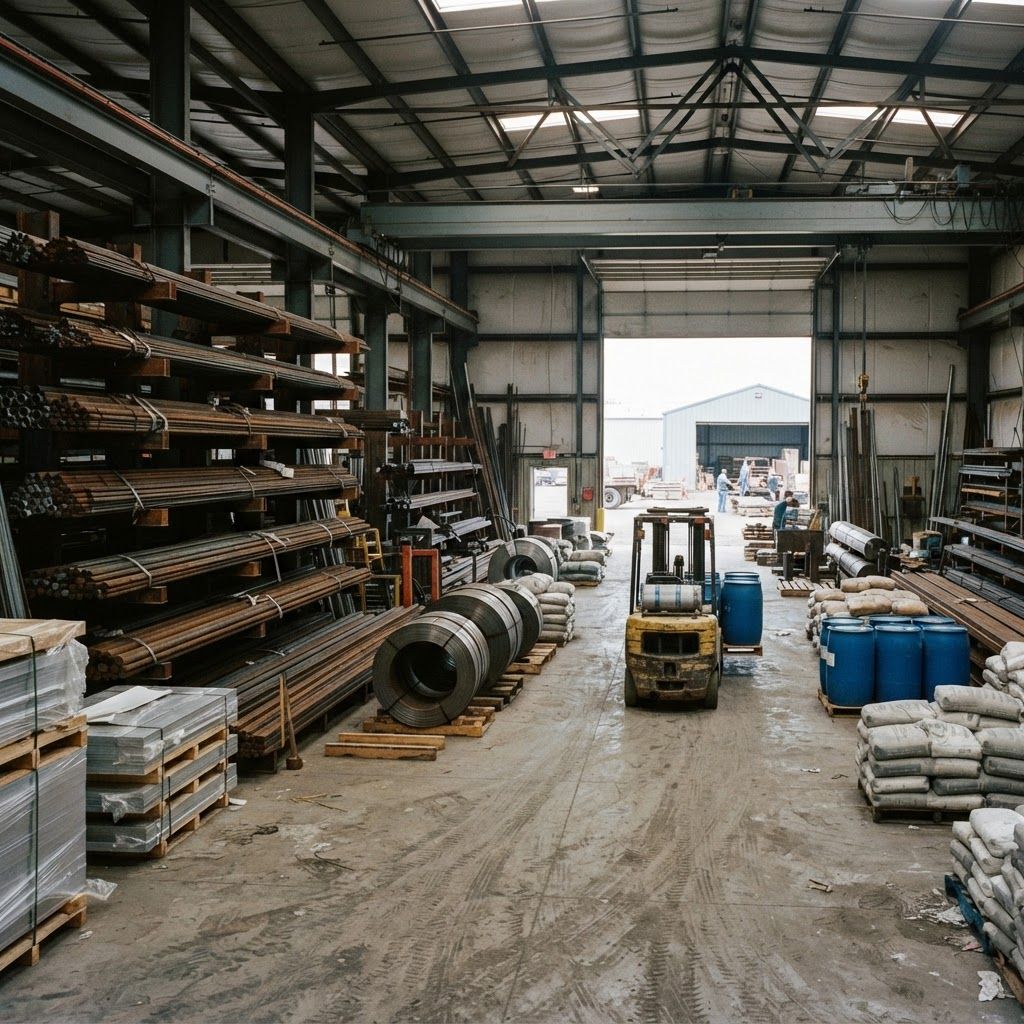
Why Raw Material Supply Matters More Than Price
Raw materials sit at the very beginning of the value chain, which means every problem there multiplies downstream. A steel coil that arrives out of specification, a resin lot with inconsistent melt flow or a chemical delivery two weeks late does not simply cost the difference in price — it consumes production time, generates scrap and can jeopardize customer commitments.
St. Louis is a genuinely good place to manage that risk. The region has manufactured for generations, and the supporting supply base reflects it: metal service centers with in-house processing, plastics distributors with technical resources, chemical distributors with proper handling infrastructure, lumber and building material yards, and packaging converters. Barge access on the Mississippi, extensive rail connections and interstate highway convergence keep inbound freight competitive for heavy, low-value-density materials where transportation cost dominates.
Selection Criteria
Suppliers were evaluated on material quality and certification, processing capability, inventory depth, lead time reliability, technical support, quality documentation and traceability, and willingness to serve mid-sized manufacturers rather than only high-volume accounts.
1. Gateway Metals Service Center
Gateway Metals Service Center supplies carbon steel, stainless, aluminum and alloy products in sheet, plate, bar, tube and structural forms, with in-house processing including shearing, plasma and laser cutting, sawing and forming. The processing capability is the real differentiator, because receiving material cut to size removes an operation from the customer's shop floor and reduces scrap. Mill test reports and full traceability support customers with quality system requirements.
2. Midwest Polymer and Resin Distributors
Midwest Polymer and Resin Distributors handles thermoplastic resins, engineering polymers, masterbatch colorants and additives for injection molders, extruders and thermoformers. Technical support around material selection, processing windows and regrind strategy distinguishes it from commodity resin brokers. Consistent lot quality is critical in molding, where small variations in melt flow index produce dimensional and cosmetic defects, and the company's lot documentation is a recurring point of praise.
3. Arch City Chemical Supply
Arch City Chemical Supply distributes industrial chemicals, solvents, acids, surfactants and specialty additives to manufacturers, food processors, water treatment operations and formulators. Compliance and handling infrastructure define this business — permitted storage, proper containment, hazardous materials transport, safety data documentation and regulatory tracking. Buyers also value the company's blending and repackaging services, which let smaller operations buy working quantities instead of full bulk loads.
4. Riverfront Lumber and Wood Products
Riverfront Lumber and Wood Products supplies dimensional lumber, engineered wood, hardwoods, plywood, panel products and industrial packaging lumber to builders, cabinet shops, furniture manufacturers and crating operations. Moisture content control and grading consistency matter enormously to woodworkers, and the company's kiln documentation and grading discipline are frequently cited. Millwork and cut-to-size services reduce waste for volume users.
5. Show Me Packaging Materials
Show Me Packaging Materials provides corrugated board, films, stretch wrap, foam, protective inserts, strapping and closures to manufacturers and distributors. Packaging engineering is the standout service: designing structures that survive transit testing while minimizing material use, which reduces both damage claims and dimensional shipping costs. Custom corrugated design and prototype testing help manufacturers protect products without overpackaging.
6. Heartland Textile and Fiber Supply
Heartland Textile and Fiber Supply distributes woven and nonwoven fabrics, technical textiles, foam, batting, webbing, thread and trims to furniture makers, upholstery shops, sewn goods manufacturers and industrial fabricators. Performance specification support — abrasion resistance, flame retardancy, colorfastness — is essential for commercial applications, and the company can source certified materials for contract and institutional work.
7. Missouri Aggregate and Concrete Materials
Missouri Aggregate and Concrete Materials supplies sand, gravel, crushed stone, cement, admixtures and masonry materials to contractors and precast operations. Consistency of gradation and cleanliness directly determines concrete performance, so quality control at the source is the core value. Reliable delivery scheduling matters acutely in concrete work, where a late load can compromise an entire pour, and dispatch discipline is the company's strongest reputation point.
8. Delmar Industrial Minerals and Abrasives
Delmar Industrial Minerals and Abrasives provides silica alternatives, blasting media, foundry sands, fillers, refractory materials and specialty minerals for foundries, coating operations and surface preparation businesses. Health-conscious media substitution has been a major shift in this category, and the company supports customers transitioning to lower-hazard alternatives with both product options and process guidance.
9. Soulard Recycled Materials Group
Soulard Recycled Materials Group supplies post-industrial and post-consumer recycled feedstock — regrind polymers, recovered fiber, scrap metals and reclaimed materials — to manufacturers pursuing recycled content targets. Verified content documentation is essential when customers make recycled-content claims, and the company's testing and certification support makes those claims defensible. Cost advantages over virgin material are an additional benefit where specifications permit.
10. Cardinal Adhesives and Coatings Supply
Cardinal Adhesives and Coatings Supply distributes industrial adhesives, sealants, coatings, primers and surface treatments for manufacturing and assembly operations. Application engineering is central, since adhesive performance depends heavily on substrate preparation, cure conditions and joint design. The company assists with trials and process validation, which shortens the path from material selection to reliable production bonding.
Trends in Raw Material Sourcing
Supply chain resilience has replaced pure cost optimization as the dominant procurement philosophy, with manufacturers deliberately qualifying secondary suppliers and holding strategic inventory. Nearshoring continues to shift sourcing toward North American producers, improving lead times and reducing exposure to ocean freight volatility. Recycled and bio-based content requirements are appearing in customer specifications, not just marketing plans. Digital procurement platforms now provide real-time availability and pricing visibility. Meanwhile, traceability documentation has become a routine expectation as regulatory and customer audits intensify.
How to Choose a Raw Material Supplier
Qualification should be a formal process, not a purchase order. Request certifications and test reports, audit quality systems for critical materials, and run production trials before committing. Evaluate lead time consistency rather than best-case quoted times, and understand the supplier's own upstream dependencies. Confirm what happens when material fails inspection: who pays for return freight, replacement expediting and downstream scrap. For any material that could stop your production line, qualify a second source before you need one.
Final Thoughts
Raw material supply is where manufacturing reliability begins. The ten St. Louis suppliers above cover metals, polymers, chemicals, wood, textiles, minerals, packaging and adhesives with the processing and technical support that mid-sized manufacturers actually need. Invest in supplier qualification early, and the downstream savings will far exceed any unit-price negotiation.