
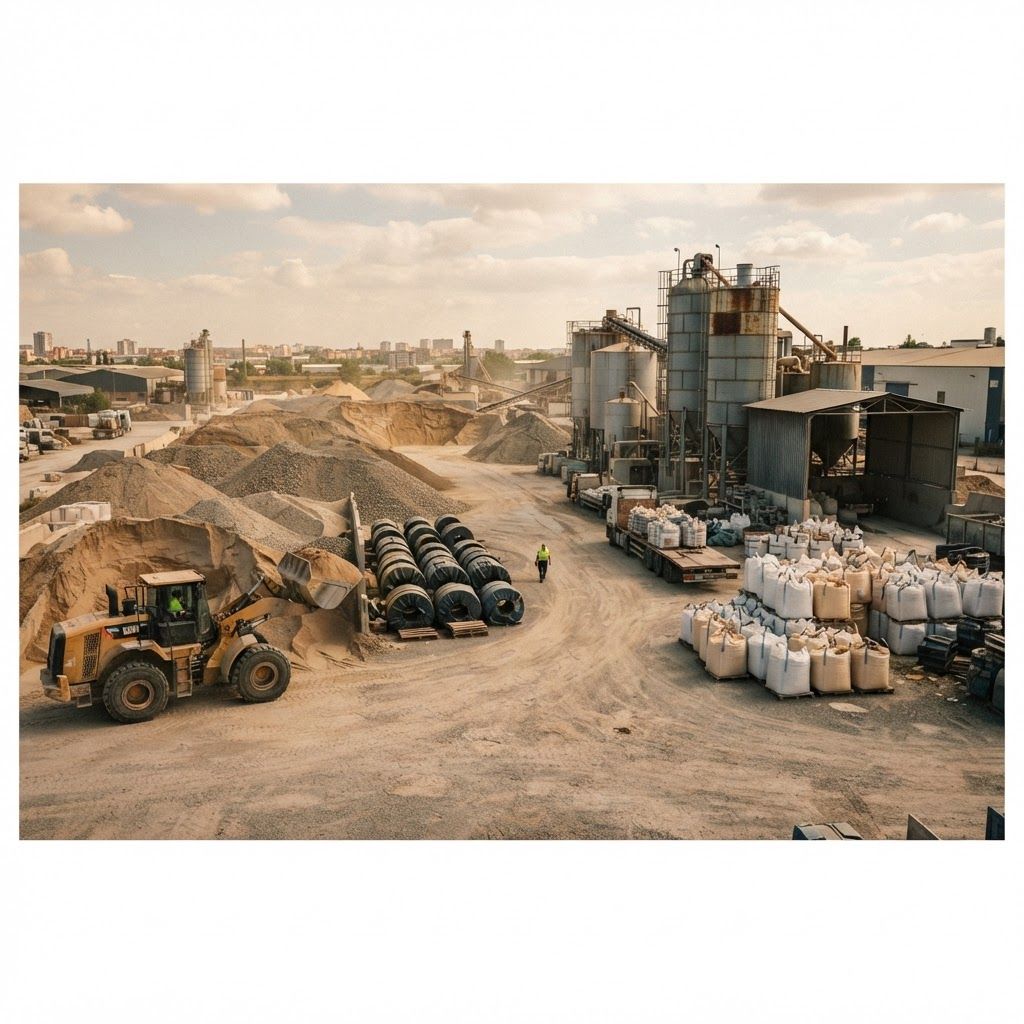
Raw Materials as the Foundation of Local Industry
Every manufactured product in Boise City begins as raw material. Metal coil, plate, and bar become enclosures, frames, and machined components. Resin pellets and sheet become packaging and molded parts. Chemicals become cleaners, coatings, and process aids. Lumber and engineered wood become structures and cabinetry. Because these inputs sit at the very start of the value chain, disruptions in raw material supply propagate through every downstream operation, which is why sourcing strategy in this category deserves serious attention.
Boise City's raw material market is shaped by its geography. The region is not adjacent to primary production for most materials, so local suppliers function as service centers: they buy in mill or producer quantities, warehouse regionally, and provide processing and small-lot distribution that lets local manufacturers avoid holding mill-size inventory. That service center model is what makes advanced manufacturing viable in a mid-sized metro, since a fabricator can buy two sheets rather than a truckload and still receive competitive pricing and next-day availability.
Evaluating a Raw Material Supplier
Material certification is the first consideration for anything used in a structural, food contact, medical, or regulated application. Mill test reports, certificates of analysis, and full lot traceability allow manufacturers to prove material properties to their own customers and auditors. Suppliers unable to produce this documentation are unsuitable for those markets regardless of price.
Processing capability is the second factor and often the deciding one. Cut-to-length, shearing, sawing, slitting, plate burning, and resin drying performed at the supplier eliminate operations, scrap, and handling in the customer's plant. Inventory position follows. Suppliers holding local stock across common grades and sizes convert a multi-week mill lead time into a next-day delivery. Consistency of quality matters as well, particularly regarding grade substitution, dimensional tolerance, and surface condition, since variation forces process adjustments downstream. Finally, pricing structure and market transparency deserve scrutiny, because commodity inputs move with indices and suppliers that explain pricing mechanics help customers time purchases and quote work profitably.
Ten Raw Material Suppliers Serving Boise City
1. Treasure Valley Metals Service Center supplies carbon steel, stainless, and aluminum in sheet, plate, bar, tube, and structural shapes. Shearing, sawing, and plate cutting allow customers to receive material sized close to final dimensions. Mill test reports accompany certified grades, which supports fabricators serving structural and pressure applications.
2. Gem State Polymer and Resin Supply distributes thermoplastic resins, engineering polymers, and plastic sheet and rod. Injection molders, thermoformers, and machine shops source polyethylene, polypropylene, polycarbonate, acetal, and specialty compounds here. Material selection guidance addressing chemical resistance, temperature range, and food contact compliance supports product development.
3. Snake River Industrial Chemicals supplies solvents, acids, bases, surfactants, and process chemicals in drum, tote, and bulk quantities. Customers include food processors, water treatment operations, metal finishers, and cleaning product manufacturers. Regulatory documentation, safety data sheets, and trained drivers handling hazardous transport are core to the operation.
4. Boise Lumber and Panel Wholesale serves builders, cabinet shops, and millwork producers with dimensional lumber, plywood, medium density fiberboard, hardwood panels, and engineered wood products. Idaho and Pacific Northwest sourcing shortens supply chains, and panel cutting services reduce shop labor and offcut waste.
5. Cascade Aggregate and Cement Supply provides sand, gravel, crushed rock, cement, and concrete admixtures to contractors and precast producers. Local pit and quarry sources keep freight costs manageable on materials where transportation dominates delivered cost, and gradation testing documentation supports specification compliance on public works projects.
6. Idaho Packaging Materials Supply distributes corrugated board, stretch film, strapping, void fill, adhesives, and pallets. Food processors, distribution centers, and manufacturers shipping finished goods source here. Package design and testing assistance helps customers reduce damage claims while trimming material use.
7. Foothills Textile and Fiber Supply supports the region's sewn products manufacturers, upholstery shops, and technical textile fabricators. Woven and knit fabrics, technical laminates, foam, webbing, thread, and hardware are stocked in mid-range quantities suited to domestic production runs. Flame retardancy and abrasion testing data assist customers in contract and transportation markets.
8. Meridian Coatings and Adhesives Raw Materials supplies resins, pigments, additives, and adhesive components to coatings blenders, composite fabricators, and manufacturers performing in-house finishing. Technical support on formulation, cure profiles, and substrate adhesion helps customers troubleshoot finish defects and improve throughput.
9. Silver Sage Recycled and Secondary Materials operates in the circular supply stream, supplying recycled metals, reprocessed polymer regrind, and recovered fiber. Manufacturers pursuing recycled content targets source here, and material characterization data addressing contamination levels and melt properties allows processors to blend confidently with virgin inputs.
10. Capital City Industrial Gases and Bulk Supply delivers oxygen, nitrogen, argon, carbon dioxide, and specialty gas mixtures in cylinder, liquid, and bulk form. Fabricators, food and beverage producers, laboratories, and healthcare facilities across Boise City rely on scheduled delivery routes and on-site storage installations that eliminate cylinder handling for high-volume users.
Trends Affecting Raw Material Sourcing
Supply chain regionalization has been the most consequential shift. After extended disruptions in global logistics, manufacturers restructured sourcing toward domestic and regional suppliers, accepting modestly higher unit costs in exchange for shorter and more predictable lead times. Boise City service centers benefited directly, and several expanded warehouse capacity in response.
Recycled content requirements have moved from aspiration to specification, driven by customer commitments and, in some markets, regulation. Suppliers that can document recycled percentages and provide consistent secondary material have gained share. Price volatility has also become a permanent planning assumption, prompting more manufacturers to use index-based contracts, negotiate price adjustment mechanisms with their own customers, and hold strategic safety stock on critical inputs. Digital procurement tools providing live inventory visibility and instant pricing have shortened purchasing cycles considerably.
Building a Resilient Sourcing Approach
Qualify a second source for every material critical to production, and do it before a shortage forces the decision. Qualification takes time, and attempting it during a disruption invariably produces worse outcomes. Where specifications allow, design with commonly available grades rather than exotic alloys or specialty compounds, since availability is itself a design consideration.
Use supplier processing services deliberately. Paying a service center to cut, slit, or saw material usually costs less than performing the same work internally once labor, scrap, and handling are counted honestly. Discuss forecasts openly so suppliers can position inventory, and revisit pricing structures periodically as volumes change. In Boise City's manufacturing community, buyers who treat raw material suppliers as long-term partners rather than interchangeable vendors consistently secure better availability when markets tighten.