
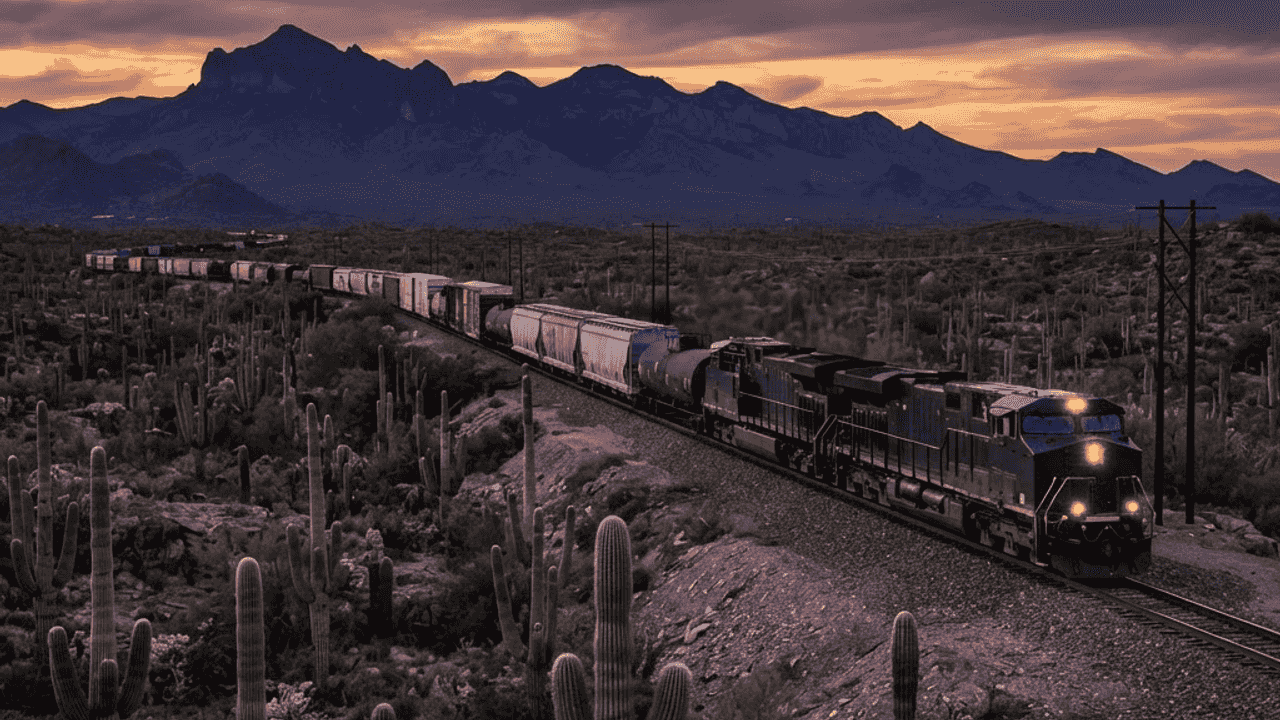
The Legacy and Future of Rail in Tucson
Railways have played a defining role in Tucson's development since the arrival of the Southern Pacific Railroad in the early 1880s, which transformed the city into a vital commercial hub. Today, rail transport remains essential to the region's economy, moving vast quantities of freight across the Southwest and connecting Tucson to national and international markets. As demand for efficient, sustainable transportation grows, railway operators continue to modernize their networks, reinforcing rail's importance in the movement of goods and, in some cases, passengers.
Major Freight Rail Operators
Union Pacific Railroad stands as the dominant freight rail operator serving Tucson, with an extensive network that links the city to ports, distribution centers, and industrial hubs across the western United States. Its main line through southern Arizona carries a steady flow of intermodal containers, agricultural products, automobiles, and raw materials. Union Pacific's investments in infrastructure and technology ensure reliable service, making it a cornerstone of regional commerce and a critical partner for businesses that depend on rail freight.
Intermodal and Cross-Border Rail Services
Intermodal transport, which combines rail with trucking, is increasingly important in Tucson's logistics landscape. Rail operators coordinate with trucking companies to move containers efficiently between rail yards and final destinations, reducing costs and emissions. Tucson's proximity to the border also elevates the significance of cross-border rail services, which facilitate trade between the United States and Mexico. These connections support manufacturers and distributors engaged in North American supply chains.
Passenger Rail Connections
While freight dominates the regional network, passenger rail also serves Tucson. Amtrak's Sunset Limited route connects the city to destinations spanning the southern United States, offering travelers a scenic and relaxed alternative to driving or flying. Although passenger service is less frequent than freight operations, it provides valuable long-distance connectivity and appeals to travelers who appreciate the comfort and character of rail journeys through the desert landscape.
Sustainability and Efficiency Advantages
Rail transport offers significant environmental and economic advantages, moving large volumes of freight with greater fuel efficiency than road transport. This efficiency reduces highway congestion and lowers emissions per ton of cargo, aligning with growing sustainability goals. Railway operators continue to invest in cleaner locomotives, improved infrastructure, and advanced logistics coordination, strengthening rail's position as a sustainable backbone of regional and national transportation.
The Role of Railways in Tucson's Economy
Railways remain a powerful engine of economic activity in Tucson, supporting industries ranging from agriculture and mining to manufacturing and retail. Their capacity to move goods reliably and cost-effectively underpins the region's supply chains and international trade. As infrastructure investment and intermodal integration expand, railway operators are poised to play an even greater role in Tucson's future. For businesses and travelers alike, the region's rail network represents a dependable and enduring pillar of transportation.