
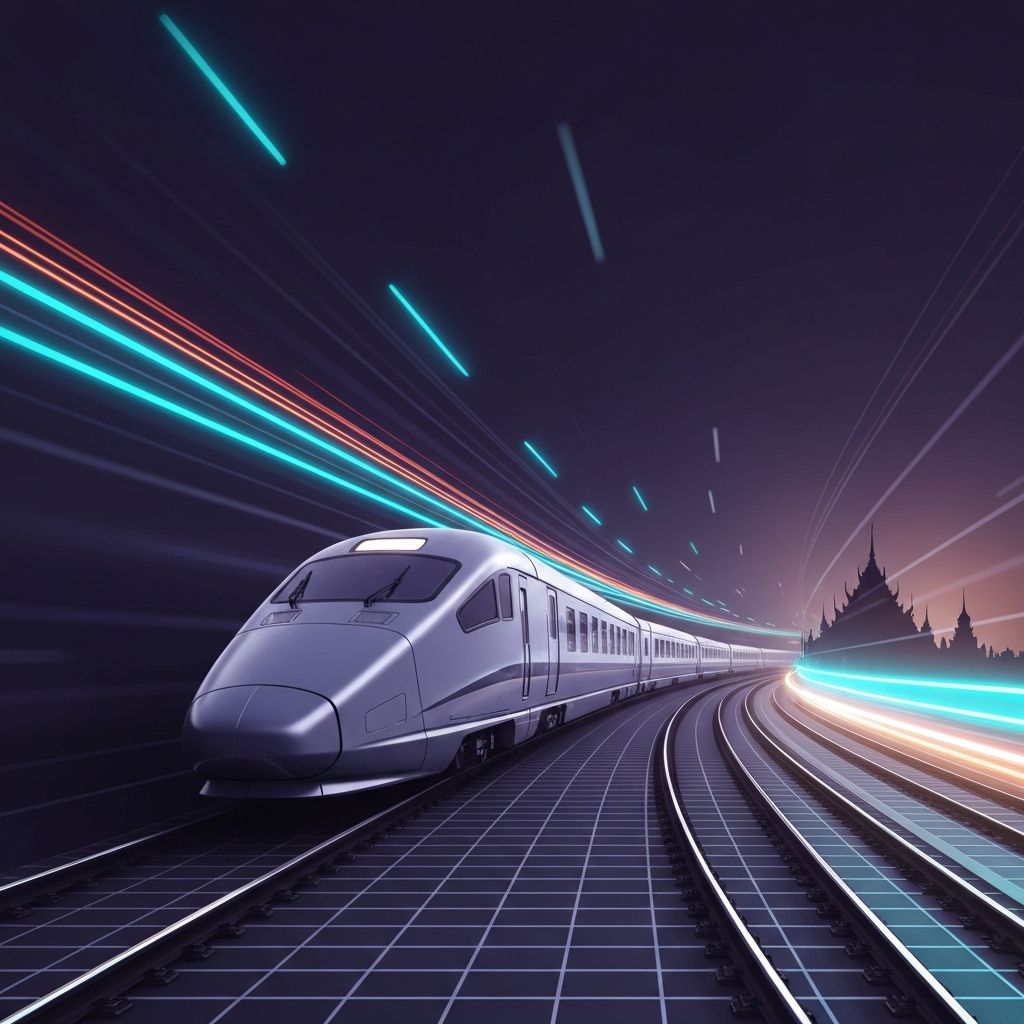
Riding Thailand's Rail Network
Railways have long been a backbone of Thailand's transportation system, connecting Bangkok with the far north, northeast, east, and south of the country. In recent decades, the network has expanded beyond traditional intercity rail to include modern metros, elevated trains, and airport links. Today, Thailand's rail ecosystem combines state-owned operators with private and public-private partnerships, all working to ease road congestion, reduce emissions, and support tourism and trade.
1. State Railway of Thailand (SRT)
The State Railway of Thailand is the country's oldest and largest rail operator. Established more than a century ago, SRT operates an extensive long-distance network covering nearly 4,000 kilometers, including iconic routes to Chiang Mai, Nong Khai, Ubon Ratchathani, and the Malaysian border. SRT also manages cross-border services and freight transport.
2. Bangkok Mass Transit System (BTS)
BTS Skytrain is the elevated rail system that revolutionized Bangkok's daily commute. Operated by Bangkok Mass Transit System Public Company Limited, the BTS Sukhumvit and Silom lines connect key business, shopping, and residential districts with reliable, modern service.
3. Bangkok Expressway and Metro (BEM)
BEM operates the MRT Blue Line and Purple Line, Bangkok's underground and elevated metro services. Known for clean stations, punctual trains, and integrated payment systems, BEM plays a central role in linking suburbs to the city center.
4. SRT Electrified Train Company (SRTET)
A subsidiary of SRT, SRTET runs the Airport Rail Link connecting Suvarnabhumi Airport with central Bangkok. It is a vital service for travelers, offering a fast and affordable alternative to road transport.
5. Eastern & Oriental Express
While not a mass-transit operator, the Eastern & Oriental Express deserves recognition as one of Asia's most luxurious tourist trains. Running scenic routes through Thailand and into neighboring countries, it offers a premium rail experience celebrated worldwide.
6. Northern Line Operations (SRT Northern)
SRT's Northern Line, operated as part of SRT, is famed for its scenic journey through mountains, tunnels, and historic stations on the way to Chiang Mai. It carries both daily commuters and tourists exploring Thailand's cultural heartland.
7. Southern Line Operations (SRT Southern)
The Southern Line stretches from Bangkok to the Malaysian border, serving important provinces such as Surat Thani, Hat Yai, and Hua Hin. It is a key route for tourism, trade, and connection to ferry services to Thailand's famous islands.
8. Northeastern Line Operations (SRT Isaan)
Connecting Bangkok with the Isaan region, SRT's Northeastern Line plays a crucial role in supporting agricultural transport, regional commerce, and cross-border travel to Laos via the Friendship Bridge in Nong Khai.
9. Red Line Commuter (SRT Red Line)
The SRT Red Line is a modern suburban commuter rail system serving the greater Bangkok area. With its hub at Bang Sue Grand Station, it offers fast and convenient service to northern and western suburbs and is a key part of the future high-speed rail network.
10. Future High-Speed Rail Operators
Thailand is actively developing high-speed rail corridors linking Bangkok with Nakhon Ratchasima and the EEC airports. As these projects come online, new operators and joint ventures are expected to play major roles in shaping the future of premium rail travel in the country.
Why Rail Matters in Thailand
Rail transport offers significant advantages over road travel: it is more energy-efficient, safer, and produces fewer emissions per passenger or ton of freight. As Thailand pushes toward sustainability goals and battles urban congestion in cities like Bangkok, expanding rail capacity is a strategic priority. Combined ticketing systems, contactless payments, and improved station accessibility are gradually making rail more attractive for daily users.
The Road Ahead
Massive investments in double-tracking, electrification, and high-speed lines are transforming Thailand's railways. New stations such as Bang Sue Grand Station have set a benchmark for modern rail infrastructure. With private sector participation, technology upgrades, and stronger regional integration, Thailand's railway operators are not only carrying passengers and goods but also driving the country into the next era of mobility.