
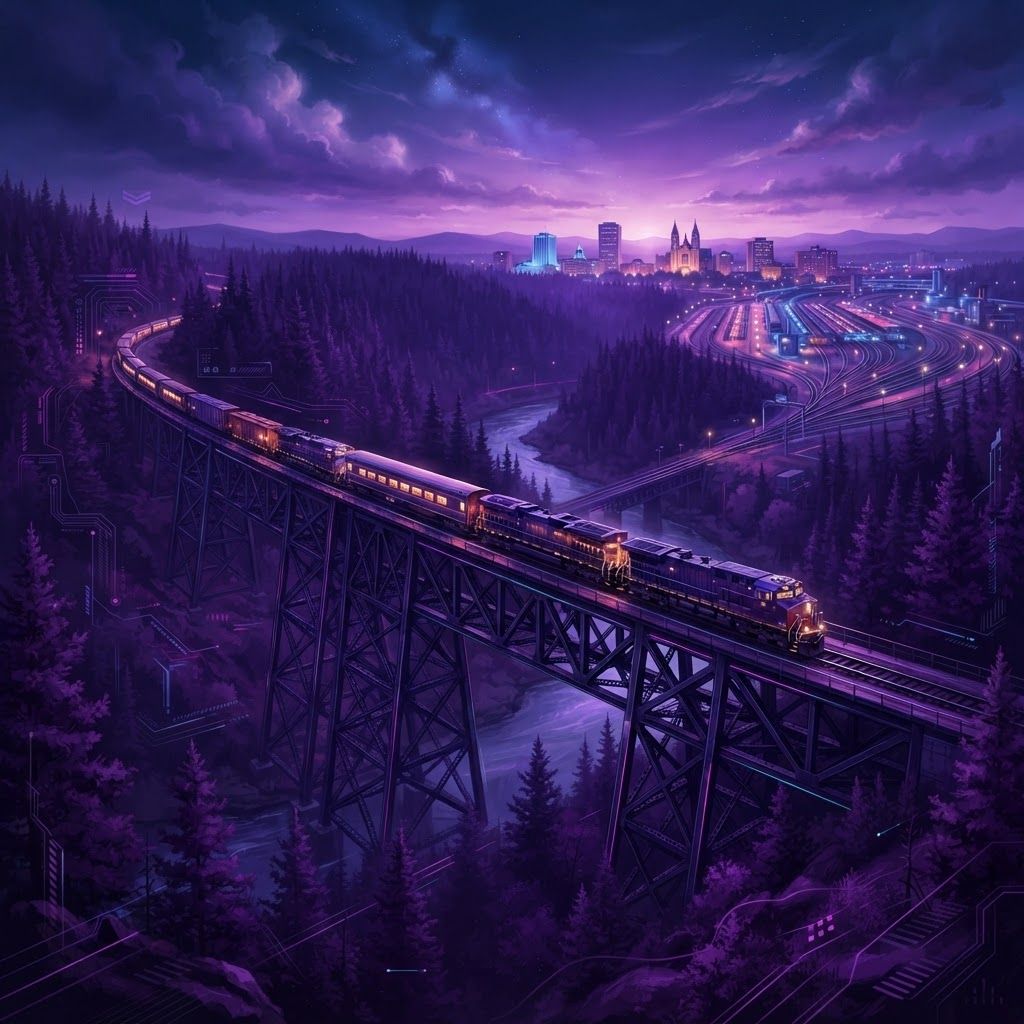
Rail and the Making of Spokane
Spokane exists in its current form because of railroads. In the late nineteenth century, competing transcontinental lines converged here, transforming a small settlement beside a waterfall into the commercial capital of the Inland Northwest. Grain from the Palouse, timber from the Idaho panhandle, silver and lead from the Coeur d'Alene mining district, and later aluminum and manufactured goods all moved through Spokane's yards. That legacy is still visible in the city's street grid, its historic depot architecture, and the industrial corridors that follow the tracks. More importantly, rail remains economically central rather than merely historic.
How the Rail Network Functions Today
Rail service in the region operates in tiers. Class I railroads own the main lines and handle long-haul movements across the continent. Short line and regional railroads operate branch lines, serving local shippers and feeding traffic to the Class I network, often on trackage the larger carriers found uneconomical to run themselves. Passenger service operates over freight-owned track under agreements. Around all of these sits a support industry of transload facilities, railcar repair shops, leasing companies, and terminal operators.
The Top 10 Railway Operators and Rail Services in Spokane
1. BNSF Railway is the dominant rail presence in the region and one of the largest freight railroads in North America. Its northern transcontinental route through Spokane carries intermodal containers from Pacific ports, grain from the interior Northwest, and manufactured freight moving between the coast and the Midwest. For shippers, BNSF offers the deepest network reach, extensive intermodal terminal access, and the operational scale to handle unit trains of grain or aggregates.
2. Union Pacific Railroad provides the essential competitive alternative, reaching Spokane and connecting the region toward the Southwest, Gulf, and California markets. Having two Class I carriers serving a market meaningfully improves shipper leverage on pricing and service, and Union Pacific's routing strengths differ enough from BNSF's that many shippers use both depending on destination.
3. Amtrak operates the Empire Builder through Spokane, and the service holds a distinctive place in the national network. Because the train splits and combines here, connecting Seattle and Portland sections, Spokane functions as a genuine junction rather than an intermediate stop. For travelers, long-distance rail offers comfort, scenery through the Cascades and along the Columbia, and an alternative that avoids winter mountain driving entirely.
4. Eastern Washington Gateway Railroad serves the agricultural heartland west of Spokane, moving grain and providing rail access to communities that would otherwise depend entirely on trucks. Short lines like this are lifelines for rural economies, and their preservation has been a sustained regional policy priority.
5. Spokane, Portland and Seattle heritage operations and the Palouse River and Coulee City Railroad system represent the state-supported short line network in the region. Public ownership of the track with private operation has kept vital grain lines viable, reducing highway wear and keeping farm-to-market costs competitive.
6. Pend Oreille Valley Railroad operates north of Spokane toward the Idaho and Canadian border region, serving timber, wood products, and industrial customers. It also demonstrates how short lines can diversify, combining freight service with excursion trains that generate tourism revenue and public goodwill.
7. Great Northwest Railroad and regional short line holding company operations manage clusters of branch lines under shared management. This structure allows small railroads to access professional maintenance, marketing, and capital planning that a standalone operation could not afford.
8. Transload and rail-served warehouse operators in the Spokane Valley and Airway Heights corridors provide the crucial interface between rail and truck. Companies without their own rail spur can still access rail economics by transloading bulk commodities, lumber, steel, or liquids at these facilities, frequently cutting inbound freight cost substantially.
9. Railcar repair, cleaning, and maintenance providers form a quietly important part of the local rail economy. Mechanical shops, mobile repair services, and inspection contractors keep equipment in service, and their presence in Spokane reduces turnaround time for regional shippers who lease or own cars.
10. Rail excursion and heritage railway experiences in the broader region serve tourism and education. Scenic excursions through river canyons and forested valleys introduce new generations to rail travel, and volunteer-supported preservation groups maintain equipment and stations that document how the region developed.
The Economics of Rail for Regional Shippers
Rail becomes compelling above certain volume and distance thresholds. A single railcar typically replaces three to four truckloads, and fuel efficiency per ton-mile is several times better than highway transport. For grain, lumber, aggregates, chemicals, and containerized imports moving long distances, the cost advantage is decisive. The tradeoffs are transit variability, minimum volume requirements, and the need for loading infrastructure or transload access. Shippers evaluating rail should model total landed cost including drayage and inventory carrying cost rather than comparing line-haul rates alone.
Infrastructure and Investment Trends
Several developments are shaping the region's rail future. Ongoing capacity investment on the northern transcontinental corridor supports growing intermodal volume. Grade separation projects in Spokane, including work to reduce conflicts between trains and street traffic, improve both rail fluidity and urban livability. Locomotive fleet modernization is lowering emissions per ton-mile, strengthening rail's environmental case. And continued state support for short line preservation keeps rural grain moving by rail rather than adding truck traffic to highways never designed for it.
Choosing How to Engage With Rail
Large-volume shippers should engage the Class I carriers directly and evaluate both, since competitive routing options exist in this market. Mid-sized shippers without a spur should investigate transload facilities, which often deliver most of the benefit without capital investment. Rural agricultural shippers should work through the short line serving their area, as those operators understand local seasonality intimately. Travelers should consider long-distance rail seriously for regional journeys, particularly in winter. Spokane's rail network remains one of the region's genuine competitive advantages, and understanding how to use it is valuable for businesses and travelers alike.