
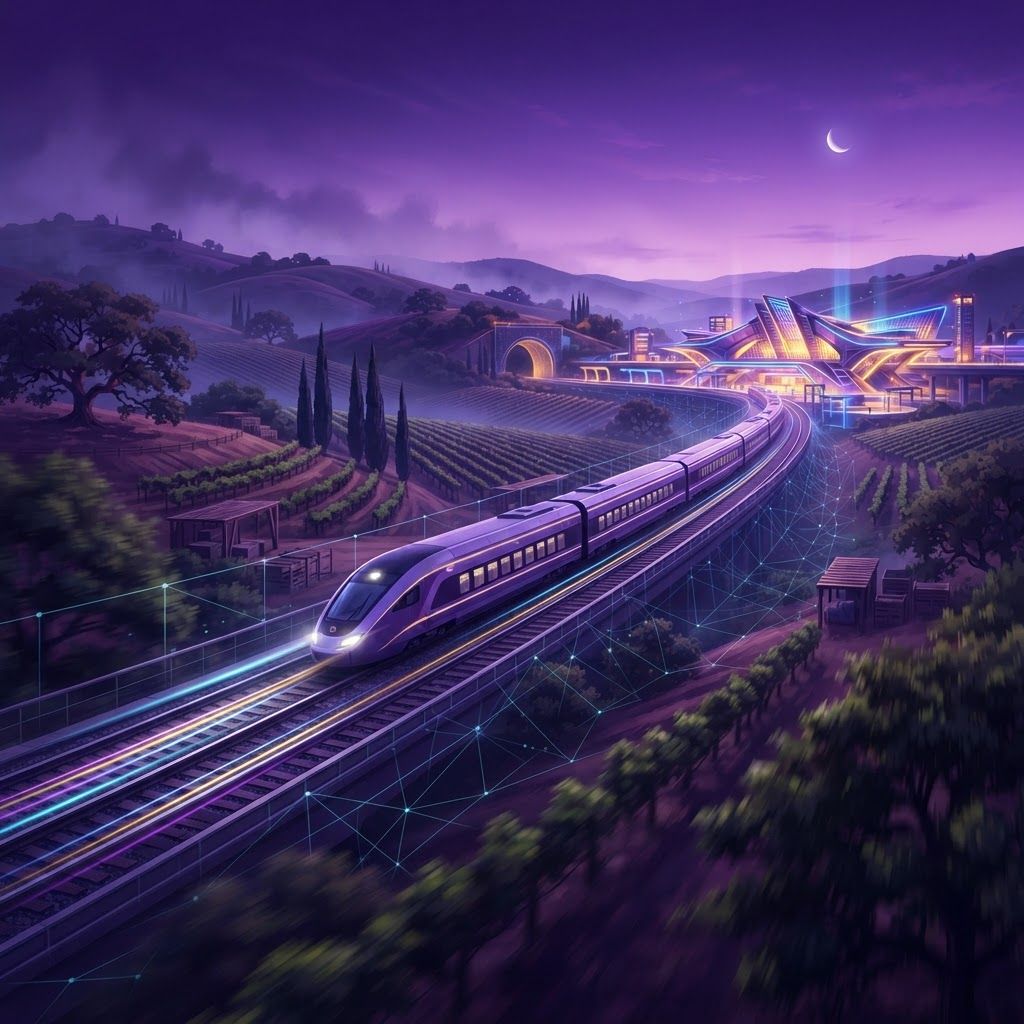
Rail Is Reshaping Travel in the North Bay
For much of the twentieth century, rail defined how goods and people moved through Sonoma County. Vineyards shipped by rail, lumber traveled south, and passenger service connected small towns to the wider state. Highways eventually took over, but the corridor never disappeared, and today rail is once again a serious part of the region's mobility conversation.
The revival matters for practical reasons. Highway 101 congestion imposes real costs on commuters and businesses, while climate goals push California toward lower-emission travel. Santa Rosa now sits on a growing passenger corridor with multiple downtown-accessible stations, and freight rail continues to serve industrial customers who move heavy volume efficiently.
The Top 10 Railway Operators Connected to Santa Rosa
1. Sonoma-Marin Area Rail Transit
SMART is the flagship passenger operator in the region, running modern diesel multiple-unit trains along the corridor between Sonoma and Marin counties with stations serving downtown Santa Rosa and the northern part of the city. Riders appreciate comfortable seating, bicycle capacity, onboard connectivity, and a parallel multi-use pathway that supports bike-and-rail commuting.
2. Amtrak
Amtrak links Santa Rosa travelers to the national passenger network through coordinated motorcoach connections to rail hubs. Long-distance and intercity services open travel to Sacramento, the Central Valley, Southern California, and beyond, all bookable on a single itinerary with checked baggage handling on many routes.
3. Capitol Corridor
Capitol Corridor provides frequent intercity service across the greater Sacramento and Bay Area region and functions as the practical onward connection for North Bay passengers. Business-class options, spacious seating, cafe service, and reliable schedules make it popular for professional travel where working en route is a priority.
4. Northwestern Pacific Railroad Company
The Northwestern Pacific operation handles freight movement along the historic North Coast corridor, serving industrial and agricultural customers. Rail is well suited to dense, heavy commodities, and this service keeps a meaningful number of truck trips off local highways while supporting regional manufacturing and construction supply.
5. California Northern Railroad
California Northern operates short-line freight service across Northern California agricultural regions, moving bulk commodities, agricultural inputs, and manufactured goods. Short lines like this act as essential first-mile and last-mile links, connecting local shippers to the larger national rail network.
6. Union Pacific Railroad
Union Pacific is one of the two dominant Class I railroads in the western United States, and its network carries Northern California freight to markets nationwide. Businesses in Sonoma County typically reach it through short-line interchange or transload facilities, gaining access to long-haul capacity at competitive cost per ton-mile.
7. BNSF Railway
BNSF provides the other major Class I option, with particular strength in intermodal container traffic connecting West Coast ports to inland markets. Importers and exporters in the region benefit from its scale, terminal infrastructure, and consistent long-haul schedules for containerized goods.
8. Sonoma Valley Railroad Excursions
Not all rail travel is about commuting. Excursion operators in the wine country offer scenic dining and tasting journeys aboard restored carriages, pairing regional cuisine with vineyard views. These experiences have become a distinctive tourism product, attracting visitors who want something more memorable than a shuttle between tasting rooms.
9. Northwestern Pacific Railroad Historical Society Excursions
Heritage rail groups preserve equipment, archives, and operating knowledge from the corridor's earlier eras, occasionally running special excursions and public events. Their work sustains local history and introduces younger residents to the role railroads played in shaping Sonoma County communities.
10. Golden Gate Ferry and Rail Connections
While not a railway itself, the coordinated ferry and rail connection at the southern end of the corridor completes many Santa Rosa journeys into San Francisco. Timed transfers between train and ferry create a car-free travel chain that is both scenic and remarkably efficient during peak commute periods.
How to Get the Most from Rail Travel Locally
Plan around the schedule rather than against it. Passenger rail in the corridor runs on defined headways, so checking departure times before leaving home prevents unnecessary waiting. Mobile ticketing applications typically offer the simplest fare experience and often include discounted multi-ride options for regular commuters.
Consider combining modes. Bicycles are welcome on passenger trains, and the parallel pathway makes first-mile and last-mile trips practical. Local bus routes connect stations to neighborhoods and employment centers, which means a car-free journey is realistic for many Santa Rosa residents. Freight shippers should ask about transload options, since even businesses without a rail spur can access rail economics through a nearby facility.
Trends in Regional Rail
Corridor extension is the headline trend, with continued planning to reach further north and improve frequency along existing segments. Station-area development follows closely behind, as cities encourage housing and commercial projects near stops to make transit genuinely convenient.
Cleaner propulsion is also advancing. Battery-electric and hydrogen trainsets are being evaluated across California, and the region has shown clear interest in reducing emissions from passenger rail. On the freight side, improved tracking technology and better interchange coordination are making short-line service more attractive to shippers who once dismissed rail as inflexible.
Final Thoughts
Rail in Santa Rosa is no longer a nostalgic footnote. Passenger service provides a genuine commuting alternative, freight operators keep heavy goods moving efficiently, and excursion trains add a distinctive tourism experience. Whether you are planning a daily commute, a shipping strategy, or a weekend outing, the region's rail options deserve a serious look.