
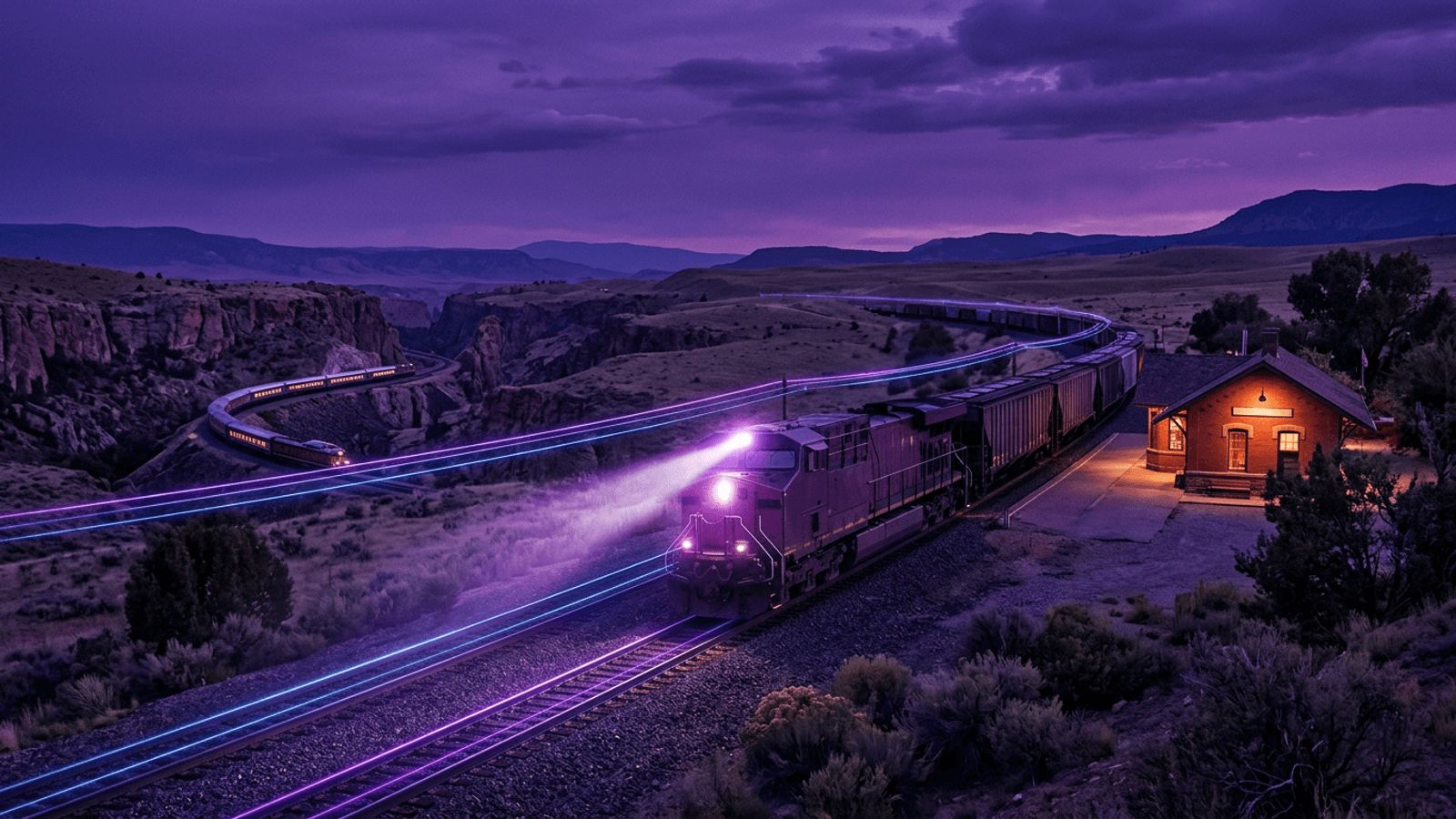
Pueblo's Railroad Heritage
Few cities in the American West owe as much to railroads as Pueblo. In the late nineteenth century, the arrival of rail lines connected Pueblo's growing steel mills and smelters to national markets, transforming the city into a powerhouse of industry. The Denver and Rio Grande Railroad, the Atchison, Topeka and Santa Fe Railway, and other lines converged here, and the grand Union Depot, completed in 1889, became a symbol of the city's importance.
Today, railroads continue to play a vital role in Pueblo's economy, research community, and tourism. Here are the top railway operators connected to Pueblo and southern Colorado.
1. BNSF Railway
BNSF Railway is one of the largest freight railroads in North America and the successor to the historic Santa Fe and Burlington Northern lines. In southern Colorado, BNSF moves coal, grain, steel, and intermodal freight. Its presence supports Pueblo's heavy industries and connects local shippers to national and international markets.
2. Union Pacific Railroad
Union Pacific, which absorbed the historic Denver and Rio Grande Western through its merger with Southern Pacific, operates rail lines through Pueblo and the Arkansas Valley. The railroad handles a wide variety of freight, including industrial products and bulk commodities, and plays a key role in the region's supply chain.
3. MxV Rail
MxV Rail, formerly known as the Transportation Technology Center, operates a renowned rail research and testing facility northeast of Pueblo. The site features dozens of miles of test track used to evaluate rail safety, equipment durability, and new technologies. Railroads and agencies from around the world rely on MxV Rail's research, making Pueblo an important center of rail innovation.
4. Amtrak
Amtrak's Southwest Chief, which runs between Chicago and Los Angeles, serves southeastern Colorado with stops in La Junta and Trinidad. Pueblo residents can reach these stations by car or bus to board the train, enjoying scenic views of the plains, Raton Pass, and the desert Southwest. The Southwest Chief offers coach seating, sleeper cars, and a dining car.
5. Royal Gorge Route Railroad
The Royal Gorge Route Railroad in Cañon City offers one of Colorado's most spectacular train rides. Trains travel along the Arkansas River through the depths of the Royal Gorge, with sheer granite cliffs rising high above. Dining options, open-air cars, and seasonal themed trips make it a favorite excursion for Pueblo residents and visitors.
6. Front Range Passenger Rail District
The Front Range Passenger Rail District was created by the state of Colorado to plan and develop passenger rail service along the Interstate 25 corridor. Its long-term vision includes connecting Pueblo, Colorado Springs, Denver, and Fort Collins. While service is still in the planning stages, the district represents an exciting future for regional rail travel.
7. Pueblo Railway Museum
The Pueblo Railway Museum preserves the city's rail heritage with restored locomotives, rolling stock, and historical exhibits near Union Depot. The museum periodically operates short train rides and special events, giving families a hands-on way to experience railroad history.
8. San Luis and Rio Grande Railroad
The San Luis and Rio Grande Railroad operates in the San Luis Valley southwest of Pueblo, providing freight service and, at times, scenic excursions over historic La Veta Pass. Its routes traverse some of the most beautiful high-country landscapes in southern Colorado.
9. Cumbres and Toltec Scenic Railroad
Running between Antonito, Colorado, and Chama, New Mexico, the Cumbres and Toltec Scenic Railroad is one of the longest and highest narrow-gauge steam railroads in the United States. It is a bucket-list experience for rail enthusiasts and an easy road trip from Pueblo.
10. Durango and Silverton Narrow Gauge Railroad
The Durango and Silverton Narrow Gauge Railroad, in southwestern Colorado, has been operating since the 1880s. Its coal-fired steam locomotives carry passengers through the rugged San Juan Mountains, offering an unforgettable journey into the past. Many Pueblo travelers include it in a Colorado rail-focused vacation.
The Importance of Rail to Pueblo's Economy
Rail is essential for Pueblo's heavy industries. The city's steel mill has long produced rail, and shipping heavy products by train is more efficient and environmentally friendly than trucking. Rail also supports agriculture in the Arkansas Valley, where crops such as melons, onions, and the famous Pueblo chile are grown and shipped. Wind energy manufacturing in Pueblo benefits from rail access as well, since large components can be transported efficiently.
MxV Rail adds another dimension by bringing engineers, researchers, and international visitors to the region, contributing to Pueblo's reputation as a hub of transportation expertise.
Rail Industry Trends
The rail industry is embracing new technologies such as positive train control, predictive maintenance, and alternative fuels. Railroads are testing battery-electric and hydrogen-powered locomotives to reduce emissions. Intermodal shipping continues to grow as shippers seek cost-effective, sustainable alternatives to long-haul trucking.
On the passenger side, renewed interest in regional rail across the country has fueled planning efforts like the Front Range Passenger Rail District. If realized, passenger trains could provide Pueblo residents with a convenient alternative to driving Interstate 25.
Final Thoughts
From freight giants that power its industries to scenic trains that showcase Colorado's beauty, Pueblo remains deeply connected to the railroad. Whether you are a shipper, a researcher, or a traveler, these railway operators highlight the enduring importance of rail in southern Colorado's past, present, and future.