
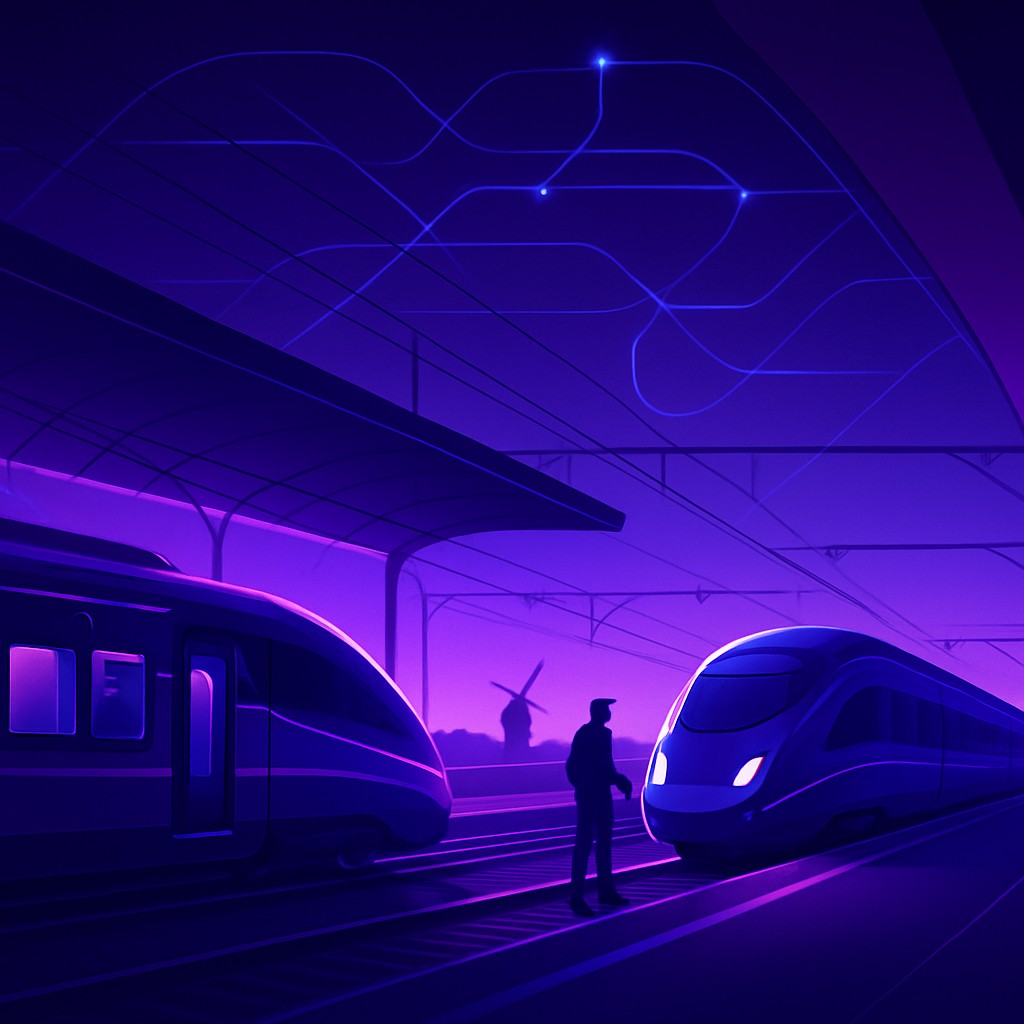
The Backbone of Dutch Transport
Railways form the backbone of the Netherlands' transport system, offering fast, frequent, and reliable connections between cities, towns, and neighboring countries. With one of the most densely used rail networks in the world, the Dutch railway system exemplifies efficiency and accessibility. For commuters, business travelers, and tourists alike, trains provide a convenient and comfortable way to traverse the country.
The Netherlands' compact geography and high population density make rail travel especially practical. Trains connect major hubs such as Amsterdam, Rotterdam, The Hague, and Utrecht within short journey times, while also reaching smaller communities. This extensive coverage, combined with punctuality and modern infrastructure, has made rail one of the most popular modes of transport in the country.
The National Railway: NS
At the center of the Dutch rail system is Nederlandse Spoorwegen, commonly known as NS, the principal national passenger railway operator. NS operates the majority of train services across the country, including intercity and sprinter trains that connect cities and regional destinations. Its extensive network and frequent schedules form the foundation of Dutch rail travel.
NS is renowned for its reliability, comfortable trains, and integrated services. The operator continually invests in modernizing its fleet, improving stations, and enhancing the passenger experience. With clear timetables, real-time information, and seamless connections to other transport modes, NS sets the standard for rail travel in the Netherlands.
Regional and Specialized Operators
In addition to NS, several regional operators serve specific areas of the country, providing essential connections in regions where dedicated local services are needed. Companies such as Arriva, Connexxion, and Keolis operate regional train lines, often complementing NS services and ensuring comprehensive coverage across the Netherlands.
These regional operators play a vital role in connecting smaller towns and rural communities to the broader network. Their services are integrated into the national ticketing system, allowing passengers to travel seamlessly across different operators. This collaboration ensures that even less densely populated areas enjoy reliable and convenient rail access.
International Rail Connections
The Netherlands is well connected to the wider European rail network, offering fast international services to neighboring countries. High-speed trains such as the Eurostar and Intercity services link Amsterdam and other Dutch cities to destinations like Brussels, Paris, and major German hubs. These connections make international travel swift and comfortable.
High-speed rail offers an attractive alternative to flying for many European journeys, combining city-center departures with reduced travel times and environmental benefits. The integration of Dutch railways into the European network reinforces the country's role as a key transport hub and provides travelers with convenient cross-border options.
Ticketing, Technology, and Convenience
Dutch rail travel is supported by an advanced and user-friendly ticketing system. The OV-chipkaart smart card allows passengers to travel seamlessly across trains, buses, trams, and metros nationwide. In addition, mobile apps, contactless payments, and online booking platforms make purchasing tickets and planning journeys effortless.
Real-time travel information, available through apps and station displays, keeps passengers informed about schedules, platforms, and any disruptions. This focus on technology and convenience enhances the overall travel experience, allowing passengers to navigate the network with ease and confidence. Such innovations reflect the forward-thinking nature of Dutch transport.
Comfort, Accessibility, and Sustainability
Dutch trains are designed with passenger comfort and accessibility in mind. Modern carriages offer spacious seating, quiet zones, and facilities for travelers with reduced mobility. Stations are equipped with ramps, elevators, and clear signage, ensuring that rail travel is inclusive and accessible to all.
Sustainability is a hallmark of the Dutch railway sector. NS, for example, has made significant strides toward operating trains powered by renewable energy. Rail travel inherently offers a lower carbon footprint than many other transport modes, making it an environmentally responsible choice that aligns with the country's green ambitions.
Tips for Smooth Rail Travel
To make the most of Dutch rail travel, planning journeys using official apps and journey planners is highly recommended. Checking schedules, especially for regional or international routes, ensures smooth connections. Acquiring an OV-chipkaart or using contactless payment simplifies boarding and transfers.
Traveling outside peak hours can offer a more relaxed experience and, in some cases, better fares. Arriving at stations a few minutes early and keeping travel documents accessible contributes to a stress-free journey. With minimal preparation, rail travel in the Netherlands becomes an efficient and enjoyable way to explore the country.
For visitors planning extensive exploration, special travel passes and group tickets can offer excellent value, allowing unlimited or discounted travel within set periods. Combining rail journeys with the country's famous cycling culture is also popular, as many stations offer bicycle rentals and dedicated bike storage. This seamless integration of train and bike travel embodies the Dutch spirit of sustainable, flexible mobility.
Final Thoughts
The Netherlands boasts one of Europe's finest railway systems, offering fast, reliable, and sustainable travel across the country and beyond. Led by the national operator NS and supported by capable regional and international services, Dutch railways deliver exceptional convenience and comfort. By understanding the network, operators, and ticketing options, travelers can fully embrace rail travel as a premier way to discover the Netherlands.