
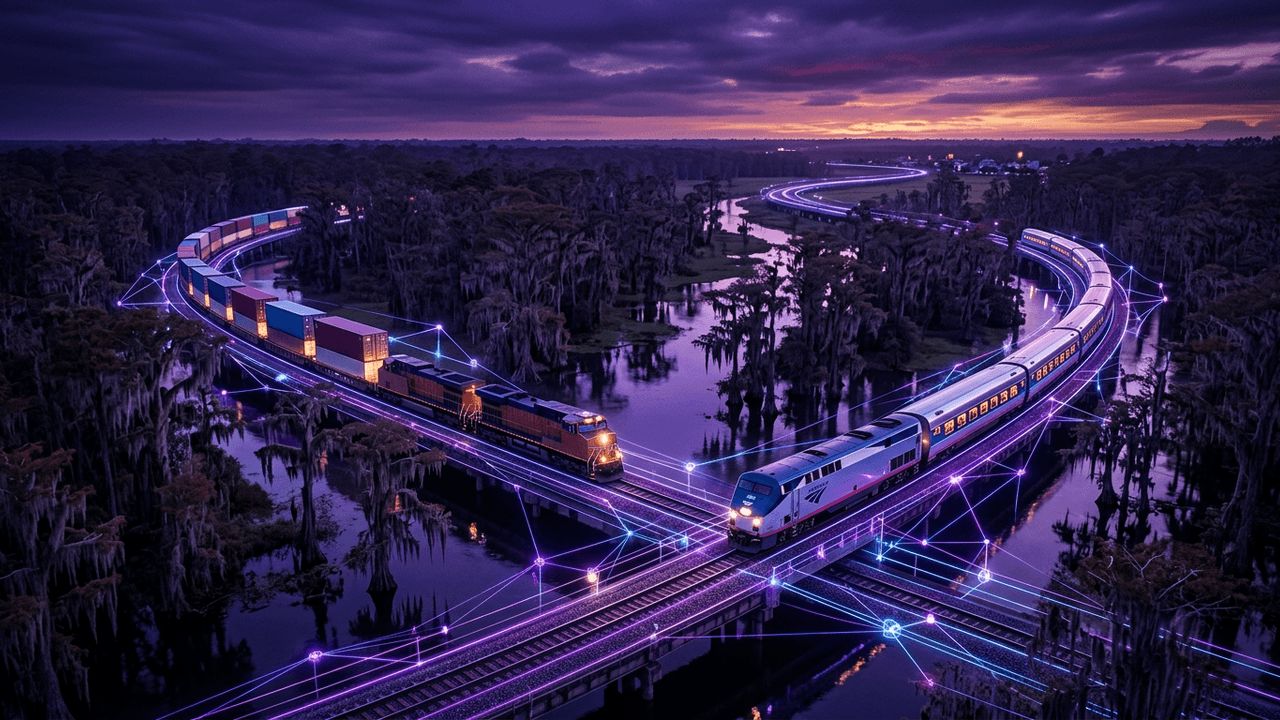
Rail's Role in Lafayette
Railroads have been part of Lafayette's story since the late nineteenth century, when rail lines helped transform a small town into a regional commercial center. Today, rail continues to support both passenger travel and freight transportation, linking Acadiana to Houston, New Orleans, and the rest of the country.
For businesses, rail offers an efficient, cost-effective way to move bulk goods such as chemicals, aggregates, agricultural products, and industrial materials. For travelers, it provides a scenic and relaxing alternative to driving or flying.
Passenger and Freight Rail Explained
Passenger rail in Lafayette is provided by Amtrak, while freight is handled by Class I railroads and smaller regional and short line railroads. Short lines often serve as the critical first and last mile, connecting local industries to the national rail network.
The Top 10 Railway Operators Serving Lafayette and Acadiana
1. Amtrak
Amtrak's Sunset Limited stops at the Lafayette station, connecting the city with New Orleans to the east and Houston, San Antonio, and Los Angeles to the west. It is a memorable way to travel across the southern United States.
2. BNSF Railway
BNSF is one of the largest freight railroads in North America and operates in South Louisiana. Its network supports shipments of consumer goods, industrial products, and agricultural commodities.
3. Union Pacific Railroad
Union Pacific operates an extensive network across the western two-thirds of the U.S., including Louisiana. It plays a major role in moving chemicals, energy products, and manufactured goods.
4. CPKC
CPKC, formed through the combination of Canadian Pacific and Kansas City Southern, connects the United States, Canada, and Mexico. Its presence in Louisiana enhances cross-border trade opportunities.
5. CN
CN operates a network that reaches the Gulf Coast, linking Louisiana to markets in the Midwest and Canada. It is an important partner for shippers moving goods north.
6. Louisiana and Delta Railroad
Based in the New Iberia area, the Louisiana and Delta Railroad is a short line that serves industrial customers in South Louisiana. It connects local businesses with Class I networks.
7. Acadiana Railway
Acadiana Railway is a short line serving communities north of Lafayette. It provides local freight service to agricultural and industrial customers.
8. CSX Transportation
CSX serves the eastern United States and reaches New Orleans, offering Lafayette shippers access to eastern markets through interchange partners.
9. Norfolk Southern
Norfolk Southern operates in the eastern U.S. and connects with Gulf Coast routes, helping shippers reach the Southeast and Atlantic seaboard.
10. Rail Logistics and Transload Providers
Transload facilities in the region help businesses without direct rail access move goods between trucks and railcars, combining the flexibility of trucking with the efficiency of rail.
Benefits of Rail Transportation
Rail is one of the most fuel-efficient ways to move freight over land, reducing emissions and highway congestion. It is especially cost-effective for heavy and bulk shipments over long distances. For passengers, rail offers the comfort of moving around, scenic views, and freedom from traffic.
Tips for Traveling by Train From Lafayette
Book Amtrak tickets in advance, as fares often rise closer to departure. Check the schedule carefully, since long-distance trains run on a limited weekly schedule. Consider a roomette for overnight journeys, and bring snacks, a charger, and a good book for the ride.
Rail Industry Trends
Railroads are investing in precision scheduling, track upgrades, and safety technology. There is ongoing discussion about expanding passenger rail service along the Gulf Coast, which could bring more frequent trains to the region. Intermodal shipping continues to grow as businesses seek efficient alternatives to long-haul trucking.
Rail and Lafayette's History
The arrival of the railroad in the 1880s helped turn Lafayette, then known as Vermilionville, into a thriving commercial hub. Rail lines connected local farmers, merchants, and manufacturers with markets in New Orleans and Texas, fueling growth in agriculture, especially sugarcane and rice. The railroad also brought new residents and businesses, shaping the downtown area that still serves as the heart of the city today. This legacy is one reason rail remains an important part of the region's identity.
Choosing Rail for Your Business
Businesses considering rail should evaluate shipment volume, distance, and frequency. Rail is most cost-effective for heavy, bulk, or high-volume shipments traveling long distances. Companies without direct rail access can use transload facilities to combine trucking and rail. Working with a short line railroad or rail logistics provider can simplify the process, as they help coordinate car supply, scheduling, and interchange with Class I railroads.
Rail Safety in the Community
With active rail lines running through Lafayette, safety at crossings is important for drivers, cyclists, and pedestrians. Always obey warning signals and gates, never try to beat an approaching train, and remember that trains cannot stop quickly. Walking on tracks or railroad property is dangerous and illegal. Rail operators and community organizations regularly promote safety awareness programs to reduce accidents and keep neighborhoods safe.
Final Thoughts
From Amtrak's historic Sunset Limited to the freight railroads that power local industry, rail remains a vital part of Lafayette's transportation network. Whether you are shipping goods or planning a scenic trip, these operators keep Acadiana connected. Confirm current schedules and services directly with each operator.