
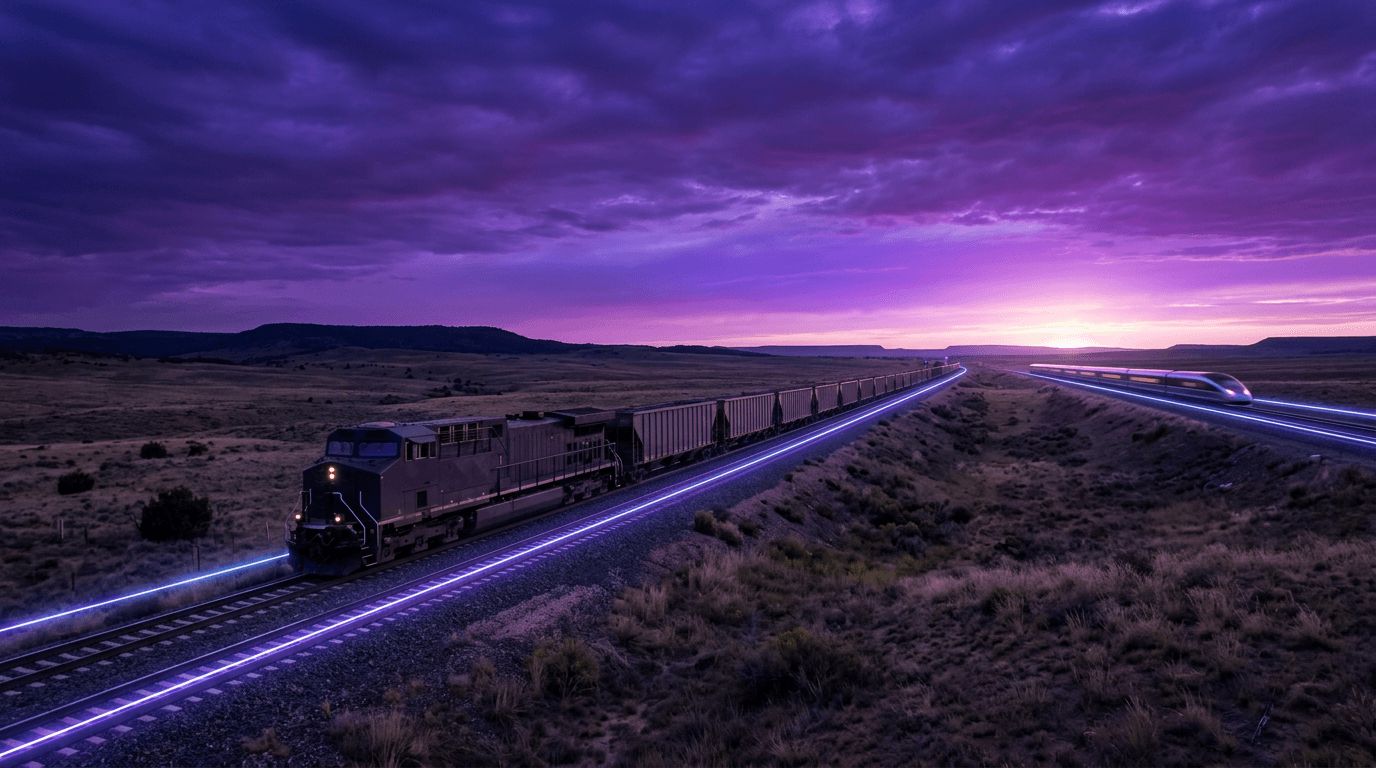
The Railroad Roots of College Station
College Station owes its very name to the railroad. In the late nineteenth century, the Houston and Texas Central Railway established a stop near the newly founded Agricultural and Mechanical College of Texas, and the area became known as College Station. Today, rail continues to play an important role in moving freight through the Brazos Valley, while passenger rail options and future high-speed projects shape conversations about regional mobility.
Here are ten railway operators and rail-related services connected to College Station and the surrounding region.
The Top 10 Railway Operators and Rail Services
1. Union Pacific Railroad
Union Pacific is the largest freight railroad in the western United States and operates the primary rail line through Bryan-College Station. Its trains carry aggregates, chemicals, agricultural products, and consumer goods across Texas and beyond.
2. BNSF Railway
BNSF operates an extensive freight network across Texas, with routes in the broader Brazos Valley region. Its intermodal and bulk services connect Texas businesses with ports and markets nationwide.
3. Canadian Pacific Kansas City
CPKC formed the first single-line railway connecting Canada, the United States, and Mexico. Its Texas operations support growing trade flows between Mexico and North American markets.
4. Amtrak
Amtrak provides long-distance passenger service in Texas through routes such as the Texas Eagle and Sunset Limited. College Station travelers can connect through Amtrak Thruway bus services and nearby stations to reach destinations across the country.
5. Rockdale, Sandow & Southern Railroad
This short line railroad operates in Milam County, west of College Station, serving industrial customers and connecting with larger freight railroads.
6. Texas State Railroad
The Texas State Railroad is a heritage railroad in East Texas offering scenic excursions on historic trains. It is a popular weekend trip for Brazos Valley families and rail enthusiasts.
7. Austin Steam Train Association
The Austin Steam Train Association offers vintage train excursions through the Texas Hill Country, providing a nostalgic experience within driving distance of College Station.
8. Watco
Watco operates short line railroads and terminal services across North America, including in Texas. Short lines like those managed by Watco play a vital role in connecting rural industries to national networks.
9. Genesee & Wyoming
Genesee & Wyoming owns and operates numerous short line and regional railroads, including several in Texas that serve agricultural and industrial shippers.
10. Texas Central
Texas Central has proposed a high-speed rail line between Dallas and Houston, with a planned Brazos Valley station near Roans Prairie. The project has seen significant ownership and planning changes, but it continues to spark interest in faster intercity travel for the region.
Freight Rail and the Local Economy
Freight rail efficiently moves heavy and bulk goods over long distances, reducing truck traffic on highways. In the Brazos Valley, rail supports industries such as construction materials, agriculture, energy, and manufacturing. Rail access can be a significant factor for businesses choosing locations for industrial facilities.
Passenger Rail Possibilities
Many College Station residents and students travel frequently to Houston, Dallas, and Austin. Improved passenger rail could reduce highway congestion and offer an alternative to driving. Texas has studied various corridor projects, and the Texas A&M Transportation Institute contributes research on future mobility, including rail planning and safety.
Rail Safety in the Community
Because active rail lines pass through Bryan and College Station, safety at crossings is important. Drivers should never attempt to beat a train, and pedestrians should only cross tracks at designated crossings. Rail operators and local agencies continue to invest in crossing upgrades and public awareness programs.
Trends in Rail Transportation
Railroads are adopting precision scheduling, advanced signaling, and fuel-efficient locomotives. Intermodal shipping is growing as companies seek sustainable alternatives to long-haul trucking. Interest in passenger rail is rising across Texas as population growth strains highway capacity.
Frequently Asked Questions
Is there an Amtrak station in College Station?
College Station does not have its own Amtrak rail station. Travelers typically use Amtrak Thruway bus connections or drive to nearby stations to access the national rail network.
Why did College Station get its name?
The city takes its name from the railroad stop that served the Agricultural and Mechanical College of Texas in the late nineteenth century.
Will high-speed rail come to the Brazos Valley?
Proposals for a Dallas-to-Houston high-speed line have included a Brazos Valley station, but the project's timeline and future remain uncertain. Residents should follow official updates for the latest status.
Can businesses ship freight by rail from the Brazos Valley?
Yes. Businesses with rail access can work directly with Class I railroads or short line operators, while others use transload facilities where freight moves between trucks and railcars. Rail is especially cost-effective for heavy, bulky, or high-volume shipments traveling long distances across Texas and the nation.
Conclusion
From its historic beginnings as a railroad stop to its role in today's freight network, College Station remains closely tied to rail. The operators above keep goods moving, preserve rail heritage, and point toward a future where passenger rail may once again play a larger role in Brazos Valley travel.