
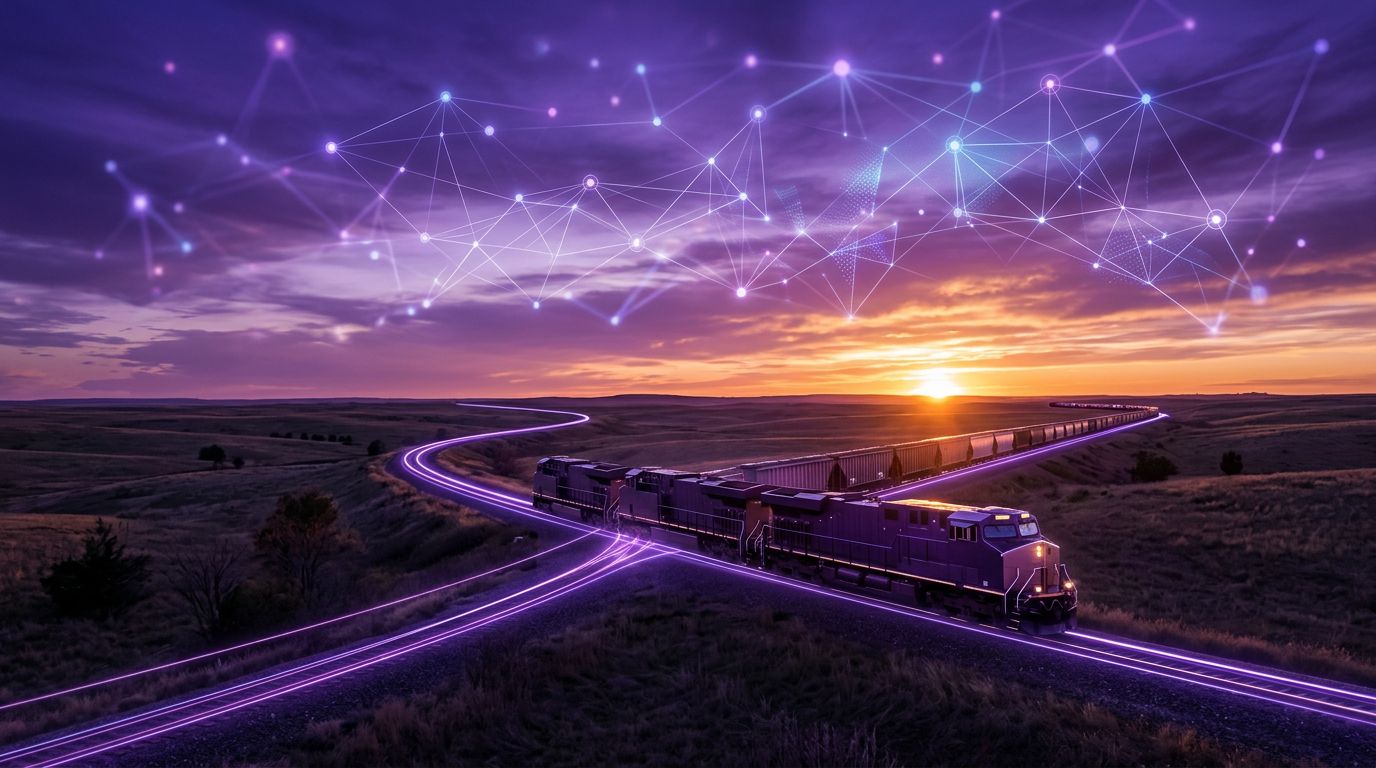
A City Built by the Railroad
Broken Arrow's history is closely tied to the railroad. The city was founded in the early 1900s along the Missouri-Kansas-Texas Railroad, commonly called the Katy, which created a townsite to serve the line. That heritage is still visible today, as rail tracks run near the historic downtown area now known as the Rose District. While passenger trains no longer stop in Broken Arrow, rail remains essential to the region's freight economy.
The Tulsa metro is served by Class I railroads, regional lines, and short line operators that connect manufacturers, energy producers, agricultural businesses, and the Tulsa Port of Catoosa to national and international markets.
Why Rail Matters for Northeast Oklahoma
Rail is one of the most fuel-efficient ways to move heavy freight over long distances. It supports industries such as energy, agriculture, aggregates, chemicals, and manufacturing. For businesses in and around Broken Arrow, rail access can reduce shipping costs, ease highway congestion, and provide connections to ports and markets across North America.
The Top 10 Railway Operators Serving the Broken Arrow Region
1. Union Pacific Railroad
Union Pacific is one of the largest railroads in North America, operating a vast network across the western two-thirds of the United States. Its lines in Oklahoma include routes inherited from historic railroads such as the Katy, including the corridor associated with Broken Arrow's founding.
2. BNSF Railway
BNSF operates one of the largest freight networks in North America and maintains significant operations in the Tulsa area. It moves intermodal containers, agricultural products, energy commodities, and industrial goods.
3. South Kansas & Oklahoma Railroad
The South Kansas & Oklahoma Railroad is a regional line operated by Watco. It serves customers across Kansas and Oklahoma, connecting local industries with Class I railroads.
4. Sand Springs Railway
Sand Springs Railway is a historic short line serving industrial customers west of Tulsa. It provides switching services that connect local businesses to larger rail networks.
5. Tulsa-Sapulpa Union Railway
The Tulsa-Sapulpa Union Railway is a short line that has served the Tulsa area for more than a century. It provides industrial switching and interchange services for local shippers.
6. Watco
Watco operates numerous short line railroads, terminals, and port services across the United States. Its presence in Oklahoma, including operations connected to the Tulsa Port of Catoosa, makes it an important regional rail partner.
7. Stillwater Central Railroad
Stillwater Central Railroad is a regional railroad operating in central Oklahoma. It connects agricultural and industrial shippers to the broader rail network.
8. Arkansas-Oklahoma Railroad
The Arkansas-Oklahoma Railroad is a short line serving eastern Oklahoma, supporting industries such as aggregates and forestry with essential freight connections.
9. Kiamichi Railroad
The Kiamichi Railroad operates in southeastern Oklahoma and nearby states, providing service to industrial and natural resource shippers in the region.
10. Amtrak
Amtrak provides intercity passenger service in Oklahoma through the Heartland Flyer, which connects Oklahoma City and Fort Worth. Broken Arrow residents seeking rail travel typically drive to Oklahoma City to board, and ongoing discussions about expanded passenger rail continue to attract interest in northeast Oklahoma.
Rail and the Tulsa Port of Catoosa
The Tulsa Port of Catoosa, located a short drive north of Broken Arrow, is a major multimodal hub where rail, river barge, and truck transportation meet. Rail service at the port allows companies to move bulk goods efficiently and connect to the McClellan-Kerr Arkansas River Navigation System, which links Oklahoma to the Mississippi River and the Gulf of Mexico.
Trends in Rail Transportation
Railroads are investing in precision scheduling, improved safety technology, and fuel-efficient locomotives. Intermodal shipping continues to grow as businesses look for cost-effective alternatives to long-haul trucking. Short line railroads are increasingly important as they provide first-mile and last-mile connections for local industries. Passenger rail advocacy is also growing, with interest in connecting Tulsa and Oklahoma City.
How Businesses Can Use Rail
Businesses shipping heavy or high-volume goods should evaluate rail as part of their transportation strategy. Transloading facilities allow companies without direct rail access to move goods between trucks and railcars. Working with a short line operator or logistics provider can help identify cost savings and service options.
Frequently Asked Questions
Can I take a passenger train from Broken Arrow?
There is currently no passenger rail service in Broken Arrow. Travelers interested in train travel can drive to Oklahoma City to board Amtrak's Heartland Flyer to Fort Worth, where they can connect to the national network. Regional leaders continue to discuss expanded passenger rail options for northeast Oklahoma.
How do businesses without rail access use trains?
Businesses without direct rail spurs can use transload facilities, where freight is transferred between trucks and railcars. Short line operators and logistics companies help coordinate these moves, giving smaller shippers access to rail's cost advantages.
Is rail freight environmentally friendly?
Rail is one of the most fuel-efficient ways to move heavy freight over land. Moving goods by train instead of truck can significantly reduce fuel consumption and emissions per ton of cargo, which is increasingly important to companies with sustainability goals.
Final Thoughts
From its origins as a railroad townsite to its place in today's regional economy, Broken Arrow remains connected to rail. The operators above keep freight moving across Oklahoma and the nation, supporting jobs, industry, and growth throughout northeast Oklahoma.