
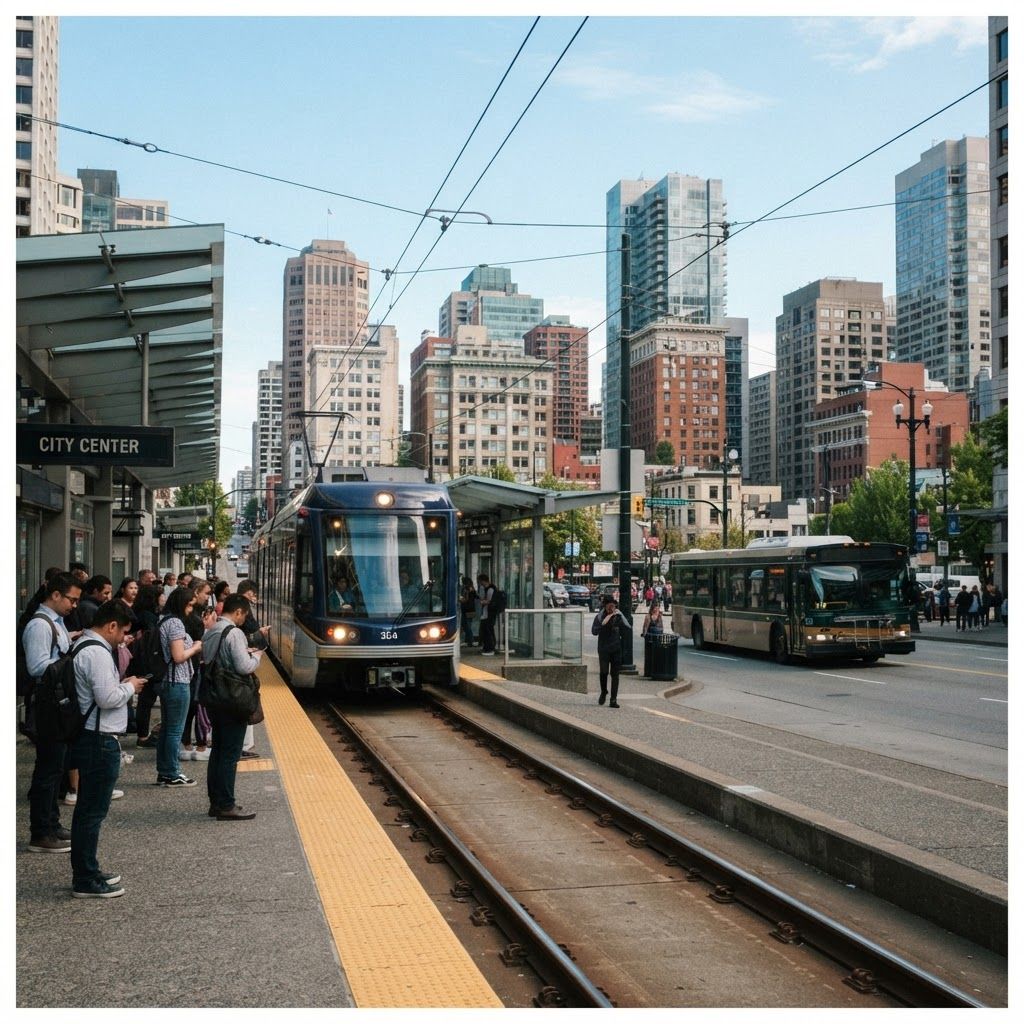
The Case for Transit in a Driving City
St. Louis is often described as a car-dependent metro, and broadly that is accurate. It is also incomplete. The region operates one of the more extensive light rail systems in the American Midwest, a bus network redesigned around frequency rather than coverage, and cross-river service linking Missouri and Illinois under a single fare structure. For a substantial number of trips, particularly along the central corridor between downtown, Midtown, the Central West End and Clayton, transit is genuinely competitive with driving once parking is priced honestly.
The system's weakness is the same as its strength: it was built around a linear corridor. If your origin and destination both sit near that spine, transit works well. If you are traveling suburb to suburb across the grain of the network, it does not. Knowing which trip you have is the whole skill.
How Fares and Transfers Work
The regional system uses a unified fare structure across light rail and bus, with two-hour transfers that make multi-leg trips practical rather than punitive. Day passes, weekly and monthly options exist, and the monthly pass reaches its break-even point at roughly two round trips per week, meaning most regular commuters should simply buy the pass. Reduced fares apply for seniors, riders with disabilities and students with proper documentation, and several area universities and large employers participate in programs that provide passes to students and staff at no individual cost. Worth asking your employer or registrar before paying out of pocket.
The Ten Most Useful Transit Services in the Region
1. MetroLink Red Line
The backbone of the system, running from Lambert International Airport through north county, into downtown, and continuing east across the Mississippi to Shiloh-Scott in Illinois. For airport access it is the single best value in the region, delivering you downtown for the price of a transit fare rather than a rideshare surge. Frequencies are best during weekday peaks and thin considerably late at night.
2. MetroLink Blue Line
Running from Shrewsbury in south county through the Central West End, Forest Park and Clayton before joining the shared central corridor into downtown, the Blue Line serves the region's densest concentration of hospitals, universities and office employment. Along the shared central segment the two lines combine to produce genuinely frequent service. This is the line that makes car-free living plausible in the Central West End or the Delmar Loop.
3. MetroBus Frequent Network
Following the network redesign, a core set of bus routes operates at high frequency throughout the day rather than only at peaks. These corridors along Grand, Delmar, Natural Bridge, Chippewa and Manchester carry the majority of bus ridership and are the routes where you can arrive at a stop without consulting a schedule. Learning which corridors are frequent is more valuable than memorizing route numbers.
4. Metro Call-A-Ride
The region's paratransit service, providing origin-to-destination trips for riders whose disabilities prevent use of fixed-route service, operating under Americans with Disabilities Act requirements. Eligibility requires an application and functional assessment, and trips are reserved in advance. For those who qualify it is essential infrastructure rather than a convenience, and the service area extends broadly across the transit district.
5. Madison County Transit
Serving the Illinois side including Edwardsville, Granite City, Alton and Collinsville, MCT operates local bus service plus express routes connecting to MetroLink stations for onward travel into Missouri. MCT also maintains an extensive regional trail network, and the agency's bike-on-bus accommodation makes multimodal commuting from the Metro East genuinely workable.
6. St. Clair County Transit District
Operating bus service in Belleville, Fairview Heights, East St. Louis and surrounding communities, and funding the Illinois MetroLink extension, SCCTD connects the Illinois suburbs to the regional rail spine. Park-and-ride facilities at Illinois MetroLink stations are the practical entry point for most Metro East commuters heading into downtown or Clayton.
7. Loop Trolley
A heritage streetcar operating along Delmar Boulevard connecting the Delmar Loop entertainment district to Forest Park and the History Museum. Its function is more circulatory and recreational than commuter-oriented, and on that basis it works: parking in the Loop is difficult, and the trolley moves visitors between the Loop, the park and the museums without moving a car.
8. Bi-State Shuttle and Employer Circulators
Several large institutions including the major hospital systems, Washington University and corporate campuses in Clayton and Creve Coeur operate shuttle services connecting MetroLink stations to their campuses. These closed the last-mile gap that historically made transit impractical for suburban office employment. If you work at a large institution, check whether a station shuttle exists before concluding transit will not work.
9. Metro Transit Park-and-Ride Network
Not a service in itself but a system feature worth treating as one. Free or low-cost parking at outlying MetroLink stations including Shrewsbury, North Hanley, Fairview Heights and others lets suburban residents drive a short distance and rail the congested segment. For anyone commuting into downtown, this hybrid approach usually beats both pure driving and pure transit.
10. Regional Microtransit and On-Demand Zones
Newer on-demand shared-ride zones operate in lower-density parts of the region where fixed-route service cannot be justified, letting riders request trips within a defined area via app or phone and connect to the fixed-route network. This model is the most likely direction of future expansion in the metro, and current coverage areas are worth checking if you live outside the traditional service map.
Making Transit Actually Work Here
Plan trips with a real-time tool rather than a printed schedule, since the useful information is the vehicle's actual position. Understand that transfers are where transit trips fail, so a two-seat ride on frequent corridors will beat a one-seat ride on an hourly route almost every time.
If you are choosing where to live and want to reduce car dependence, prioritize proximity to the central corridor. Living within a comfortable walk of a MetroLink station in the Central West End, Grand, Delmar Loop or Maplewood-Manchester area changes the calculation entirely. Living ten minutes from a station by car does not.
Closing Thought
Transit in St. Louis rewards people who learn the system's shape. Along the central spine it is fast, cheap and pleasant. Across the suburban grain it is slow. Match your trips to the network's strengths, use park-and-ride for the rest, and the region becomes noticeably more navigable than its reputation suggests.