
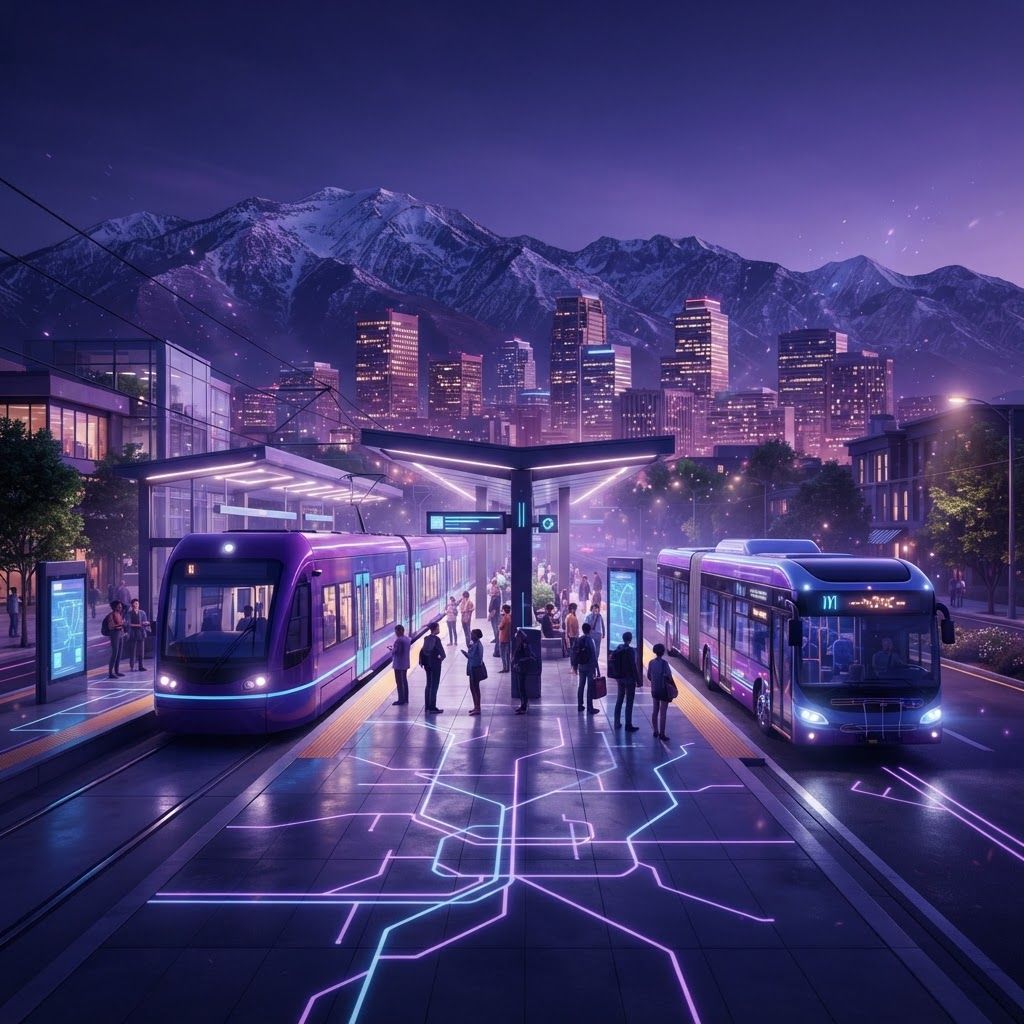
A Transit Network Built Around a Valley
Salt Lake City geography has shaped its transit system in a way few other American cities can claim. The metro area stretches along a narrow north-south corridor pinned between the Wasatch Range and the Great Salt Lake, which makes linear rail service unusually efficient. Instead of dispersing service across a sprawling grid, planners have been able to concentrate investment along a spine that serves downtown, the university, the airport, the suburbs and the growing technology corridor to the south.
The result is a network that genuinely competes with driving for many trips. Residents commuting from Ogden or Provo can reach downtown by train, students can travel from campus to the city center in minutes, and visitors can arrive at the airport and reach a downtown hotel on a single light rail ride. Air quality during winter inversions has given the system additional public importance, since reducing vehicle trips is one of the most direct tools the region has for improving valley air.
Understanding Fares, Passes and Payment
Fares are structured around single-ride tickets, day passes and monthly passes, with reduced rates for seniors, youth and riders with disabilities. Commuter rail is distance-based, so a trip from a far northern or southern station costs more than a short hop. Contactless payment allows riders to tap a bank card or phone directly at the platform validator, and fare capping means frequent riders are not penalized for paying per ride.
Employer and university programs are worth investigating before buying a pass. Many large employers, hospitals and colleges along the Wasatch Front subsidize transit passes for staff and students, sometimes making travel effectively free. Downtown also includes a free fare zone where light rail travel within the core area carries no charge, which is convenient for lunch trips, meetings and errands.
The Top 10 Public Transit Services in Salt Lake City
1. TRAX Light Rail is the backbone of the system, with lines connecting downtown to the airport, the university, and the southern suburbs. Frequent service, dedicated right-of-way and level boarding make it the most reliable option for cross-valley travel during peak hours.
2. FrontRunner Commuter Rail runs along the Wasatch Front from Ogden through Salt Lake City to Provo, serving long-distance commuters with comfortable seating, bike space and travel times that beat rush-hour driving on Interstate 15.
3. UTA Bus Network provides the coverage that rail cannot, reaching neighborhoods, employment centers and suburban destinations throughout the valley. Frequent-service routes on major arterials operate at intervals short enough that riders can arrive without consulting a schedule.
4. UTA On Demand offers app-based microtransit in designated zones, functioning like a shared ride service at transit fares. It solves the first and last mile problem in areas where fixed-route buses would be inefficient.
5. S Line Streetcar links Sugar House to the TRAX network along a former rail corridor, paired with a popular walking and cycling greenway. It has become a model for how transit investment can support neighborhood development.
6. Airport TRAX Green Line deserves separate mention because direct rail access to a terminal is a significant amenity. Travelers avoid parking fees and rideshare surcharges, and the ride to downtown takes only a matter of minutes.
7. University of Utah Campus Shuttles operate an extensive free network across a large hillside campus and medical complex, connecting parking areas, hospitals, housing and academic buildings. For students and staff these shuttles function as essential daily transit.
8. UTA Paratransit provides origin-to-destination service for riders whose disabilities prevent use of fixed-route transit, with eligibility certification and advance scheduling. It is a legally required service, but the quality of local implementation determines real independence for many residents.
9. Ski Bus Service connects the city to canyon resorts during winter, carrying skiers and snowboarders up Big and Little Cottonwood Canyons. Given limited canyon parking and frequent weather restrictions, these buses have become the practical way to reach the slopes on busy weekends.
10. Regional Express and Intercity Coach Services extend travel beyond the metro area to destinations such as Park City, Tooele, Logan and Las Vegas. Combined with the local network they make longer trips feasible without a personal vehicle.
Accessibility and Rider Experience
Level boarding on light rail, ramp-equipped buses, audio and visual stop announcements, and priority seating are standard across the system. Stations include tactile guidance and accessible ticketing, and real-time arrival information is available through the official app and third-party trip planners. Riders using wheelchairs, strollers or bicycles will find dedicated space on rail vehicles and front-mounted racks on buses.
Practical rider tips make a noticeable difference. Check real-time arrivals rather than printed schedules during storms. Validate your fare before boarding rail, since inspection is routine. Bicycles are welcome on trains outside the most crowded peak windows, and combining a bike with rail dramatically expands the area you can reach. Winter riders should allow extra time and dress for platform waits, as exposed stations offer limited shelter during cold snaps.
Trends and the Future of Transit in the Valley
Regional planning documents point toward continued expansion, including increased frequency on commuter rail, additional bus rapid transit corridors and infill stations in developing areas. Transit-oriented development is reshaping neighborhoods around existing stations, with apartments, offices and retail replacing surface parking. This pattern reinforces ridership while addressing housing supply, and it is likely to define much of the valley growth over the next decade.
Electrification is another priority, with battery-electric buses entering service and long-term plans to reduce emissions from the fleet. Fare technology continues to evolve toward account-based systems that automatically apply the best available price. For a region facing both rapid population growth and persistent air quality challenges, transit investment has moved from a transportation issue to a broader quality-of-life priority.
Making Transit Work for You
The most effective approach is to identify one or two trips where transit clearly beats driving and start there. Airport travel, downtown commuting, university access, ski days and event nights are the strongest candidates, because parking is expensive or scarce and service is frequent. Once those trips become routine, expanding to others feels far less daunting.
Download the official app for real-time information and mobile fare payment, verify whether your employer or school offers a subsidized pass, and plan a practice trip on a weekend before relying on transit for a critical commute. With rail, bus, microtransit and specialized services all operating within one integrated network, Salt Lake City rewards residents who take the time to learn how the pieces fit together.