
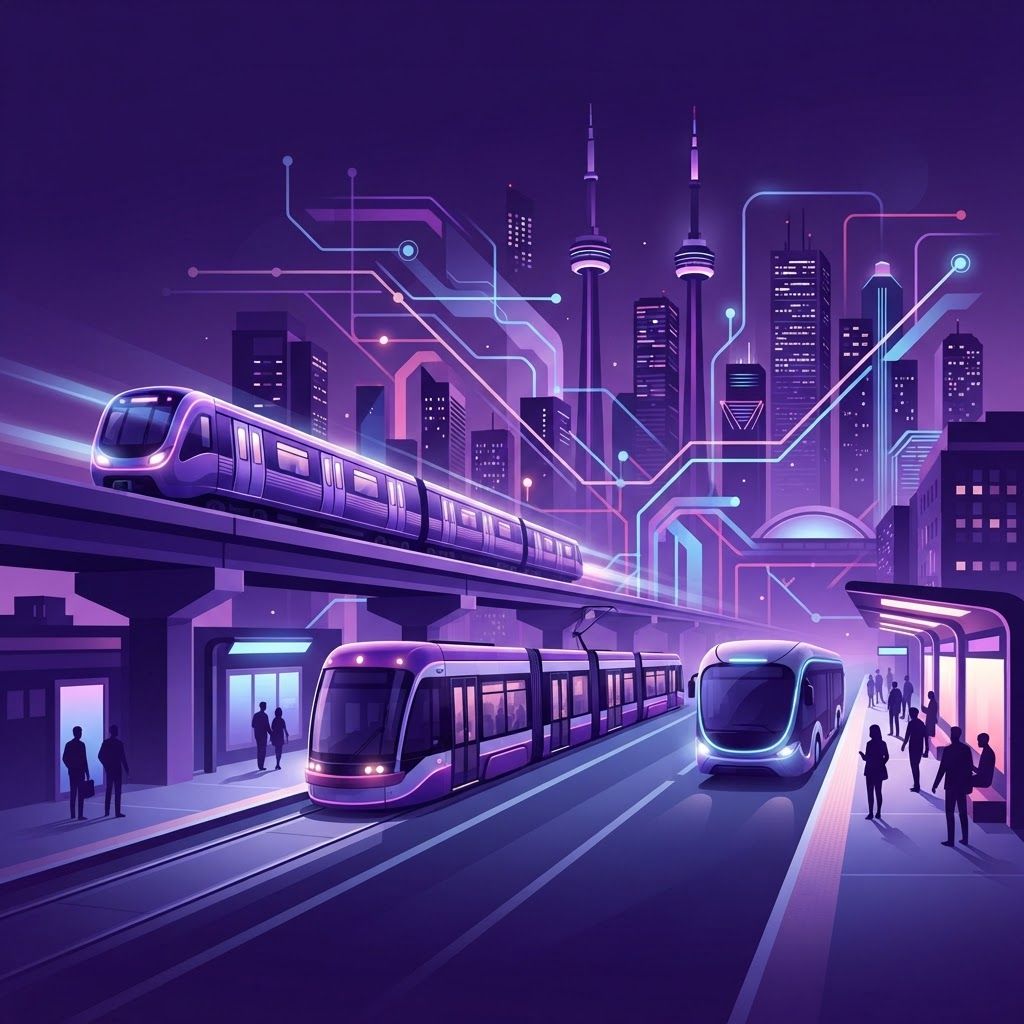
Public transit shapes daily life for millions of Ontarians. The province contains Canada's largest urban transit system, an expanding regional rail network, several new light rail lines and dozens of municipal bus operations serving cities of every size. Investment over the past decade has been substantial, with subway extensions, light rail construction and regional rail expansion all underway simultaneously, making this one of the most active periods of transit building in the province's history.
Why Transit Quality Varies Across Ontario
Transit in Ontario is funded and operated municipally, with provincial and federal capital contributions for major projects. That structure explains why service levels differ so sharply between neighbouring communities. Density is the other determining factor, since frequent service requires enough riders per kilometre to justify it. Understanding both helps explain why a fifteen-minute bus in one city becomes a forty-minute wait across a municipal boundary.
Toronto Transit Commission
The Toronto Transit Commission is the largest transit system in Canada and among the busiest in North America. It operates subway lines, streetcars, buses and a light rail line, carrying enormous daily ridership. Its streetcar network is the largest in North America and is being renewed with accessible low-floor vehicles. Subway extensions and new rapid transit lines under construction will substantially expand rapid transit coverage across the city and into neighbouring regions.
GO Transit
GO Transit provides regional rail and bus service across the Greater Toronto and Hamilton Area and well beyond, connecting Niagara, Waterloo, Barrie, Peterborough and Kitchener to Toronto. Its transformation program is converting peak-only commuter lines into frequent all-day, two-way service with electrification on core corridors. For regional travel it is the single most important service in the province.
OC Transpo
OC Transpo serves Ottawa with a light rail backbone and an extensive bus network including dedicated transitway corridors. The light rail system replaced the busiest bus corridors through the downtown core, and extensions continue to expand coverage east, west and south. Its integration with regional bus routes and its park-and-ride network make car-free commuting practical across much of the capital region.
Mississauga MiWay
MiWay serves Mississauga with a large bus network anchored by a dedicated bus rapid transit corridor that provides fast, reliable service across the city independent of highway congestion. Connections to Toronto's subway, GO rail stations and Pearson airport make it an important link in the regional network.
Brampton Transit
Brampton Transit has recorded some of the strongest ridership growth of any Canadian system, driven by its Züm bus rapid transit network and frequent local service. Its success demonstrates that well-designed bus rapid transit can deliver rapid transit outcomes at a fraction of rail construction cost, and further corridor expansion is planned.
York Region Transit
York Region Transit serves Markham, Vaughan, Richmond Hill, Newmarket and Aurora with local buses and the Viva bus rapid transit network running on dedicated lanes along major arterial roads. The subway extension into Vaughan created a major interchange that has reshaped travel patterns across the northern part of the region.
Hamilton Street Railway
Despite its historic name, the Hamilton Street Railway operates buses across Hamilton, including express routes along the main east-west corridor. A light rail line under development will replace the busiest of these corridors, and the system also connects with GO rail service to Toronto, giving Hamilton residents strong regional links.
Grand River Transit
Serving Kitchener, Waterloo and Cambridge, Grand River Transit operates buses alongside the ION light rail line connecting Waterloo and Kitchener. ION has been credited with substantial transit-oriented development along its route, transforming the region's urban form and supporting its technology sector workforce.
London Transit Commission
The London Transit Commission serves southwestern Ontario's largest city with a bus network built around the university and downtown. Rapid transit corridors are being developed to improve reliability on the busiest routes, and student ridership through universal pass agreements forms a significant portion of total trips.
Regional and Northern Systems
Smaller systems in Windsor, Kingston, Guelph, Barrie, Oshawa and Durham Region, Thunder Bay, Sudbury and North Bay provide essential local mobility. Several have introduced on-demand transit in low-density areas, where a rider books a trip through an app and a small vehicle deviates to collect them. This model has proven more cost-effective than running near-empty fixed-route buses in suburban and rural zones.
Fares, Accessibility and Integration
Electronic fare cards now work across most major Ontario systems, and fare integration agreements have reduced the cost of trips crossing municipal boundaries, historically one of the network's biggest weaknesses. Accessibility legislation requires conventional services to be fully accessible, and every major municipality also operates specialised para-transit for riders unable to use conventional service, generally requiring registration and advance booking.
Making Transit Work for You
Use official trip planning apps, which incorporate real-time vehicle location and service alerts far more accurately than static schedules. Monthly passes almost always pay for themselves for regular commuters, and post-secondary students should confirm whether a universal pass is already included in their tuition fees. For regional trips, compare GO rail against driving honestly, factoring parking cost and congestion rather than distance alone.
The Decade Ahead
Ontario transit is in the middle of its largest expansion in a generation, with new subway lines, light rail projects in multiple cities and regional rail electrification all in progress. Completion will materially change how people move around the province, particularly by making cross-regional trips practical without a car. For residents choosing where to live and businesses choosing where to locate, watching these corridors closely is increasingly a practical planning decision rather than an academic interest.