
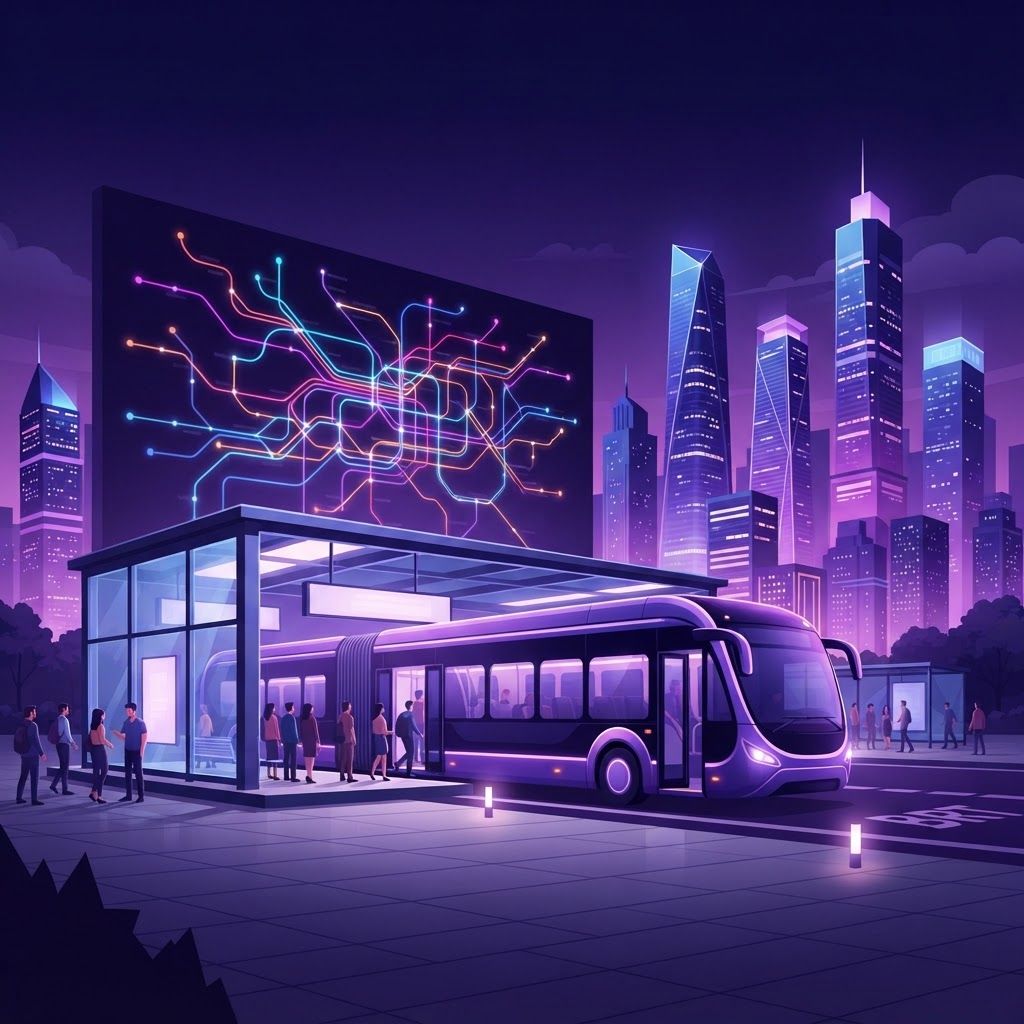
Public Transit in a Growing Mid-Sized City
Grand Rapids occupies an interesting position in American transit. It is large enough to justify meaningful investment in public transportation but compact enough that a well-designed system can serve most of the population effectively. Over the past two decades the city has moved from a basic bus network toward a layered system that includes bus rapid transit, university shuttles, accessible paratransit, and demand-responsive services.
The practical result is that a growing number of residents can genuinely live without a car, or with fewer cars per household, particularly in the downtown core, the medical corridor, and near the major campuses. For students, healthcare workers, and downtown employees, transit is often faster and cheaper than driving once parking costs are included.
The Transit Services Serving Grand Rapids
The Rapid is the primary public transportation authority for the metropolitan area, operating the fixed-route bus network that forms the backbone of local transit. Its routes connect downtown with neighborhoods, shopping districts, and surrounding communities.
Silver Line bus rapid transit provides higher-frequency service along a major corridor with dedicated features that speed travel, including signal priority and enhanced stations. It functions much more like light rail than a conventional bus route.
Laker Line serves the corridor connecting downtown with a major university campus, offering frequent service designed around student and staff travel patterns with modern articulated vehicles.
DASH shuttle service circulates through downtown, connecting parking areas with the central business district and making short downtown trips practical without moving a vehicle.
GO!Bus paratransit provides door-to-door service for riders whose disabilities prevent them from using fixed-route buses, an essential service that underpins independence for many residents.
Rapid Connect and on-demand microtransit services fill coverage gaps in lower-density areas where fixed routes are inefficient, letting riders request trips within defined zones.
University campus shuttles operated by local higher education institutions move students between campuses, residence halls, and academic buildings, complementing the public network.
Hospital and medical campus shuttles serve the health corridor, connecting parking facilities, clinics, and hospital buildings for patients, visitors, and staff.
Regional connector services link Grand Rapids with surrounding communities in Kent and Ottawa counties, extending the practical commuting range of the transit network.
Employer-sponsored vanpool and commuter programs round out the ecosystem, organizing shared commutes for workers traveling from outlying communities to major employment centers.
Making Transit Work in Daily Life
The most common mistake new transit users make is evaluating a single trip rather than a travel pattern. Transit works best when it aligns with routine journeys, particularly commutes along well-served corridors. Occasional trips to dispersed destinations remain harder, which is why many households pair transit for commuting with a single car for everything else.
Frequency matters more than route coverage for most riders. A route running every ten minutes requires no schedule planning; a route running every hour dominates your entire day's timing. When evaluating whether transit fits your life, check headways during the hours you actually travel rather than looking only at whether a route exists.
Trip planning tools have improved substantially. Real-time arrival information, mobile fare payment, and integrated journey planning have removed much of the friction that discouraged casual riders in previous years.
Trends Shaping Local Transit
Fleet electrification is progressing steadily, driven by both emissions goals and lower operating costs. Electric buses reduce noise noticeably along residential corridors, which has proven to be a popular secondary benefit.
Fare technology continues to evolve toward account-based systems and contactless payment, removing the need for exact change and enabling fare capping, where frequent riders automatically receive the best available rate.
Microtransit has emerged as a practical answer to the first-mile and last-mile problem. Rather than running near-empty fixed routes through low-density areas, agencies deploy smaller on-demand vehicles that feed riders into high-frequency trunk routes.
Transit-oriented development is reshaping land use along major corridors, with housing and commercial projects clustering near high-frequency service. This creates a reinforcing cycle where higher density supports better service, which in turn supports more development.
Accessibility improvements continue across the system, including level boarding, audio and visual stop announcements, and improved sidewalk connections to stops, which are often the weakest link in an otherwise accessible journey.
Practical Tips for Riders
Start with a trial run on a low-pressure day rather than your first day at a new job. Learning where a stop is, how payment works, and how long the trip actually takes removes most of the anxiety.
Use the pass structure appropriate to your frequency. Daily commuters almost always save with monthly passes, and students and seniors typically qualify for reduced fares that make transit dramatically cheaper than driving.
Plan for weather. Michigan winters make stop selection matter, and choosing a sheltered stop or a route with more frequent service makes cold-weather commuting far more tolerable.
Combine modes. Many riders bike or walk to a high-frequency corridor rather than waiting for a low-frequency feeder route, and most buses accommodate bicycles on front-mounted racks.
Final Thoughts
Public transit in Grand Rapids has matured into a genuinely useful system, particularly for downtown employees, students, and residents along the bus rapid transit corridors. It is not yet a complete substitute for car ownership everywhere in the metro area, but for a growing share of residents it substantially reduces driving, parking expense, and stress. Evaluate frequency along your specific corridor, take a trial trip, and choose the fare product that matches how often you travel.