
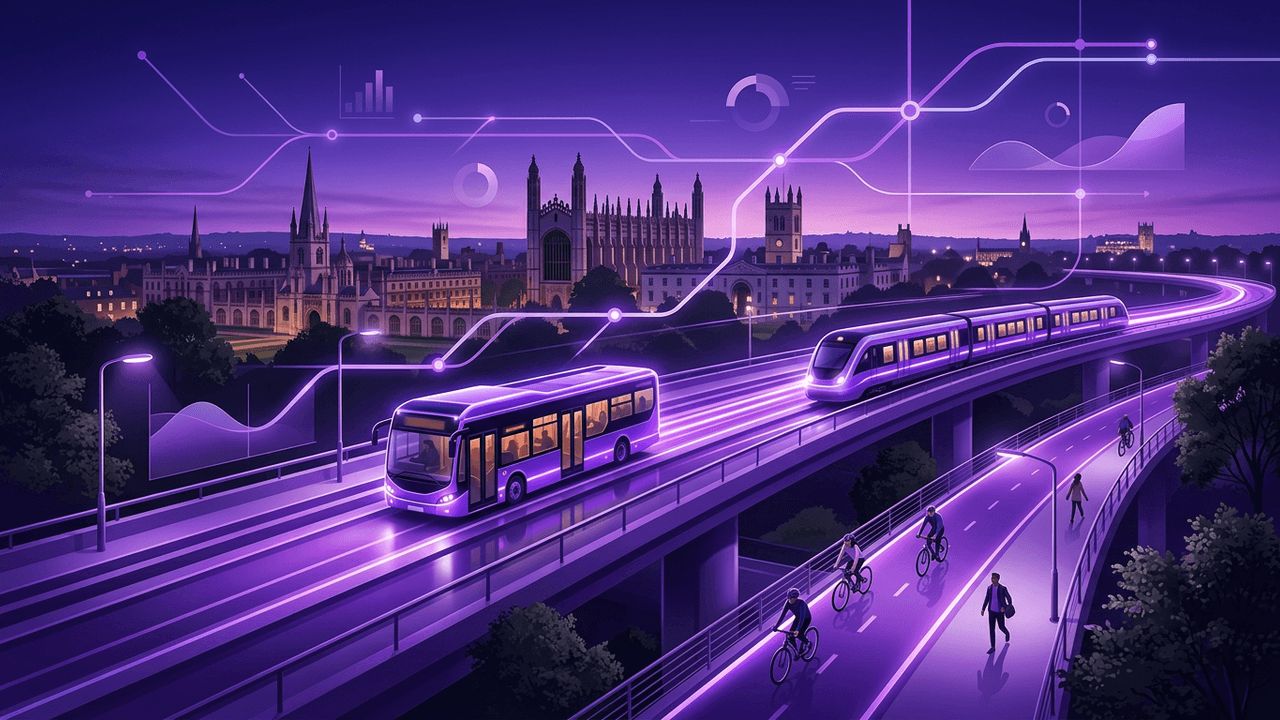
Public Transport in Cambridge
Cambridge is famous for its bicycles, but public transport is just as important for daily life in the city. With a growing population, popular tourist attractions and major employment sites on the edges of the city, a joined-up transit network helps keep people moving while protecting the historic centre from congestion.
In this guide, we look at the ten most useful public transit services in Cambridge, covering buses, trains, demand-responsive transport and shared micromobility.
The 10 Best Public Transit Services in Cambridge
1. Cambridgeshire Guided Busway
The Cambridgeshire Guided Busway is one of the longest guided busways in the world. It links Cambridge with St Ives, Huntingdon and the Biomedical Campus using dedicated tracks that allow buses to bypass traffic. It is fast, frequent and features a popular parallel cycle and walking path.
2. Stagecoach East City Network
Stagecoach East runs the main city bus network, connecting residential areas, the city centre, the railway station and major employment sites. Frequent services, contactless payment and fare caps make it convenient for everyday travel.
3. Cambridge Park and Ride
The Park and Ride network offers five sites on the city outskirts with frequent buses into the centre. It is one of the easiest ways for visitors and commuters to avoid city centre traffic and parking costs.
4. Greater Anglia
Greater Anglia trains provide quick connections from Cambridge and Cambridge North to Ely, Norwich, Ipswich, Stansted and London Liverpool Street. Many commuters combine rail with cycling for an efficient door-to-door journey.
5. Thameslink and Great Northern
Thameslink and Great Northern services connect Cambridge with London King's Cross, St Pancras and destinations south of London. Frequent trains make it easy to commute or visit the capital for the day.
6. Universal (U) Bus
The Universal bus links the railway station and city centre to the West Cambridge site and Eddington. It is open to the public and uses electric buses, providing a clean and convenient service for students, staff and residents.
7. Whippet Local Services
Whippet operates a range of local and Busway routes connecting villages and towns with Cambridge. Its services fill important gaps in the network, particularly for rural communities.
8. Voi E-Scooters and E-Bikes
Voi operates a shared e-scooter and e-bike scheme in Cambridge, allowing users to unlock vehicles through an app and ride across designated zones. It is ideal for short journeys and connecting to bus and rail stations.
9. Ting Demand-Responsive Transport
Ting is a demand-responsive bus service introduced in parts of Cambridgeshire. Passengers book journeys through an app or by phone, and minibuses pick them up close to their location. It improves access in areas where fixed routes are less practical.
10. National Express Coaches
National Express links Cambridge with airports and cities across the country. Its coaches complement local transit by offering affordable long-distance travel from central Cambridge.
Getting the Most from Cambridge Transit
Use journey-planning apps that combine bus, rail and micromobility options to find the fastest route. Contactless payment with daily and weekly fare capping can significantly reduce the cost of frequent travel. If you travel regularly, consider passes that combine multiple journeys at a discount.
Cyclists can take advantage of extensive cycle parking at stations and Park and Ride sites, making it easy to combine cycling with public transport.
The Future of Public Transport in Cambridge
Local authorities and partners continue to explore ways to improve bus frequencies, extend busway corridors and reduce congestion. New stations, electric buses and integrated ticketing are all part of the long-term vision.
As new communities develop around the city, expect public transport to expand further, creating a more connected and sustainable Cambridge.
Frequently Asked Questions
Can I pay for Cambridge buses with contactless?
Yes. Most buses in Cambridge accept contactless bank cards and mobile wallets. Fare capping ensures you never pay more than the price of a day or week ticket, which makes contactless both simple and good value.
Is the Guided Busway suitable for cyclists and walkers?
The Busway has a parallel maintenance track that doubles as a popular path for walking and cycling. It provides a safe, traffic-free route between Cambridge and surrounding towns, and is used by many commuters every day.
How do I get from Cambridge to Stansted Airport by public transport?
Direct trains run from Cambridge to Stansted Airport, and National Express coaches also provide regular services. Both options are quick, affordable and avoid the cost of airport parking.
Is public transport in Cambridge accessible for wheelchair users?
Most buses on Cambridge routes are low-floor vehicles with ramps, a dedicated wheelchair space and audio-visual announcements. Cambridge and Cambridge North stations offer step-free access, and rail operators provide passenger assistance that can be booked in advance. Checking accessibility details for your specific route before travelling helps ensure a smooth and comfortable journey.
Final Thoughts
Cambridge offers a rich mix of public transport options, from the Guided Busway and Park and Ride to trains, e-scooters and demand-responsive buses. By combining these services, residents and visitors can travel quickly, affordably and sustainably throughout the city and beyond.