
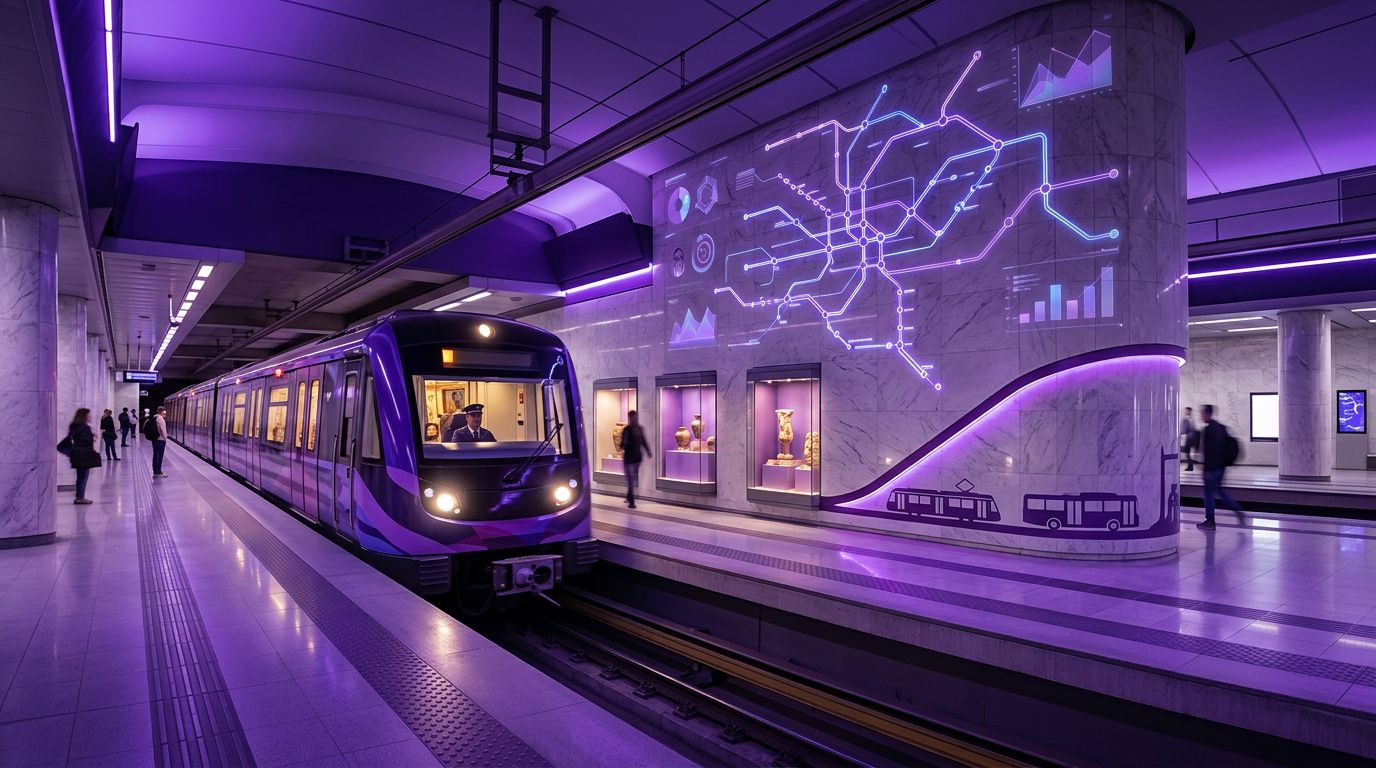
Navigating Athens by Public Transport
Athens offers one of the most user-friendly public transit systems in Southern Europe. A single integrated network allows passengers to move between metro, tram, buses, and trolleybuses with the same ticket or contactless card. For visitors, this means easy access to major attractions, the port of Piraeus, the beaches of the Athenian Riviera, and the airport.
The system is overseen by the Athens Urban Transport Organisation and operated by several companies. Ongoing investments, including new metro extensions and modern buses, continue to improve comfort and reliability.
How We Selected These Services
We focused on network importance, convenience for residents and visitors, frequency, comfort, and overall contribution to mobility in the Greek capital. The list includes organizations, specific lines, and specialized services.
The 10 Best Public Transit Services in Athens
1. OASA
OASA, the Athens Urban Transport Organisation, coordinates the entire public transport network. It manages ticketing, fares, and integrated planning, ensuring that metro, tram, and bus services work together. Its journey planning tools help passengers find the best routes across the city.
2. STASY
STASY operates the Athens Metro and Tram. Its services carry the majority of rail passengers in the city, and its clean, modern stations are among the best in Europe. STASY also manages ongoing upgrades to rolling stock and station accessibility.
3. OSY
OSY operates the city's bus and trolleybus network, covering hundreds of routes across Attica. New electric and natural gas buses are improving comfort and reducing emissions, and dedicated bus lanes on key avenues help maintain reliable service.
4. Metro Line 1
Line 1 connects Piraeus with Kifissia, passing through central stations such as Monastiraki, Thissio, and Omonia. It is ideal for reaching the port, the Ancient Agora, and the northern suburbs, and remains one of the busiest transit corridors in Athens.
5. Metro Line 2
Line 2 runs from Anthoupoli to Elliniko, serving Syntagma, Acropolis, and Omonia stations. It provides direct access to the Acropolis Museum and the historic center, making it one of the most useful lines for visitors.
6. Metro Line 3
Line 3 connects Piraeus, the city center, and Athens International Airport. Its airport branch offers a fast, comfortable alternative to taxis, and its central stations, including Syntagma and Monastiraki, link easily to other lines.
7. Athens Tram
The Athens Tram links Syntagma with the coastal suburbs and Piraeus. Its route along the seafront is particularly scenic, allowing passengers to reach beaches, marinas, and seaside cafés without a car.
8. Athens Suburban Railway
The suburban railway, operated by Hellenic Train, connects Athens with the airport, the western suburbs, and towns beyond Attica. It is ideal for commuters and travelers heading to Corinth or Chalkida.
9. Airport Express Buses
Airport express bus routes operate around the clock, linking the airport with Syntagma, Piraeus, and key transport hubs. They provide an affordable and reliable connection, particularly for late-night arrivals when the metro is closed.
10. Lycabettus Funicular
The Lycabettus funicular carries visitors from Kolonaki to the summit of Lycabettus Hill, offering spectacular views over the city and the sea. While small in scale, it is a memorable part of the Athens transport experience.
Ticketing and Fares
Athens uses an integrated ticketing system with reusable cards and contactless bank card payments. Tourist tickets offer unlimited travel for several days, including airport transfers, providing excellent value for visitors. Always validate your ticket or card before boarding to avoid fines.
Trends in Athens Public Transport
Metro Line 4 is one of the most ambitious infrastructure projects in Greece and will connect neighborhoods currently served only by buses. Fleet electrification, real-time arrival information, and mobile ticketing are also transforming the passenger experience. Accessibility upgrades continue at stations and stops across the network.
Tips for Using Public Transit
Use journey planning apps to check real-time arrivals. Avoid peak commuting hours when possible, especially on Line 1. Keep valuables secure in crowded areas, and remember that some services run reduced schedules late at night and on public holidays.
Frequently Asked Questions
How do I pay for public transport in Athens?
Passengers can use reusable transport cards, paper tickets, or contactless bank cards at validators. Tourist tickets offer unlimited rides for several days, including airport trips.
Does the Athens metro run all night?
The metro typically operates from early morning until around midnight, with extended hours on some weekend nights. Airport express buses run around the clock.
Is public transport in Athens accessible?
Most metro stations have elevators and tactile guidance, and many buses are low-floor vehicles. Accessibility continues to improve across the network.
What is the easiest way to reach the beaches from the center?
The tram runs from Syntagma to the coastal suburbs, offering a direct and scenic route to the beaches of Palaio Faliro, Alimos, Glyfada, and Voula.
Final Thoughts
Public transit is the smartest way to explore Athens. Affordable, integrated, and increasingly modern, these ten services make it easy to move between ancient monuments, vibrant neighborhoods, and the sparkling coastline of the Greek capital.