
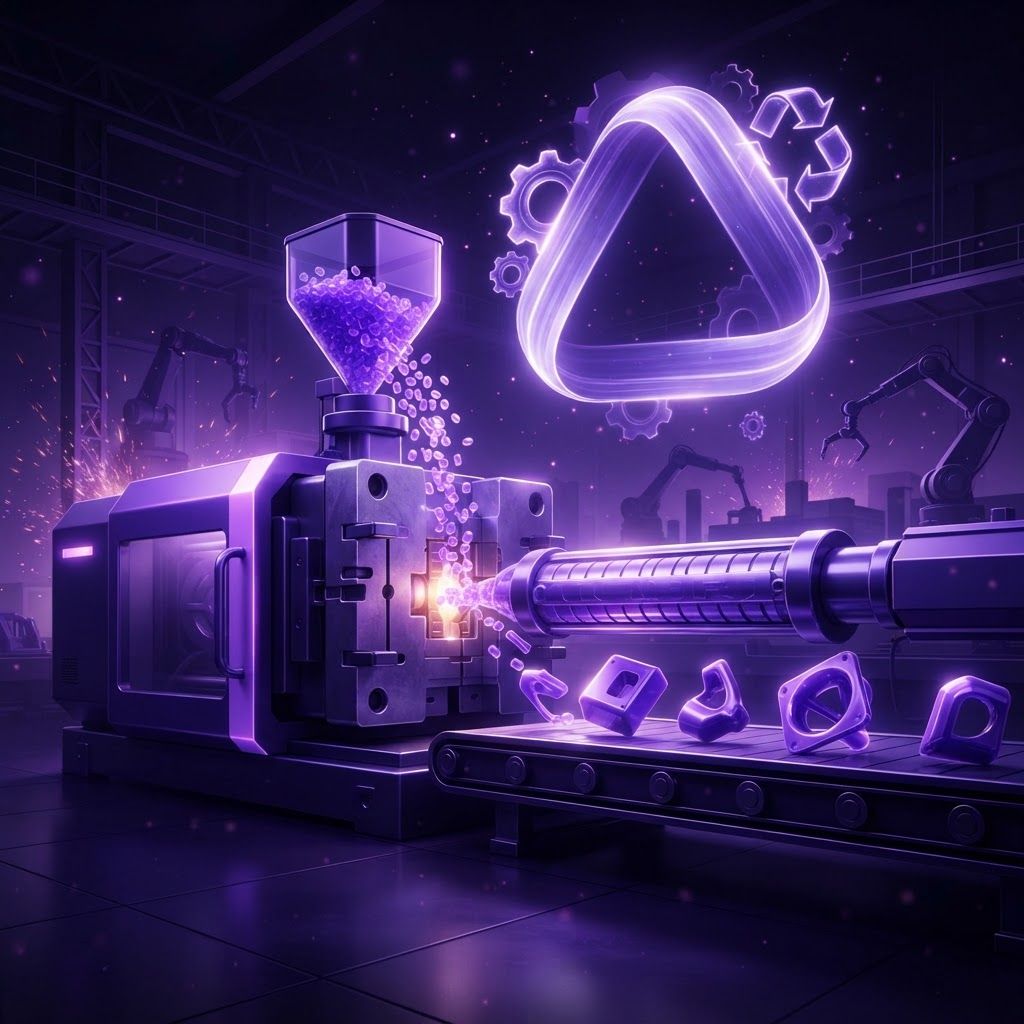
Plastics Manufacturing in Central Texas
Texas anchors the North American plastics supply chain, with resin production concentrated along the Gulf Coast and converting operations distributed statewide. Converters transform raw resin into usable products through injection molding, extrusion, thermoforming, blow molding, and fabrication. Central Texas hosts a meaningful share of that converting activity, supported by resin availability, logistics access, and diverse regional demand.
Around Killeen, plastics customers include packaging users, construction and infrastructure contractors, medical and laboratory operations, agricultural producers, signage and display companies, and industrial manufacturers needing custom components. Because plastics processing rewards tooling expertise and process control, supplier capability varies substantially. The manufacturers below represent the strongest regional options across the main processing methods.
Selection Criteria
Assessment considered processing capability and equipment, tooling and engineering support, material expertise across resin families, quality systems and inspection, regulated-industry experience, sustainability and recycling capability, and reputation among industrial buyers.
1. Central Texas Injection Molding
A custom molder running a range of press tonnages with in-house tooling support, producing precision components for industrial, consumer, and electronics customers with documented process control.
2. Bell County Plastic Extrusion
Producing profiles, tubing, and sheet through continuous extrusion, this manufacturer handles both standard shapes and custom dies for construction, agricultural, and industrial applications.
3. Lone Star Thermoforming Solutions
Specializing in vacuum and pressure forming, this company produces trays, housings, covers, and packaging, a cost-effective approach for larger parts at moderate volumes where tooling cost matters.
4. Killeen Plastic Fabrication Works
A fabrication shop machining, bending, welding, and assembling acrylic, polycarbonate, and engineering plastics into guards, enclosures, displays, and tanks for one-off and low-volume needs.
5. Cavazos Medical Plastics Group
Serving medical and laboratory customers, this molder operates under controlled conditions with material traceability, validation documentation, and cleanroom-compatible processes.
6. Texas Packaging Plastics
Manufacturing containers, closures, and blow-molded bottles for food, chemical, and consumer product customers, offering both stock and custom container programs.
7. Harker Heights Industrial Polymer Products
Producing wear components, bearings, liners, and machined parts from engineering polymers, this company supports equipment manufacturers and maintenance operations with high-performance materials.
8. Trimmier Pipe and Conduit Manufacturing
Producing polyethylene and PVC pipe, conduit, and fittings for water, irrigation, telecommunications, and utility construction throughout Central Texas.
9. Copperas Cove Plastics Recycling
A reprocessor collecting, sorting, grinding, and pelletizing post-industrial plastic waste into usable regrind and recycled resin, supporting converters seeking recycled content.
10. Central Texas Mold and Tooling
A tooling specialist designing and building injection molds and forming tools, providing maintenance and repair services that directly affect part quality and production uptime for regional molders.
Trends in the Plastics Industry
Recycled content requirements have moved from voluntary commitments to procurement specifications, particularly in packaging, which has increased demand for reliable reprocessed resin and for converters able to run it consistently. Material substitution work has grown as customers evaluate bio-based and alternative polymers, though performance and cost trade-offs remain application-specific. Process monitoring and automation have improved scrap rates and cycle consistency, making data-driven molders measurably more competitive. Regulatory attention to specific additives and single-use applications continues to shape product development. Domestic resin availability has also given North American converters a relative advantage in supply stability compared with import-dependent competitors.
How to Choose a Plastics Manufacturer
Begin with the process rather than the shop, since injection molding, extrusion, thermoforming, and fabrication each suit different geometries and volumes, and choosing the wrong method is far costlier than choosing the wrong vendor. Discuss tooling openly, including cost, lead time, ownership, and maintenance responsibility, because tooling often represents the largest upfront investment. Confirm material expertise for your specific resin family, as processing windows differ substantially. Request dimensional inspection data and ask about process capability rather than accepting general quality assurances. For regulated products, verify documentation, traceability, and validation practices explicitly before committing.
Choosing the Right Process and Material
Process selection follows from volume, geometry, and tolerance. Injection molding suits high volumes and complex detailed parts but requires significant tooling investment, making it difficult to justify below a few thousand units. Thermoforming handles large, relatively shallow parts at moderate volumes with far cheaper tooling. Extrusion fits continuous constant-profile products such as tubing, trim, and pipe. Machining and fabrication from sheet or rod serve prototypes and low quantities where tooling cannot be amortized. Material selection deserves equal attention, since properties diverge widely: some resins offer excellent impact resistance but poor ultraviolet stability, others resist chemicals but deform under modest heat, and Texas outdoor applications in particular demand realistic evaluation of temperature and sun exposure. Regulatory requirements narrow options further for food contact and medical use. Discussing both process and material with a converter during design, rather than presenting a finished drawing, typically reduces part cost substantially and improves long-term performance.
Final Thoughts
Plastics manufacturing around Killeen provides molding, extrusion, forming, fabrication, tooling, and recycling capability serving a wide customer base. The manufacturers above range from precision medical molders to pipe producers and reprocessors. Engaging a capable converter early, during part design rather than after it is finalized, typically reduces tooling cost and improves manufacturability more than any later negotiation can.