
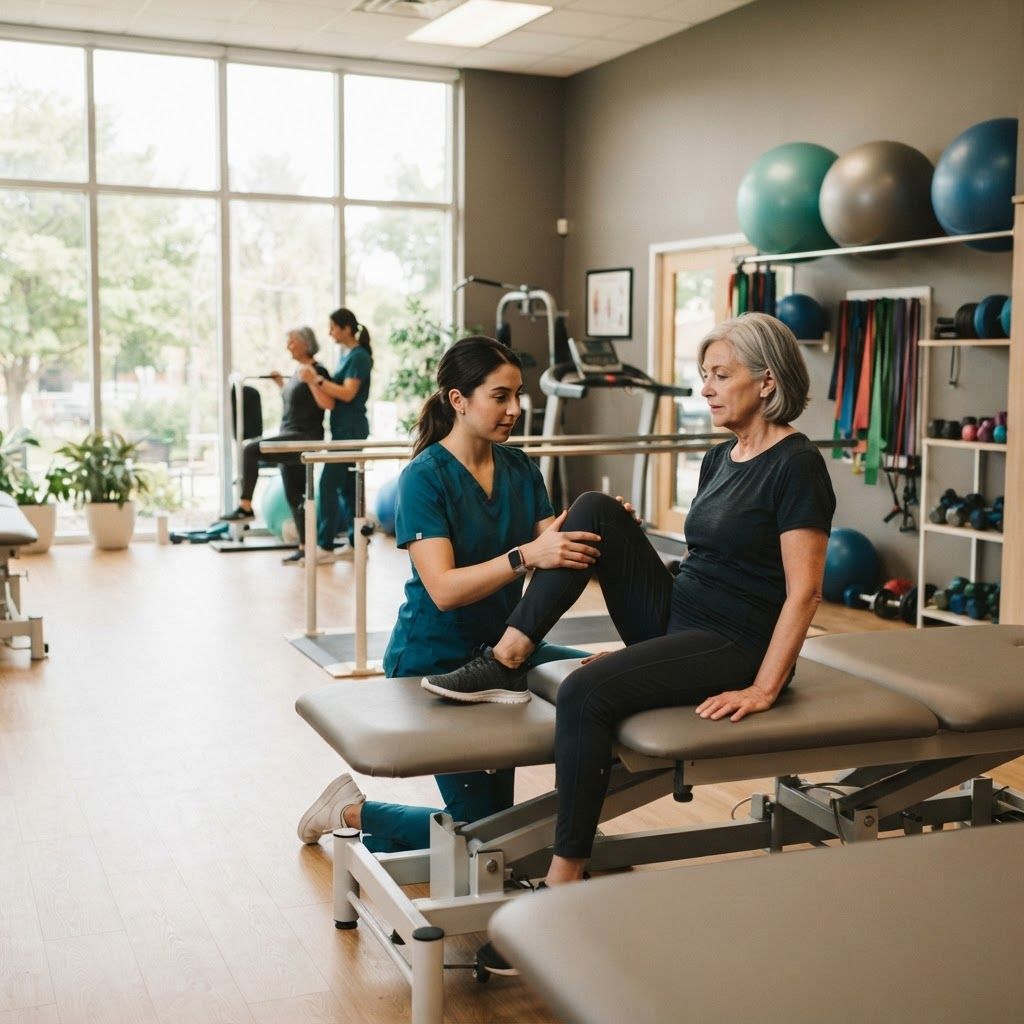
What Separates Effective Physical Therapy From the Rest
Active loading versus passive modalities
The single most useful thing a patient can know about physical therapy is that recovery is driven overwhelmingly by progressive, measured loading of tissue, not by heat packs, ultrasound, or electrical stimulation. Passive modalities feel pleasant and occupy time, and the evidence supporting them for durable outcomes is weak. Clinics that build sessions around supervised exercise progression, movement retraining, and objective strength testing produce better results than clinics where a technician applies a machine while the therapist supervises six patients simultaneously.
Patients can assess this quickly. A strong clinic measures something at the first visit, whether range of motion in degrees, a hop test, grip strength, or timed functional tasks, and re-measures it periodically to prove progress. Absence of measurement usually indicates absence of a plan.
The Local Context
Referral patterns and direct access
California permits patients to see a physical therapist directly for a limited period without a physician referral, which shortens the path to care for straightforward musculoskeletal problems. Many Chula Vista clinics also work closely with orthopedic surgeons at nearby hospitals, and post-surgical protocols are typically dictated by the operating surgeon. When choosing a clinic after surgery, the practical question is whether the therapists routinely handle that specific procedure and communicate with that surgeon, because protocol familiarity affects both safety and pace.
Ten Physiotherapy Centers Serving Chula Vista
1. South Bay Orthopedic Rehabilitation
A post-surgical specialist practice handling knee and shoulder reconstruction protocols with objective return-to-activity testing rather than time-based clearance alone. One-on-one treatment blocks are the norm.
2. Bayfront Physical Therapy and Sports Medicine
Focused on athletic populations from high school through recreational adult competition, with running gait analysis and throwing mechanics assessment. Strong at bridging the gap between pain resolution and full competitive load.
3. Eastlake Movement and Rehab
A clinic built around strength-based rehabilitation with real barbell and dumbbell loading, appealing to patients whose goals involve returning to lifting or physically demanding work rather than clinical exercise bands.
4. Otay Ranch Physical Therapy
A generalist neighborhood practice covering low back pain, neck pain, and post-injury recovery with consistent therapist assignment. Reliable, unglamorous, well-run care with good scheduling availability.
5. Chula Vista Neurological Rehabilitation
Specialized in stroke recovery, Parkinson's disease, and balance disorders, with high-repetition task-specific training and fall-risk assessment. Neurological rehabilitation requires different expertise than orthopedic work, and this distinction matters enormously for outcomes.
6. Third Avenue Spine and Pain Rehabilitation
Concentrated on persistent spinal pain, combining graded exercise with pain-education approaches that address sensitization rather than chasing structural explanations for every symptom. Suited to patients who have cycled through failed passive treatment.
7. Bonita Pelvic Health and Physical Therapy
Pelvic floor rehabilitation for postpartum recovery, incontinence, and pelvic pain, an underserved specialty relative to demand. Private treatment rooms and clinicians with specific pelvic health certification.
8. Palomar Industrial and Occupational Therapy
Focused on work injury recovery, functional capacity evaluation, and return-to-duty conditioning for physically demanding jobs, with experience navigating workers' compensation documentation requirements.
9. Rancho del Rey Hand Therapy
A hand and upper-extremity clinic with certified hand therapists handling tendon repairs, fracture rehabilitation, and custom splint fabrication. Hand rehabilitation is technically distinct and benefits from dedicated specialists.
10. Harborside Aquatic and Geriatric Rehab
Offers pool-based rehabilitation for patients who cannot tolerate full weight-bearing, alongside land-based balance and strength programs for older adults. Aquatic therapy is a genuine bridge for painful early-stage recovery.
Making Rehabilitation Actually Work
The home program is the treatment
Two or three clinic visits per week cannot produce adaptation on their own. The prescribed home program is where most of the physiological change happens, and adherence is the strongest predictor of outcome across nearly every musculoskeletal condition studied. A clinic that prescribes twelve exercises no one will do is less effective than one that prescribes three that get done daily.
Knowing when to change course
Expect measurable improvement within four to six weeks for most conditions, understanding that improvement means better function and tolerance, not necessarily zero pain. If nothing objective has changed by then, the plan should change, whether that means different loading, imaging, or referral. Continuing an unchanged program for months without measurement is the most common failure mode in outpatient rehabilitation.