
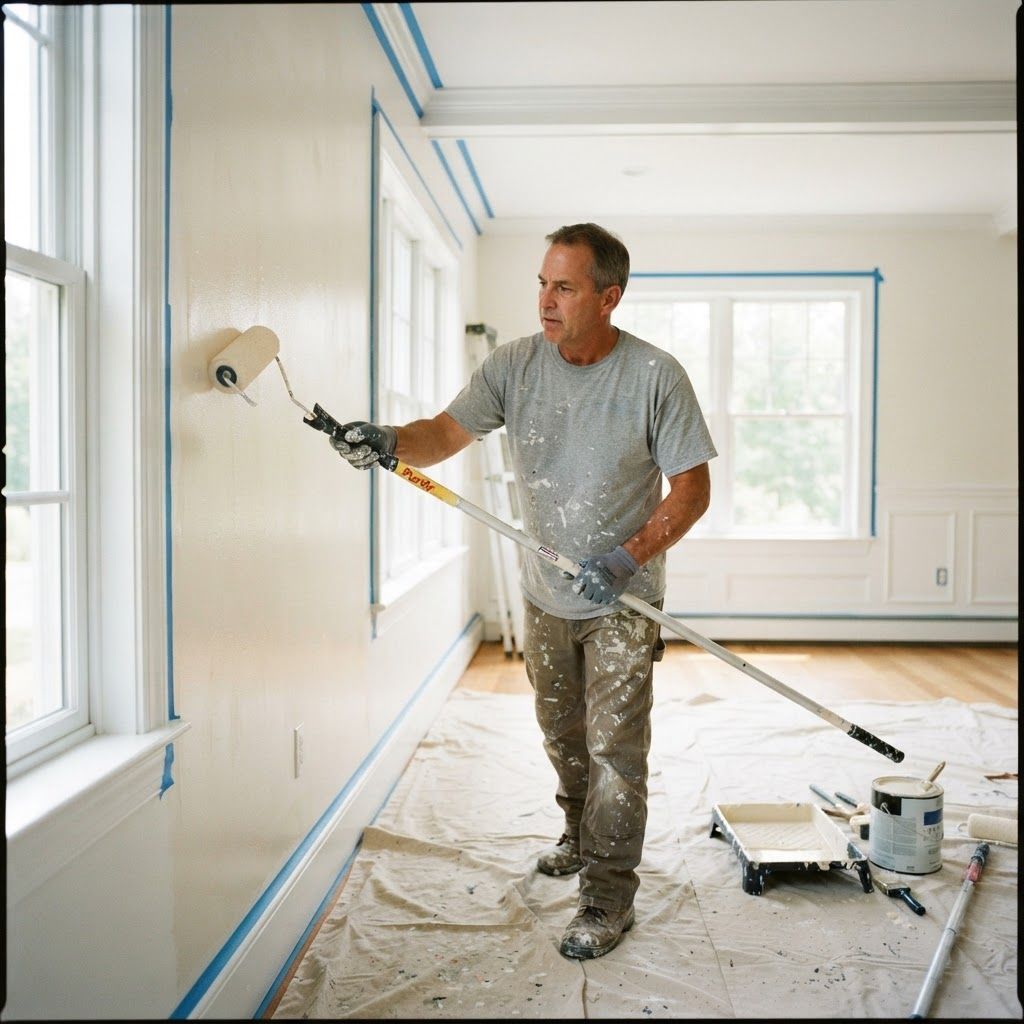
Why Paint Fails Early in Chula Vista
Paint failure is almost never a paint problem. It is a preparation problem or a specification problem. In Chula Vista, three environmental factors make both of those failures show up faster than they would elsewhere. Intense year-round ultraviolet exposure breaks down binders and fades pigments, particularly on south and west elevations. Salt air near San Diego Bay penetrates coatings and attacks the substrate beneath, causing blistering and peeling. Daily marine layer moisture creates wetting and drying cycles that stress the coating film and lift any layer that was applied over a dirty, chalky or damp surface.
The consequence is that the difference between a five-year paint job and a twelve-year paint job is almost entirely invisible on the day the work finishes. Both look excellent. One had pressure washing, full scraping, stucco crack repair, spot priming, caulking replacement and two properly measured coats. The other had a quick rinse and a single thin coat rolled over the existing surface. Since you cannot see the difference at completion, you must verify it through the written scope and through observation while work is underway.
How to Evaluate a Painting Contractor
Judge the proposal by its preparation section
Read past the price to the preparation description. A credible proposal specifies pressure washing, scraping and sanding of failed areas, repair of stucco cracks and drywall damage, removal and replacement of failed caulking, spot priming of bare substrate, and masking. Proposals that describe preparation in one vague sentence are telling you exactly how much preparation you will receive.
Require coating specification by product and coat count
The proposal should name the manufacturer and product line, the sheen, the number of coats and the target film thickness or spread rate. Two coats of a mid-grade exterior acrylic properly applied will outlast one coat of a premium product every time, so coat count matters as much as brand.
Verify licensing, insurance and workers compensation
Confirm an active California contractors license in the painting classification and obtain insurance certificates from the insurer. Painting involves ladders, lifts and solvents, and uninsured crews create real liability for the property owner.
Ask about crew composition and supervision
Find out whether the crew is employed by the company or subcontracted, who supervises daily, and whether the same crew stays through completion. Consistency of crew is strongly correlated with consistency of quality.
Understand the warranty and what voids it
Ask for the workmanship warranty length in writing, what it covers, and what conditions exclude coverage. A contractor confident in their preparation offers a meaningful warranty; one who is not will hedge heavily.
The Ten Types of Painting Contractor in Chula Vista
1. Full-service residential painting companies
These firms handle interior and exterior repainting for homes, with crews trained in preparation, masking and application. They are the default choice for most homeowners and typically offer the best balance of scale, warranty and accountability.
2. Exterior and stucco painting specialists
Stucco dominates local architecture and behaves differently from wood or fiber cement. Specialists understand elastomeric coatings, crack repair, breathability requirements and how to avoid trapping moisture inside a wall assembly, which is the most damaging exterior painting error.
3. Interior finish and decorative painters
Fine interior work involves level surface preparation, precise cut lines, correct sheen selection by room function and sometimes decorative techniques such as glazing or faux finish. This category is judged on crispness of edges and uniformity of sheen under raking light.
4. Cabinet and millwork refinishing specialists
Refinishing kitchen cabinets is a specialty requiring degreasing, deglossing, bonding primer and sprayed application in controlled conditions. Done properly it transforms a kitchen at a fraction of replacement cost; done improperly the finish chips within months.
5. Commercial painting contractors
Offices, retail and multi-tenant buildings require phased work, night and weekend scheduling, low-odor products and coordination with occupants. Commercial firms bring lift equipment, safety programs and the crew size to complete large areas quickly.
6. Industrial and protective coating applicators
Structural steel, tanks, warehouse floors and equipment need protective coatings selected for corrosion resistance and abrasion rather than appearance. Applicators in this niche understand surface profile preparation and coating systems engineered for specific exposures.
7. Multi-family and HOA painting contractors
Apartment complexes and community associations need contractors who can produce color schemes, phase work across many buildings, communicate with residents and hold consistent quality across large scopes. Project management capability defines this category.
8. Deck, fence and outdoor structure finishers
Horizontal exterior surfaces receive the harshest ultraviolet and moisture exposure. Specialists here understand stains versus solid coatings, when to strip rather than recoat, and how to detail end grain and fastener penetrations to prevent premature failure.
9. Drywall repair and texture matching painters
Many painting projects are really repair projects. Contractors skilled in patching, texture matching and blending are essential after water damage, electrical work or wall removal, since a poorly matched texture is more noticeable than a color mismatch.
10. Specialty coating and epoxy floor contractors
Garage floors, commercial kitchens and industrial spaces use epoxy and polyaspartic systems requiring mechanical surface preparation, moisture testing and careful mixing. Failure in this category is almost always a preparation shortcut.
Practical Advice for Owners
Plan exterior painting for late spring through early autumn, and expect crews to start after morning marine layer moisture has cleared rather than at dawn. Test colors on the actual wall in large samples and view them at different times of day, because strong local sunlight shifts color perception dramatically. Choose lighter values and quality pigments on sun-exposed elevations to reduce fade. Finally, walk the job with the contractor at the end of preparation, before any paint goes on, since that is the only moment when you can verify the work that determines longevity.
Conclusion
In Chula Vista, paint longevity is decided by preparation and specification, not by the finished appearance. Read proposals for their preparation and coating detail, verify licensing and insurance, understand the warranty, and inspect before the first coat. Select the specialist type your surfaces require, and a paint job will protect and beautify the building for a decade rather than a season.