
Buffalo's Position in the Northeast Energy Corridor
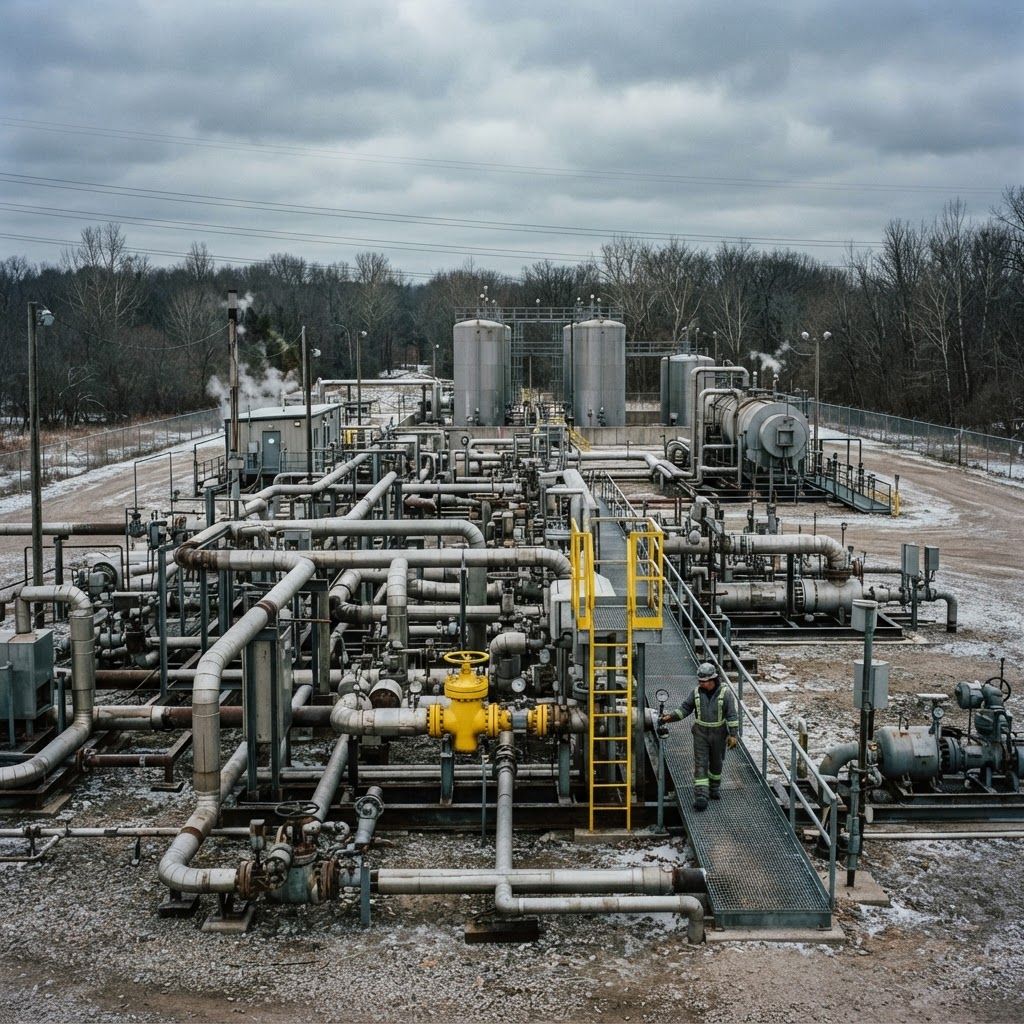
Buffalo occupies a genuinely strategic position in North American energy logistics. Major interstate natural gas transmission lines converge in Western New York, moving supply between Appalachian production basins, Canadian markets and Northeast demand centers. The city's rail network, Great Lakes port access and proximity to the Ontario border make it a natural node for fuel movement and storage.
That infrastructure has practical consequences. Industrial gas users in the region often access competitive supply that inland markets cannot match. Heating oil and propane distributors serve a large residential base with older housing stock. And the interconnection between American and Canadian pipeline systems makes Buffalo a place where cross-border energy trade is an everyday commercial reality rather than an abstraction.
Regulatory Context in New York State
New York's regulatory posture toward fossil fuels is among the most restrictive in the country, and this defines the local market. The state banned high-volume hydraulic fracturing, meaning there is essentially no unconventional production activity within New York despite the Marcellus and Utica formations extending beneath the Southern Tier. Conventional shallow well production in Western New York continues at a small scale, much of it operated by long-established local companies.
The Climate Leadership and Community Protection Act sets emissions reduction requirements that directly affect gas utilities, and building code changes have restricted new fossil fuel infrastructure in certain construction categories. Companies operating in this space are therefore managing a business with strong current demand and constrained long-term growth, which shapes how they invest. Many have diversified into electrification services, efficiency work and renewable fuels.
Ten Companies Serving the Region
1. National Fuel Gas Company is headquartered in Western New York and is by far the most significant oil and gas enterprise in the region. It operates as an integrated company spanning exploration and production, pipeline and storage, gathering and regulated utility distribution. Its utility segment serves a large customer base across Buffalo and the surrounding counties, and its corporate presence makes it a major regional employer and civic institution.
2. National Grid delivers natural gas to a substantial share of Upstate New York customers and operates the associated distribution infrastructure. Utility delivery companies increasingly function as energy service providers, administering efficiency rebates and electrification programs alongside traditional gas service.
3. NOCO Energy is a long-established Western New York family company distributing heating oil, propane, gasoline, diesel, lubricants and commercial fuels. Its diversification into renewable fuels, fleet services and energy efficiency work illustrates how regional distributors are adapting to policy pressure while maintaining their core delivery business.
4. Superior Plus Propane and comparable propane distributors serve rural and suburban customers across Erie, Niagara and Genesee counties where natural gas mains do not reach. Propane remains essential for heating, agricultural drying, commercial cooking and industrial process applications.
5. Buffalo Fuel Corporation represents the commercial and industrial fuel supply segment, providing bulk diesel, heating oil and lubricants to fleets, contractors and manufacturers. Reliability of delivery during Western New York winters is the primary competitive dimension in this business.
6. Sprague Operating Resources and similar wholesale petroleum marketers supply terminals and downstream distributors throughout the Northeast, including the Buffalo market. Terminal access and storage capacity determine which suppliers can offer stable pricing during demand spikes.
7. Empire Pipeline and regional transmission operators manage the interstate and intrastate lines that move gas through Western New York, including bidirectional capacity serving Canadian and domestic markets. Pipeline capacity rights are a meaningful commercial asset for large industrial users.
8. Otis Eastern Service is a Western New York pipeline construction contractor with a long history building and maintaining transmission and distribution infrastructure across the Northeast. Specialized pipeline construction capability is concentrated in relatively few firms, and having one regionally based is significant.
9. Conventional producers in the Southern Tier operate shallow oil and gas wells across Allegany, Cattaraugus and Chautauqua counties, some on fields producing since the nineteenth century. These are small operations by national standards but they represent a continuous local industry with genuine institutional knowledge.
10. Petroleum equipment and environmental service firms in the Buffalo area handle tank installation, removal, spill response, compliance testing and remediation. Regulatory requirements around underground storage tanks generate steady demand for this specialized work.
Industry Trends Affecting Buffalo
Three trends dominate. First, demand for natural gas in the region remains strong for heating and industrial process use, particularly in metals, chemicals and food processing, even as policy discourages new connections. This creates a market where existing infrastructure has high value and new build faces headwinds.
Second, distributors are diversifying deliberately. Renewable diesel, biodiesel blends, renewable natural gas from landfills and digesters, and hydrogen pilots are appearing in regional portfolios. Companies with delivery logistics, storage and customer relationships can carry those assets into lower-carbon fuels more easily than they can replace them.
Third, methane management has become a core operational focus. Leak detection, pipeline replacement programs targeting older cast iron and bare steel mains, and measurement improvements are significant capital priorities for utilities serving Buffalo's older neighborhoods.
What Commercial Buyers Should Evaluate
For industrial and commercial energy purchasers, contract structure matters more than headline price. Understand whether pricing is fixed, indexed or capped, what the term is, how volume tolerance bands work, and what happens in a force majeure event. Winter basis risk in the Northeast can be severe, and a poorly structured contract can produce extraordinary February invoices.
Evaluate delivery reliability with specific questions: fleet size, storage capacity, emergency protocols during lake-effect storms, and priority policies among customer classes. References from businesses of comparable size in the same industry are the most reliable signal.
Finally, ask about compliance support. Environmental reporting, tank compliance, spill prevention plans and emissions accounting are increasing in complexity, and suppliers that provide documentation and guidance reduce genuine administrative burden.
Outlook
The oil and gas sector in Buffalo is stable in the near term and structurally constrained in the long term. Existing infrastructure serves essential heating and industrial needs, and no realistic scenario removes that demand quickly. At the same time, New York's policy trajectory means growth capital is flowing toward efficiency, electrification and lower-carbon fuels. The companies best positioned locally are those treating their logistics, storage and customer relationships as durable assets adaptable to whatever molecules they eventually deliver.