
Metal Fabrication in Middle Tennessee
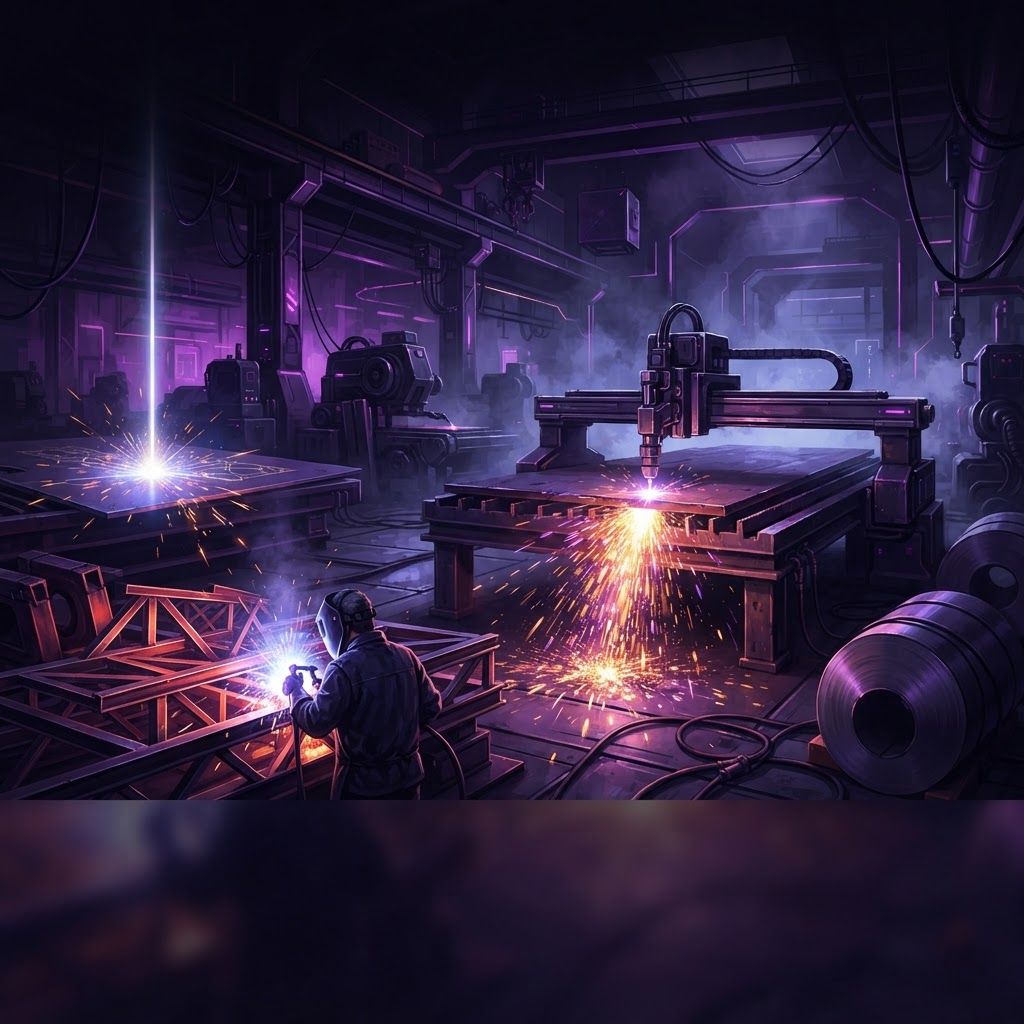
Metalworking is one of the oldest continuous industries in Rutherford County, and it remains among the most technically demanding. Today's fabrication shops in Murfreesboro bear little resemblance to the blacksmith operations that preceded them. Fiber laser cutters slice through thick plate with millimeter accuracy, computer-controlled press brakes bend complex forms from digital programs, robotic welders lay consistent beads for hours, and coordinate measuring machines verify results against three-dimensional models.
The customer base is broad. Automotive suppliers need brackets, frames and weldments. Construction contractors need structural steel, stairs, railings and miscellaneous metals. Equipment manufacturers need enclosures, guards and chassis. Architects and homeowners need decorative ironwork, gates and custom features. Each of these requires different equipment and different skills, which is why the local market supports so many specialized shops.
Core Capabilities to Understand
Cutting is the starting point. Laser cutting dominates sheet and thin plate work for its speed and edge quality, plasma handles thicker material economically, and waterjet cuts virtually any material without heat-affected zones. Shops offering multiple cutting technologies can choose the most economical option per job rather than forcing every part onto one machine.
Forming follows. Press brake capacity, tooling inventory and operator skill determine what geometries a shop can produce and how consistently. Rolling, punching and stamping expand the range further.
Joining is where reputations are made or lost. Welding certifications matter enormously, particularly for structural and pressure applications. Procedures qualified to recognized standards, certified welders and documented inspection separate serious fabricators from general shops. Finishing completes the picture with deburring, blasting, powder coating, painting, plating and passivation.
The Leading Metalworks Companies in Murfreesboro
Stones River Metal Fabrication is a full-service sheet metal and plate fabricator running laser cutting, forming, welding and powder coating in one facility. Single-source processing shortens lead times and eliminates the quality risks of shuttling parts between vendors.
Rutherford Structural Steel focuses on structural fabrication for commercial construction, producing beams, columns, joists, stairs and railings with detailing services and erection coordination.
Middle Tennessee Precision Welding specializes in certified welding across carbon steel, stainless and aluminum, serving industrial customers with both shop fabrication and on-site field welding.
Cannonsburgh Ornamental Iron produces architectural and decorative metalwork including gates, handrails, balconies and custom features, blending traditional forging techniques with modern fabrication.
Blackman Sheet Metal Works serves mechanical contractors with custom ductwork, plenums and specialty sheet metal for commercial heating and cooling systems.
Salem Creek Laser and Waterjet offers contract cutting services with quick turnaround for shops and manufacturers that need parts cut but handle forming and welding themselves.
Veterans Parkway Stainless Fabrication concentrates on stainless steel work for food, beverage and pharmaceutical customers, where sanitary welds, polished finishes and passivation are required.
Old Fort Machine and Weldment combines heavy fabrication with machining, producing large weldments that are then precision machined to final tolerances, a capability many shops cannot offer internally.
Gateway Powder Coating provides finishing services including blasting, pretreatment and powder application in a wide color and texture range, serving other fabricators as well as direct customers.
Broad Street Mobile Welding completes the list with field repair and on-site fabrication services, keeping equipment, trailers and structures operational without transporting them to a shop.
Quality, Certification and Documentation
Metal fabrication quality is largely invisible after finishing, which makes documentation essential. Material test reports verify that steel matches specification. Welding procedure specifications and welder qualification records prove that joints were made correctly. Dimensional inspection reports confirm that finished assemblies match the drawing. Coating thickness measurements verify corrosion protection.
For structural work, third-party inspection is often required by code. For manufactured components, customers increasingly require certified quality management systems and first-article approval before production release. Buyers should confirm these capabilities during supplier qualification rather than discovering gaps after a project starts.
Trends in the Local Fabrication Market
Automation is the dominant trend. Robotic welding cells and automated material handling have become accessible to mid-sized shops, improving consistency and offsetting the persistent shortage of skilled welders. Shops that invested early are winning higher-volume work.
Digital workflow is a close second. Customers now send three-dimensional models rather than paper drawings, and shops that can import models directly into nesting and programming software eliminate transcription errors and quote faster. Some fabricators offer online quoting for simple laser-cut parts, dramatically compressing the procurement cycle.
Material cost volatility continues to influence purchasing behavior. Steel and aluminum prices have swung significantly in recent years, and buyers increasingly ask for firm pricing windows, material escalation clauses or the option to supply their own material.
How to Select a Metalworks Partner
Match capability to need. A shop optimized for high-volume production parts will price a one-off custom railing poorly, and an artisan ironworker cannot support a production schedule. Be honest about volume, tolerance and finish expectations when requesting quotes.
Visit the facility and look at organization, equipment condition and the quality of work in process. Ask to see welding certifications and quality documentation. Discuss capacity and current backlog, since a shop with strong capability but no available machine time cannot meet your schedule.
Finally, involve the fabricator early. Experienced shops routinely identify design changes that reduce cost substantially, such as adjusting bend radii to match existing tooling, consolidating parts to eliminate welds, or changing material grades to improve formability. That input is free and often worth more than any price negotiation.
Final Thoughts
Murfreesboro's metalworks companies span the full spectrum from certified structural steel to hand-forged architectural detail. The city's fabricators combine modern equipment with the accountability that comes from operating in a community where reputation travels quickly. Buyers who define requirements clearly, verify certifications and engage fabricators during design will consistently get better parts, delivered on schedule, at a fair price.