
Metalworking in the Inland Empire Industrial Base
Metalworking is foundational to almost every other industry in Moreno Valley. Warehouse racking, conveyor frames, HVAC ductwork, trailer components, agricultural implements, architectural railings, and machine parts all begin in a metal shop. As the city's industrial footprint has expanded, so has the depth of local fabrication capability, ranging from one-off welding repairs to production runs of laser-cut and formed components.
The advantage of working with a regional fabricator is responsiveness. Steel is heavy, and freight on fabricated assemblies is expensive, so keeping fabrication within the same county reduces cost and shortens turnaround. Local shops can also send a welder to a jobsite the same day, something distant suppliers simply cannot match.
Core Metalworking Capabilities Explained
Metalworks is a broad term. Understanding the underlying processes helps buyers ask better questions and avoid paying for capabilities they do not need.
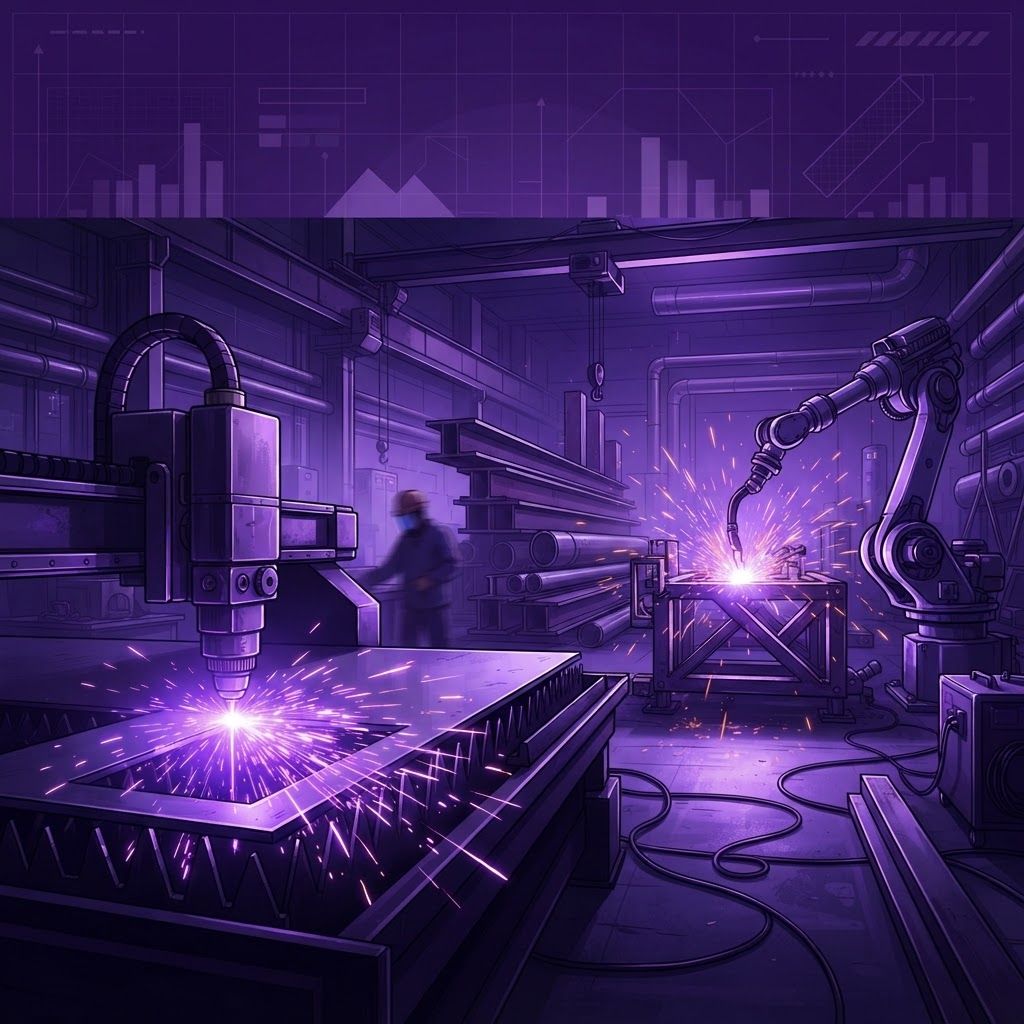
- Laser and plasma cutting: Fast, accurate cutting of sheet and plate from digital files.
- Press brake forming: Bending sheet metal into brackets, enclosures, and panels.
- Welding and assembly: MIG, TIG, and stick processes, with certified welders required for structural work.
- CNC machining: Turning and milling for tight-tolerance components.
- Finishing: Powder coating, galvanizing, anodizing, and passivation for corrosion resistance.
Top 10 Metalworks Companies Serving Moreno Valley
1. Inland Steel Fabricators
A structural steel shop producing beams, columns, stairs, and mezzanines for warehouse and commercial construction. Certified welding procedures and detailing support make it a reliable partner on permitted structural work.
2. Valley Precision Machining
Operates CNC mills and lathes for close-tolerance components in hydraulics, agriculture equipment, and industrial machinery. In-house inspection equipment supports documented dimensional reporting.
3. Ridgeline Sheet Metal Works
Combines laser cutting, press brake forming, and welding for enclosures, control panels, and equipment guards. Strong at prototype-to-production transitions for equipment builders.
4. Sunstate Architectural Metals
Fabricates railings, gates, canopies, sunshades, and decorative screens for commercial and residential architecture, with a focus on clean welds and durable finishes.
5. Moreno Powder Coating and Finishing
A dedicated finishing house offering sandblasting, pretreatment, and powder coating in a wide color range. Many local fabricators outsource finishing here for consistent, jobsite-ready results.
6. Summit Welding and Mobile Repair
Provides on-site welding, equipment repair, and emergency structural fixes for warehouses, trucking fleets, and agricultural operations, minimizing downtime for critical assets.
7. Pacific Tube and Roll Forming
Specializes in tube bending, roll forming, and end finishing for frames, handrails, and conveyor structures where repeatable curves are required.
8. Copperline Metal Stamping
Runs progressive and single-hit stamping for brackets, clips, and high-volume small parts, offering low per-piece costs once tooling is amortized.
9. Horizon Stainless Solutions
Focuses on stainless steel fabrication for food processing, laboratory, and commercial kitchen environments, including sanitary welds and polished finishes.
10. GreenForge Metal Recycling and Supply
Handles scrap recovery alongside supply of plate, tube, angle, and sheet stock, giving fabricators a nearby source for both material and disposal.
Trends Shaping Modern Metal Fabrication
Automation has transformed the shop floor. Fiber laser cutting has largely replaced older cutting methods for sheet work, robotic welding cells deliver consistency on repetitive assemblies, and offline programming lets shops quote and produce faster. The practical result for customers is tighter tolerances and shorter lead times than a decade ago.
Digital workflow is the second shift. Fabricators increasingly accept 3D models directly, flattening parts automatically and flagging manufacturability problems before cutting begins. Designers who supply proper CAD files rather than paper sketches typically see fewer revisions and lower cost.
Workforce development remains the industry's central challenge. Certified welders and CNC programmers are in short supply, and the shops investing in apprenticeships are the ones best able to hold schedules during busy periods.
How to Select a Metalworks Partner
Start by identifying whether your project is structural, precision, or architectural, because those disciplines demand different equipment and certifications. For structural work, verify welding certifications and whether the shop can provide detailing and inspection documentation. For precision parts, ask about measurement capability and tolerance history. For architectural metal, evaluate finish quality in person, since weld appearance and coating uniformity are what clients ultimately see.
Also confirm capacity honestly. A shop running at full utilization may quote attractive pricing but struggle to deliver. Asking about current backlog, material availability, and who performs finishing gives a realistic picture of delivery risk.
Material Selection and Corrosion Protection
Choosing the right metal and finish determines whether a fabrication lasts five years or thirty. Carbon steel is strong and economical but requires coating to resist corrosion, aluminum offers excellent weight savings and natural corrosion resistance at higher cost per pound, and stainless grades vary substantially in their tolerance for chlorides and washdown environments. Specifying stainless without identifying the grade is one of the most common sources of premature failure.
Finish selection should follow the environment rather than appearance alone. Powder coating provides durable, attractive protection for interior and moderately exposed applications, hot-dip galvanizing performs better for structural steel facing continuous outdoor exposure, and anodizing suits architectural aluminum where color consistency matters. In the inland climate, ultraviolet exposure is intense, so coatings rated for exterior use resist chalking and fading far better than general purpose alternatives.
Fabrication details also influence longevity. Welds that trap moisture, unsealed hollow sections, and dissimilar metals in direct contact all accelerate corrosion regardless of coating quality. Reputable fabricators design around these issues by adding drainage holes, sealing joints, and isolating dissimilar materials with appropriate barriers. Asking a prospective shop how it handles these details reveals a great deal about whether it thinks in terms of service life or simply in terms of completing the weld.
Final Thoughts
Moreno Valley's metalworks companies deliver a comprehensive mix of cutting, forming, welding, machining, and finishing services supported by local material supply and responsive field service. Matching the fabricator's specialty to the project, supplying clean design files, and confirming certifications up front produces stronger results and fewer surprises than selecting purely on quoted price.