
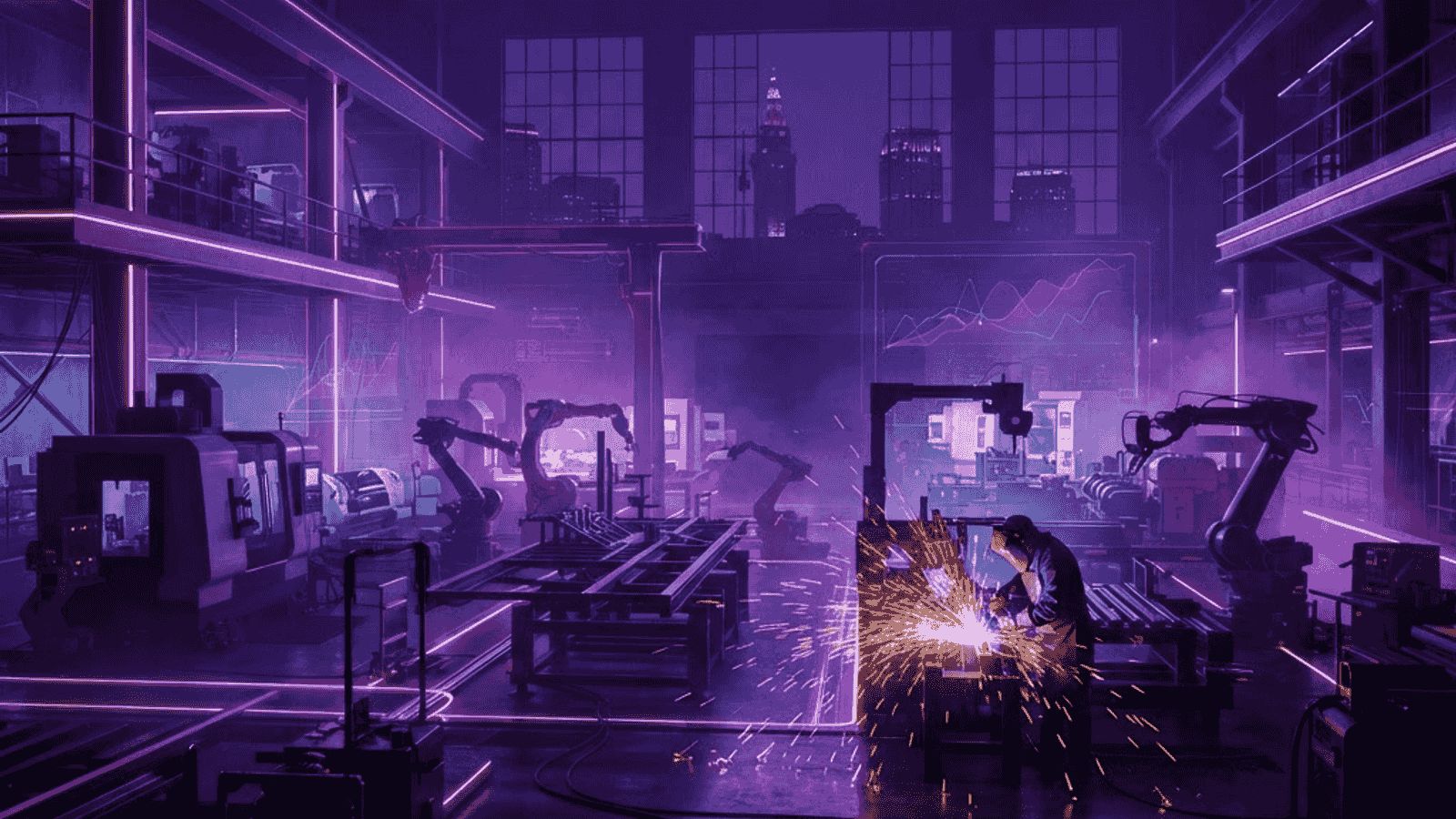
Why Cleveland Is Still a Metalworking Powerhouse
Cleveland's identity has been shaped by steel, stamping presses, and skilled trades for well over a century. The city sits at the intersection of Great Lakes shipping routes, freight rail corridors, and interstate highways, which historically made it an ideal place to receive raw material and ship finished goods. That advantage has not disappeared. Today, Northeast Ohio hosts a dense concentration of job shops, precision machining houses, structural fabricators, and custom sheet metal specialists serving aerospace, automotive, energy, medical device, and construction customers.
What has changed is the technology. The modern Cleveland metalworks shop is far more likely to run fiber laser cutters, five-axis CNC machining centers, robotic welding cells, and digital quality inspection than the manual equipment of previous generations. Many local firms have also invested in ERP systems, in-house engineering support, and certifications such as ISO 9001 or AS9100 to compete for higher-value contracts. For buyers, this means the region offers something rare: deep tribal knowledge in metal forming combined with genuinely current capability.
How Metalworks Companies Are Typically Organized
Before comparing suppliers, it helps to understand the categories. Structural and plate fabricators handle heavy weldments, frames, platforms, and tanks. Precision machining shops focus on tight-tolerance turned and milled components. Sheet metal fabricators specialize in laser cutting, punching, forming, and finishing thin-gauge material into enclosures, brackets, and panels. Metal stamping operations produce high-volume parts from dies. Finally, service centers and specialty processors provide heat treating, powder coating, plating, anodizing, and grinding. Many Cleveland companies blend two or three of these disciplines, which reduces handoffs and shortens lead times.
The Top 10 Metalworks Companies in Cleveland
1. Cuyahoga Precision Metalworks — A mid-sized precision machining and fabrication house known for tight-tolerance CNC turning and milling. Their reputation rests on documented process control, first-article inspection discipline, and a willingness to take on complex low-to-medium volume work that larger shops decline. Engineers often cite their design-for-manufacturability feedback as a differentiator.
2. Lakeshore Steel Fabricators — A heavy structural specialist serving commercial construction, bridge repair, and industrial plant projects. They maintain certified welders across multiple processes and offer in-house detailing, which shortens the gap between architectural intent and shop drawings. Their large-bay capacity makes them a natural fit for oversized weldments.
3. Flats Industrial Sheet Metal — Focused on laser cutting, CNC forming, and finished enclosures for electronics, controls, and equipment builders. Rapid prototyping is a core strength, and many clients use them to iterate on a housing design before locking in production tooling.
4. Ohio Alloy Machining Group — Known for working confidently in difficult materials such as stainless grades, Inconel, titanium, and hardened tool steels. Aerospace and energy customers rely on their traceability documentation and material certification practices.
5. Rockside Stamping and Tooling — A high-volume progressive die stamping operation with in-house die design and maintenance. Because they build and service their own tooling, they can respond quickly when a die needs revision, which reduces costly production gaps.
6. Erie Weldments and Assembly — Specialists in robotic and manual welded assemblies, including fixtures, skids, and machine bases. Their value proposition is delivering complete assemblies rather than loose parts, which removes assembly labor from the customer's floor.
7. Buckeye Metal Finishing Works — A finishing-focused operation offering powder coating, wet paint, passivation, and shot blasting. Manufacturers frequently pair them with local fabricators so that raw parts can move between facilities without long freight legs.
8. Midwest Waterjet and Laser — A cutting-services house running waterjet, fiber laser, and plasma equipment. They are commonly used for fast turnaround blanks, gaskets, and thick plate profiles where heat-affected zones must be controlled.
9. Cleveland Tube and Pipe Works — Concentrated on tube bending, end forming, and pipe spool fabrication for fluid handling, HVAC, and material handling applications. Their tooling library covers a wide range of diameters and bend radii, which limits new tooling charges.
10. Great Lakes Prototype and Model Shop — A small, engineering-driven operation serving product developers, universities, and R&D teams. They excel at one-off components, fixtures, and functional prototypes where speed and collaboration matter more than unit cost.
What Separates a Strong Fabrication Partner From an Average One
Price per piece is the easiest thing to compare and the least useful predictor of a good outcome. The stronger indicators are process discipline and communication. Ask how the shop documents inspection, whether they use calibrated equipment on a defined schedule, and how they handle nonconforming material. A supplier that can explain its corrective action process clearly is usually a supplier that rarely needs it.
Capacity transparency matters just as much. A shop that openly discusses current backlog, machine availability, and realistic lead times is protecting your schedule. Vague promises tend to become missed dates. It is also worth asking whether engineering support is included in quoting. Shops that review your drawings and suggest tolerance relief, material substitutions, or weld reductions can often remove significant cost before the first chip is cut.
Industry Trends Shaping Cleveland Metalworking
Three trends stand out. First, automation adoption is accelerating, particularly collaborative robots for welding and machine tending, which helps shops offset the skilled labor shortage. Second, reshoring interest has increased demand for domestic fabrication with shorter, more predictable supply chains. Third, sustainability requirements are pushing suppliers to document scrap recovery, energy use, and coating chemistry, especially when serving larger corporate customers.
Workforce development is the quiet story underneath all of it. Local apprenticeship programs, technical colleges, and in-house training pipelines are how Cleveland shops keep institutional knowledge alive as experienced machinists retire. Buyers should view a company's training investment as a proxy for long-term reliability.
Choosing the Right Company for Your Project
Start by defining your project honestly: material, tolerances, volume, finish requirements, and true deadline. Then shortlist two or three shops whose core capability matches that profile rather than sending the same drawing package to a dozen suppliers. Visit the floor if you can. Cleanliness, organization, and how staff talk about their work reveal more than any brochure.
Finally, treat the first order as a trial rather than a commitment. Evaluate not only the parts but the paperwork, the packaging, and the responsiveness when something needs clarification. Cleveland offers enough depth in metalworking that you can afford to be selective, and the right partner will improve your product for years rather than simply filling a purchase order.