
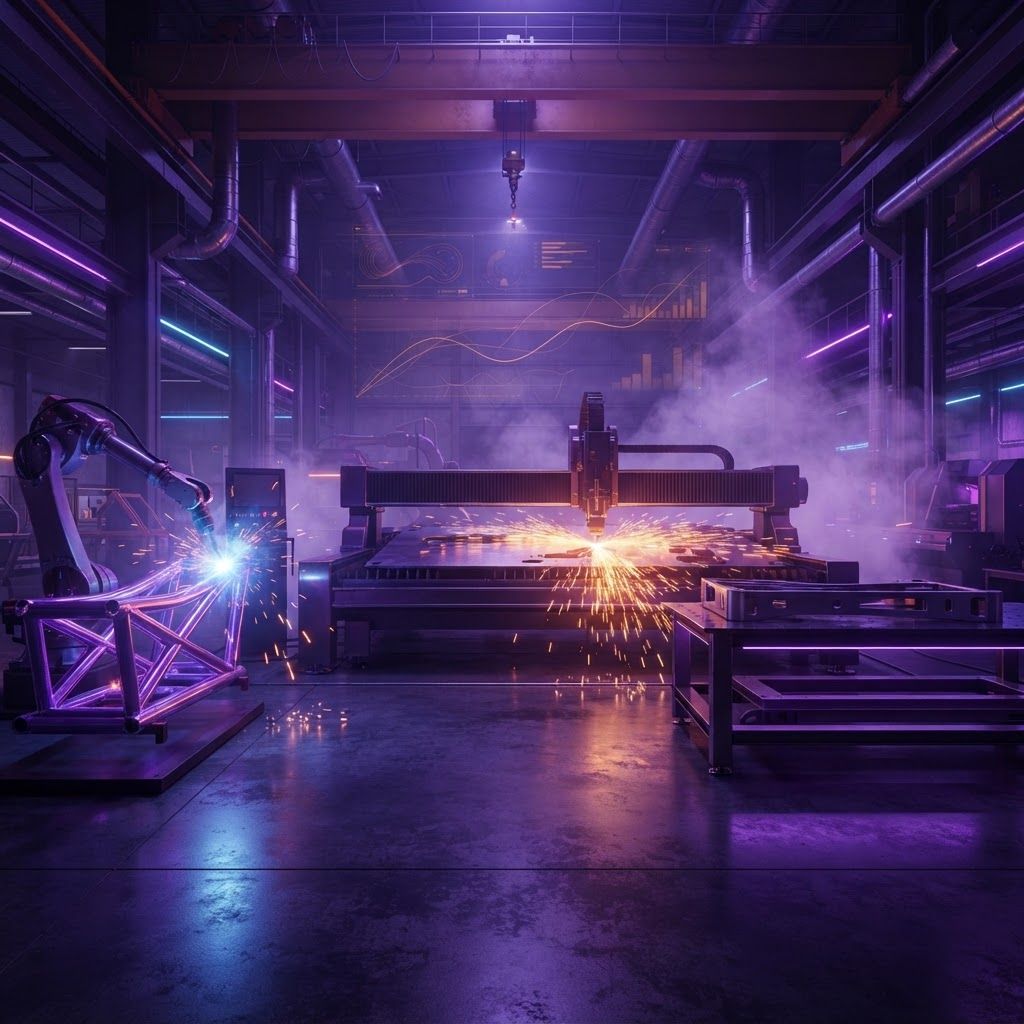
Metalworking in the Clarksville Economy
Metalworking is the quiet backbone of industrial activity around Clarksville. Almost every manufactured product, building, and piece of equipment in the region passes through a metal shop at some point, whether as a structural frame, a machined component, a welded assembly, or a fabricated enclosure. The sector encompasses a wide spectrum of capability, from general job shops taking on whatever walks through the door to highly specialized operations serving narrow technical niches.
What has changed most in recent years is the level of technology in play. Fiber laser cutting, multi-axis machining, robotic welding, and computer-controlled press brakes have raised both precision and throughput dramatically. Shops that invested in this equipment can hold tolerances and meet lead times that would have been impossible a decade ago, while those that did not have found themselves competing only on the simplest work.
Evaluating a Metalworking Partner
Begin with process capability. Cutting, forming, welding, machining, and finishing are distinct disciplines. Some shops do all of them under one roof, which simplifies coordination and reduces handling. Others specialize deeply in one. Neither model is inherently better, but the match to your part matters.
Tolerance capability should be verified rather than assumed. Ask what tolerances the shop routinely holds on parts like yours, what inspection equipment they have, and whether they can provide dimensional reports. A coordinate measuring machine and a documented calibration program indicate a shop serious about accuracy.
Welding qualifications deserve particular scrutiny on structural or pressure-containing work. Certified procedures and qualified welders are not bureaucratic formalities; they are the mechanism by which weld integrity is assured. Ask which codes the shop works to and how welder qualifications are maintained.
Material sourcing and traceability matter for anything safety-relevant. Shops that maintain mill certifications and can trace material back to heat number protect their customers from serious problems.
The Top 10 Metalworks Companies in Clarksville
1. Cumberland Steel Fabricators is among the most capable structural and miscellaneous steel fabricators in the region, producing building frames, platforms, stairs, and equipment supports. Its detailing capability and certified welding procedures make it a frequent choice on commercial construction projects where inspection scrutiny is high.
2. Riverbend Precision Machining operates multi-axis machining centers producing tight-tolerance components in steel, aluminum, stainless, and specialty alloys. In-process inspection and a well-equipped quality lab support work where dimensional accuracy is critical.
3. Southfield Sheet Metal Works specializes in laser cutting, forming, and sheet metal assembly, producing enclosures, panels, brackets, and housings. Quick turnaround on prototype and short-run work has made it a favorite among product developers and equipment builders.
4. Ironforge Welding and Fabrication handles heavy fabrication, including tanks, frames, and large weldments, with the lifting capacity and floor space that such work requires. Its welders hold qualifications across multiple processes and positions, which allows it to take on demanding structural assignments.
5. Meridian Metal Finishing provides powder coating, painting, plating, and passivation services to other manufacturers. Surface finish determines corrosion resistance and appearance, and the company's pretreatment process control is what distinguishes its results from lower-cost alternatives.
6. Clarksville Tube and Pipe Services focuses on tube bending, pipe fabrication, and spool work for industrial piping systems. Accurate bending and fit-up reduce field installation time substantially, which is where most piping cost lives.
7. Northgate Waterjet and Laser offers cutting services for materials and thicknesses that challenge conventional methods, including thick plate, composites, and heat-sensitive alloys. Many other shops subcontract specialized cutting to the company rather than investing in the equipment themselves.
8. Foundry Casting and Machining combines metal casting with subsequent machining, producing finished components from raw pour through final dimension. Handling both stages internally eliminates coordination problems and shortens overall lead time.
9. Anchor Ornamental Metals serves architectural and decorative applications, producing railings, gates, facades, and custom architectural elements. This work blends fabrication skill with aesthetic judgment, and the company's craftsmanship is widely recognized locally.
10. Bluegrass Industrial Repair rounds out the list with on-site welding, machining, and emergency repair services for industrial facilities. When production equipment fails, response speed matters more than anything, and the company's mobile capability keeps plants running.
Trends in Metalworking
Automation is spreading beyond large operations. Robotic welding cells, automated material handling, and lights-out machining are now accessible to mid-sized shops, improving consistency while addressing the persistent shortage of skilled welders and machinists.
Digital workflows are reducing errors. Direct transfer of models to programming, nesting software that optimizes material usage, and digital work instructions on the shop floor all reduce the transcription mistakes that traditionally caused rework.
Material costs and availability remain volatile, leading shops to manage inventory more strategically and customers to commit earlier on larger projects.
Workforce development has become a strategic priority. Shops that run apprenticeship programs and partner with technical schools are building the skilled labor they cannot hire off the open market.
Working Successfully with Metal Shops
Provide complete drawings with clearly identified critical dimensions. Shops cannot prioritize what matters if everything carries the same tolerance, and over-tolerancing drives cost up without improving function.
Discuss material choice openly. Substituting a more available grade or a standard stock thickness frequently reduces both cost and lead time with no functional penalty, and experienced shops will suggest these options if invited to.
Visit the shop before placing significant work. Organization, equipment condition, and how work in progress is managed tell you a great deal about what to expect. The metalworking companies around Clarksville offer substantial capability across the full range of processes, and clear communication paired with realistic scheduling produces the best results.