
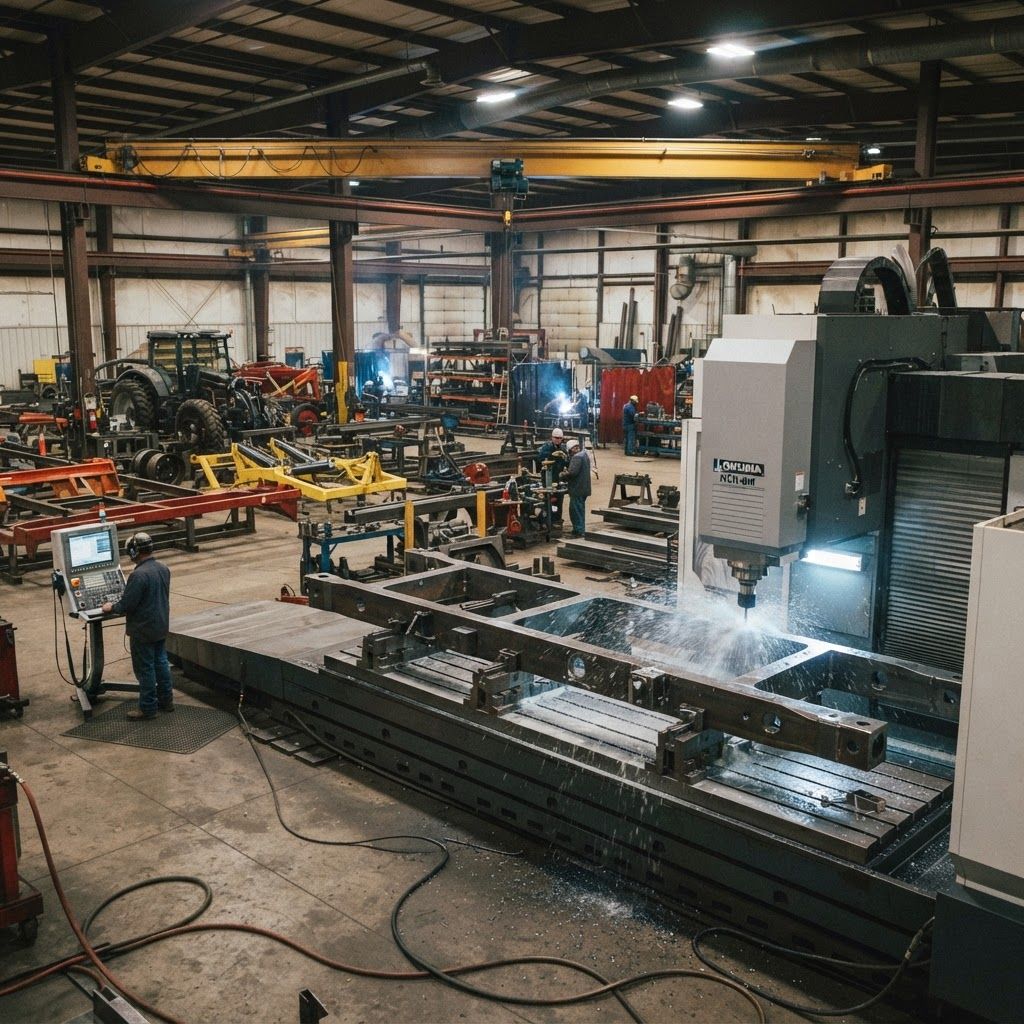
Machinery Built Where It Gets Used
Lubbock's machinery industry exists because of proximity. When equipment fails during a narrow harvest window, distance becomes expensive, so the South Plains developed manufacturers who design, build and service machinery within driving distance of their customers. That closeness produces better products: engineers hear about failures directly, iterate quickly, and understand exactly what abrasive soil, extreme heat and continuous operating hours do to bearings, belts and hydraulics.
The result is a diverse local sector covering agricultural implements, gin and processing machinery, material handling systems, irrigation equipment and custom industrial automation. Buyers gain access to real engineering conversations rather than catalog ordering, and service response measured in hours rather than weeks.
The Top 10 Best Machinery Manufacturers in Lubbock
1. Caprock Agricultural Machinery
Manufacturers of tillage implements, planters, cultivators and harvest support equipment tailored to regional cropping systems. Their designs prioritize serviceable wear parts and simple maintenance, which reduces downtime during compressed field seasons.
2. Llano Gin Machinery Works
Specialists in cotton gin equipment: module feeders, cleaners, lint handling, conveying and pneumatic systems. They perform both new installations and modernization of existing plants, and their seasonal service programs are a major reason gins in the area maintain high uptime.
3. Hub City Conveyor Systems
Designers and builders of belt, screw, drag and pneumatic conveying systems for agriculture, food processing and bulk material handling. Projects include layout engineering, fabrication and installation, with attention to dust control and access for cleaning.
4. South Plains Irrigation Equipment
Producers of center pivot components, drip system hardware, pump stations and control systems. Water efficiency is the central design driver, and the company supports growers with system audits and retrofit recommendations.
5. Red Raider Automation Engineering
A custom automation integrator building robotic cells, packaging lines, vision inspection stations and PLC-controlled processes. They serve manufacturers who need throughput improvements without replacing entire production lines.
6. Panhandle Hydraulics and Power Units
Manufacturers of hydraulic power units, cylinders, custom manifolds and mobile hydraulic systems. In-house testing and hose fabrication mean repairs and replacements can be handled quickly rather than waiting on distant suppliers.
7. Yellowhouse Machine Shop and Fabrication
Precision machining, welding and structural fabrication supporting other manufacturers and industrial maintenance departments. Capabilities include CNC turning and milling, plate work and reverse engineering of obsolete parts.
8. Texas Plains Feed and Grain Equipment
Equipment for feed mills, grain storage and livestock operations: mixers, augers, roller mills, bin systems and dust collection. Designs emphasize durability under continuous operation and easy sanitation.
9. Monarch Industrial Gearboxes and Drives
Builders and rebuilders of gear reducers, drive assemblies and power transmission components. Rebuilding a gearbox is frequently faster and cheaper than replacement, and this capability keeps aging plants productive.
10. Cotton Belt Equipment Remanufacturing
Full remanufacturing of industrial and agricultural machinery, including teardown, machining, component replacement and performance testing. Their work extends asset life significantly and appeals to operators managing capital budgets carefully.
Trends in Machinery Manufacturing
Automation and instrumentation are spreading into equipment categories that were purely mechanical a decade ago. Sensors on bearings, motors and gearboxes feed condition monitoring systems that predict failures before they happen, and variable frequency drives are now standard on many conveying and pumping applications for both control and energy savings. Modular design has also gained ground, allowing customers to reconfigure equipment as needs change rather than replacing complete systems.
Skilled labor availability remains the sector's most persistent challenge, which is pushing manufacturers to invest in apprenticeships, standardize fabrication processes and adopt equipment that reduces reliance on scarce specialties.
How to Choose a Machinery Manufacturer
Machinery purchases are long-term commitments, so evaluate the total relationship rather than the quoted price. Understand the design philosophy, the parts supply and the service model before signing.
- Ask for reference installations you can visit and operators you can talk to.
- Confirm spare parts stocking and typical lead times for wear components.
- Clarify whether service technicians are employees or subcontractors.
- Review the engineering documentation package you will receive.
- Request performance guarantees tied to measurable throughput or efficiency.
Final Thoughts
Machinery manufacturing is one of Lubbock's genuine strengths, grounded in decades of solving demanding agricultural and industrial problems. The companies above span implements, processing equipment, conveying, hydraulics, automation and remanufacturing, giving regional buyers unusual access to both new equipment and life-extension services. Approach these purchases as engineering partnerships, insist on documented performance expectations, and prioritize service capability alongside capital cost. Equipment that can be maintained locally almost always outperforms cheaper machinery that cannot.