
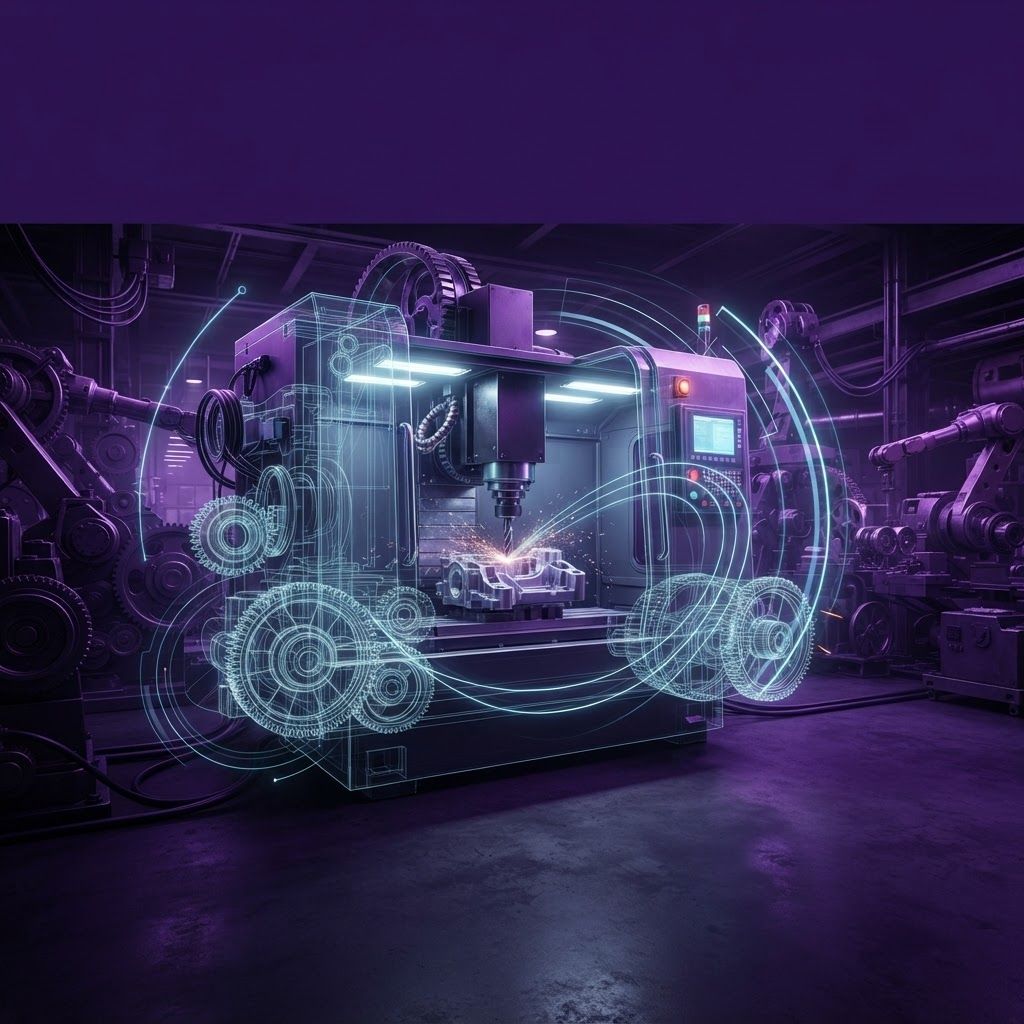
Every advanced manufacturing region eventually develops a machinery industry, because sophisticated products require sophisticated equipment to build them. Huntsville followed that pattern precisely. Decades of aerospace work created demand for custom test stands, handling fixtures, and specialized tooling, while the arrival of large automotive plants generated a parallel need for conveyors, automation cells, weld fixtures, and material handling systems. The result is a machinery sector defined by engineered to order work rather than catalog products, staffed by engineers and machinists comfortable solving problems that have no off the shelf answer.
What Machinery Manufacturing Looks Like in North Alabama
The regional industry covers several overlapping specialties. Custom automation integrators design and build robotic cells, assembly stations, and inspection systems. Precision machining operations produce components to tight tolerances for aerospace, defense, and industrial equipment customers. Tool and die makers create stamping dies, molds, gauges, and fixtures. Material handling fabricators build conveyors, lift assists, carts, and storage systems. Test equipment specialists produce hydraulic, thermal, vibration, and load test rigs, often for one of a kind applications. Finally, machinery service organizations retrofit, rebuild, and modernize aging equipment.
Because so much of this work is engineered to order, reputation and referral drive the market far more than advertising. The strongest firms are known by name inside plant engineering departments across the Tennessee Valley.
Top 10 Best Machinery Manufacturers in Huntsville
1. Custom Automation Integrators of North Alabama
Several regional integrators design turnkey robotic and automation cells, handling mechanical design, controls programming, safety validation, and installation. Their differentiator is disciplined project management combined with the electrical and controls expertise needed to commission complex equipment on schedule.
2. Aerobotix
A Huntsville company specializing in robotic coating, sanding, and precision surface treatment systems for aerospace and defense applications. Aerobotix builds highly engineered robotic cells where surface finish and repeatability are critical, and its systems are deployed at demanding customer sites nationwide.
3. Precision Machining Job Shops
Huntsville hosts an impressive concentration of CNC machining operations running multi axis milling and turning centers. The best hold tight tolerances on aerospace alloys, maintain calibrated inspection equipment including coordinate measuring machines, and provide documented first article inspection reports as standard practice.
4. Tool and Die Manufacturers
Regional tool and die shops build stamping dies, injection molds, trim fixtures, and check gauges supporting the automotive supplier network. Die design expertise, hardened tool steel machining, and rapid repair response are what plant managers value most, since tooling downtime halts production lines immediately.
5. Material Handling Equipment Fabricators
Local fabricators produce conveyors, roller systems, tilt tables, ergonomic lift assists, tugger carts, and dunnage racks. This work blends structural fabrication with ergonomic and workflow design, and good suppliers contribute layout suggestions rather than simply building to a drawing.
6. Test Stand and Test Equipment Builders
Huntsville's aerospace heritage produced genuine world class capability in custom test equipment. Local firms build hydraulic load frames, thermal vacuum fixtures, vibration test adapters, and instrumented structural test rigs, typically as unique articles with full instrumentation and data acquisition integration.
7. Hydraulic and Pneumatic Systems Builders
Specialists design and assemble hydraulic power units, manifold systems, and pneumatic control panels for industrial machinery. Cleanliness control, proper filtration design, and thorough leak testing separate reliable systems from chronic maintenance problems.
8. Industrial Machine Rebuilders and Retrofitters
Rebuilding an existing machine tool with modern controls and drives frequently costs far less than replacement. Regional service firms perform way grinding, spindle rebuilds, ballscrew replacement, and control retrofits, extending equipment life while improving accuracy and diagnostics.
9. Structural and Heavy Fabrication Shops
Heavy fabricators produce machine bases, frames, weldments, platforms, and enclosures, often with certified welding procedures and stress relief capability. Large capacity machining after welding is a valuable combined capability that relatively few shops offer.
10. Controls and Panel Building Specialists
Electrical panel shops build machine control panels, motor control centers, and safety circuits to recognized industrial standards. Since controls quality determines both machine reliability and future serviceability, experienced panel builders are essential partners for any automation project.
Trends in Machinery Manufacturing
Digitalization is the clearest shift. Machines now ship with condition monitoring, remote diagnostics, and data connectivity as baseline expectations rather than premium options. Collaborative robotics has lowered the practical threshold for automating small batch operations, expanding the customer base beyond high volume plants. Simulation and digital twin modeling let integrators validate cycle times and reach envelopes before cutting metal, reducing costly rework. Additive manufacturing has become genuinely useful for fixtures, grippers, and low volume tooling. Meanwhile, skilled labor scarcity is pushing customers toward equipment designed for easier setup and maintenance, and toward suppliers who provide thorough training and documentation.
How to Choose a Machinery Manufacturer
Insist on a clearly written specification covering cycle time, capability targets, safety standards, and acceptance criteria, because ambiguity is the leading cause of disputes in custom equipment projects. Ask to see comparable completed systems and speak with those customers directly. Evaluate in house capability versus subcontracting, since integrators who outsource everything have less control over schedule. Confirm controls platform compatibility with your plant standards, as a mismatched controller creates permanent maintenance friction. Require documentation packages including electrical schematics, spare parts lists, and preventive maintenance procedures. Finally, discuss post installation support and response times before signing, not after commissioning problems appear.
Conclusion
Huntsville's machinery manufacturers occupy a demanding niche where nearly every project is unique and success depends on engineering judgment as much as fabrication skill. From robotic coating systems and precision machining to tooling, material handling, test stands, and controls integration, the region offers a remarkably complete industrial equipment supply base. For manufacturers in the Tennessee Valley, that local capability translates into faster response, easier collaboration, and equipment better matched to actual plant conditions.