
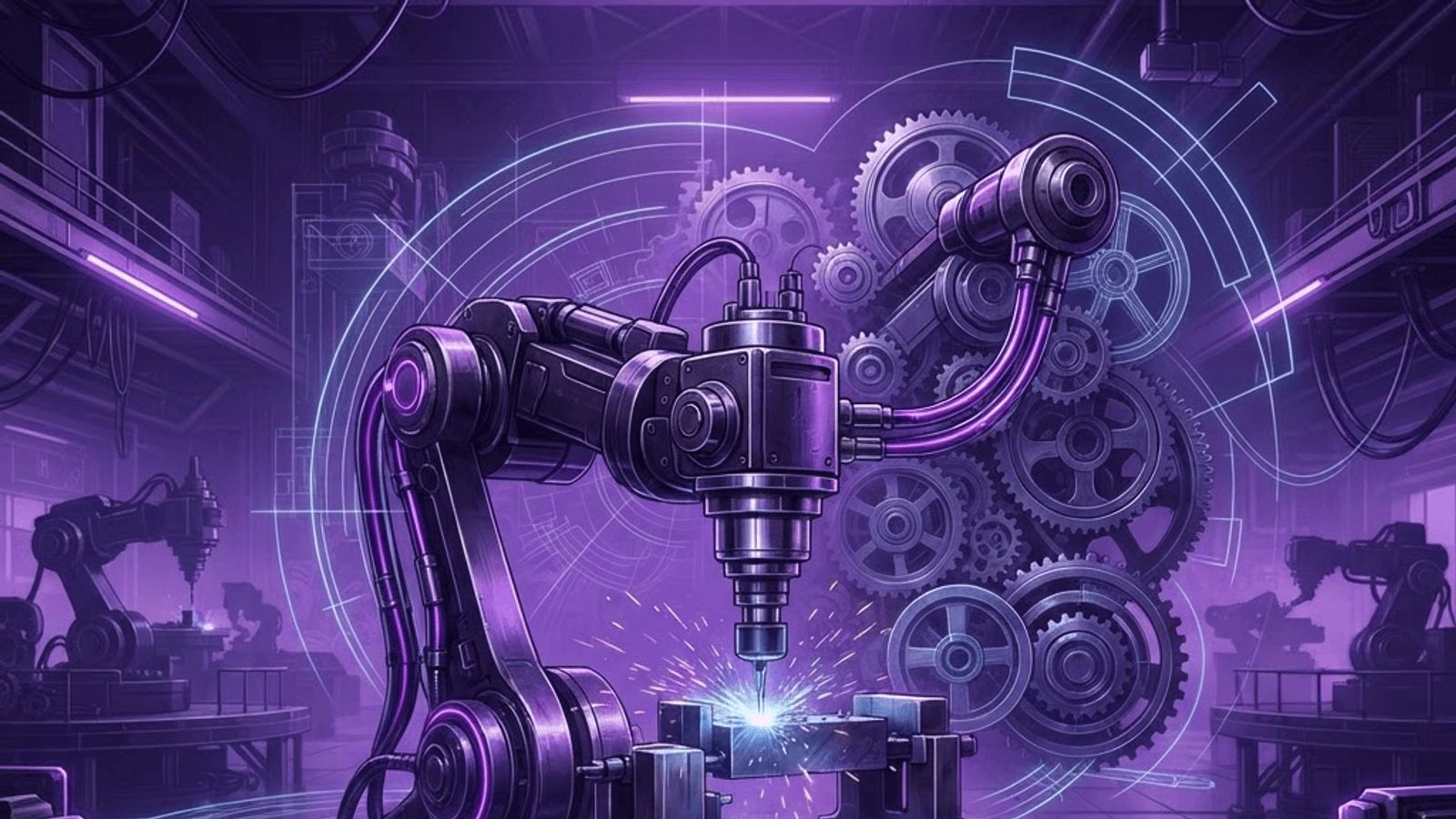
Behind every manufactured product is a machine that made it, and around Grand Rapids there is an unusually deep concentration of firms that design and build those machines. West Michigan machinery manufacturers produce automated assembly lines, robotic work cells, packaging equipment, material handling systems, tooling, dies and specialized process machinery. Their customers include automotive plants, food processors, furniture manufacturers, pharmaceutical facilities and consumer goods companies worldwide.
The Machinery Sector in West Michigan
This industry exists because the region's manufacturers demanded it. Local plants needed custom equipment, and machine builders grew up alongside them, close enough to iterate quickly on the plant floor. Over time those builders developed reputations that extended far beyond Michigan, and today many ship equipment internationally from facilities in Kent and Ottawa counties.
What distinguishes strong machine builders is not just mechanical engineering. Modern equipment integrates controls programming, robotics, safety systems, vision inspection and data connectivity. The best firms carry all of these disciplines in-house.
The Top 10 Machinery Manufacturers Serving Grand Rapids
1. JR Automation
JR Automation, headquartered in Holland, is among the largest automation integrators in North America. It designs and builds complete automated production systems combining robotics, vision, conveyance and controls for automotive, life sciences, consumer goods and logistics customers.
2. Ranger Automation Systems
Ranger Automation Systems provides custom automation, assembly equipment and material handling solutions. Mid-sized integrators like this often deliver strong value for projects that need engineering rigor without the overhead of a global organization.
3. DME Company
DME supplies mold bases, mold components and tooling technologies used by injection molders across the region and beyond. Tooling quality directly determines part quality, making these suppliers foundational to the plastics industry.
4. Bulman Products
Bulman Products, a long-standing Grand Rapids manufacturer, produces roll handling, cutting and dispensing equipment for packaging and paper converting operations. Its equipment is a familiar sight in shipping and fulfillment areas nationwide.
5. Wolverine Coil Spring and Component Machinery Suppliers
Specialty component manufacturers supply springs, fasteners and mechanical elements that machine builders integrate into larger systems. Their responsiveness on custom specifications supports rapid equipment development.
6. Koops Automation Systems
Koops, based in Holland, designs and builds custom automated assembly and test systems. The company is known for taking on technically challenging applications that require significant process development alongside machine design.
7. Rapid Machining and Fabrication Shops
A dense network of job shops around Grand Rapids provides the machined weldments, frames, brackets and precision components that machine builders require. Their capacity and turnaround times materially affect equipment delivery schedules.
8. Grand Rapids Metrology and Test Equipment Providers
Suppliers of measurement systems, coordinate measuring machines, calibration services and test stands support both machine builders and their customers, ensuring that equipment produces verifiable results.
9. Pneumatic and Hydraulic Systems Integrators
Fluid power specialists design and assemble the pneumatic and hydraulic circuits that actuate industrial machinery. Their contribution to cycle time, energy consumption and reliability is frequently underestimated during equipment specification.
10. Controls and Panel Building Firms
Electrical contractors and panel builders such as those serving the region construct control cabinets, program logic controllers and integrate human machine interfaces. Their work determines how maintainable a machine is over its service life.
How to Evaluate a Custom Machinery Partner
Custom equipment projects fail for predictable reasons: unclear requirements, optimistic cycle time assumptions and inadequate acceptance criteria. Guard against all three from the start. Insist on a written functional specification covering throughput, uptime targets, changeover time, part tolerance capability, safety standards and data outputs.
Ask how the builder validates performance before shipment. A structured factory acceptance test using real production materials, followed by a site acceptance test measuring sustained output, protects both parties. Clarify how spare parts, documentation, training and remote support are handled after commissioning.
Total Cost of Ownership
Purchase price is only part of the equation. Energy consumption, tooling wear, changeover labor, maintenance intervals, spare part availability and expected uptime often dominate lifetime cost. A machine that costs more up front but delivers higher availability and faster changeovers usually wins over a multi-year horizon. Request an estimated maintenance schedule and consumables list during quoting so comparisons are meaningful.
Automation Trends Shaping the Industry
Several developments are changing what customers expect. Collaborative robots have made automation viable for lower-volume applications where fencing and hard guarding were previously prohibitive. Machine vision has become dramatically more capable and affordable, enabling in-line inspection that was once impractical. Connectivity standards allow equipment to report performance data directly into plant systems, supporting predictive maintenance and real-time throughput visibility. Modular machine architectures let manufacturers reconfigure lines as product mix changes rather than replacing equipment outright.
Workforce Considerations
Skilled controls engineers, machine builders and maintenance technicians remain scarce across the region. Buyers should factor this into equipment decisions by favoring standardized components, well-documented control code and platforms their existing maintenance team already knows. Training included in the project scope pays for itself the first time a line goes down at night.
Final Thoughts
Grand Rapids offers a machinery and automation ecosystem that rivals far larger metropolitan areas. From full-line integrators to specialized component suppliers and job shops, the region can support projects ranging from a single work cell to a complete production system. Clear specifications, rigorous acceptance testing and a focus on lifetime cost separate successful projects from expensive lessons.